Festa di Sant’Agata
February 4, 2024
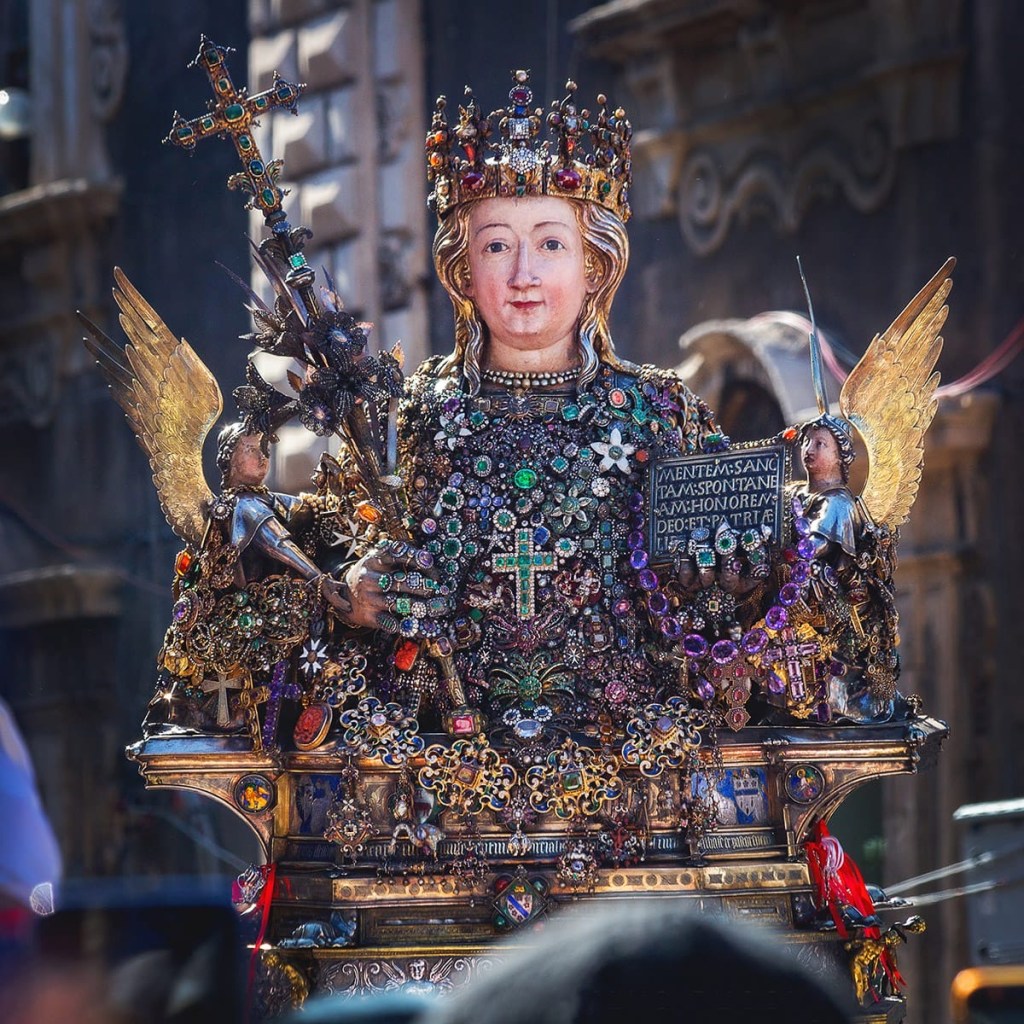
The feast of Saint Agatha, the celebration of Sant’Agatha, Patron Saint of Catania, takes place each year from February 3rd to the 5th, in the City of Catania, Sicily. The remains of The Saint which are kept throughout the year in the Cathedral are now carried around the city, following specific traditional routes, which are the same year after year. The man pulled vehicle, called ‘a vara” in Sicilian dialect, “fercolo” in Italian, carries the remains of Sant’Agata throughout the city for three days and one long night. The crowds gather around the “fercolo” and many devotees wearing the traditional white tunic, “u saccu di Sant’Agata”, are both “i portatori”, the pullers, as well as followers. The thick ropes that pull the “fercolo”are just over 100 meters
La Festa di Sant’Agata, la celebrazione di Sant’Agata, Patrona di catania, si svolge ogni anno dal 3 al 5 Febbraio a Catania in Sicilia. I resti della santa custoditi durante l’anno presso la Cattedrale di Catania sono trasportati in un “fercolo’, a “vara”, in dialetto Siciliano per le strade della città’ seguendo specifiche tradizioni che si susseguono anno dopo anno. Il fercolo gira per le strade della città’ per tre giorni ed una lunga notte. La folla di gente si aggira intorno al fercolo e molti devoti indossano una tradizionale tunica bianca denominata in dialetto “u saccu di Sant’Agata.” In mezzo alla folla di gente vi sono “i portatori” e coloro che seguono il percorso. Le corde spesse che tirano il fercolo sono circa 100 metri in lunghezza.
.
The picture below portrays “i portatori” pulling the “fercolo” in Via Umberto on the afternoon of the 4th of February – nella foto in basso vi sono i portatori che tirano il fercolo in Via Umberto nel pomeriggio del 4 Febbraio.

People gather on rooftops and balconies to view the procession – Gli spettatori si ritrovano sui tetti dei palazzi e sui balconi.
Enormous candles are made for the occasion – degli enormi ceri si realizzano per l’occasione.

In the following photo is Piazza Duomo – The Cathedral in backdrop with the symbol of Catania, the Elephant, “u liotru”. In this picture, one can see the “Cerei”, “i cannaroli” in Sicilian, gathered around. The cerei will tour the city for days on the occasion. Each “cereo” is made by an association and the people of that association will carry the cereo on their shoulders for long, long hours.
Nella foto in basso si vede Piazza Duomo – La Cattedrale sullo sfondo della foto ed il simbolo di Catania davanti ad essa. “u liotru.” In questa foto si vedono i cerei, “i cannaroli” in dialetto siciliano radunate in piazza. I cerei gireranno per la città’ per giorni. Ciascun cereo e’ stato realizzato da una associazione di antichi mestieri e membri di tali associazioni trasporteranno il cereo in giro sulle spalle per lunghe e lunghe ore.


Two Carabinieri guarding the Statue of Sant’agata during Mass in the Cathedral- Due carabinieri che fanno la guardia a Sant’Agata durante la messa celebrata in Cattedrale

Sant’Agatha was born in the III Century A.C. and lived in Catania. At that time, the Romans ruled Catania and Procunsul Quinziano had been sent to enforce the Edict of Decius that dictated Christians renounce their Faith publicly or suffer severe consequences. Agatha was a young Christian girl. After the pressures of renouncing her Faith, she refused and also resisted to the personal advances by Quinziano, who took a personal interest in the girl. Consequently, Agatha was tortured and died in her prison cell. Over the years, many people have made a vow to the Saint and promised to wear a white tunic during the celebrations of her Feast each year. The tunic, called “u saccu” is worn by the devotees of all ages, both female as well as male.
Sant’Agata nacque nel III Secolo d.C. e visse a Catania. Inquel periodo i Romani era al comando di Catania ed il Proconsole Quinziano era stato inviato per far rispettare l’editto di Decio che imponeva ai cristiani di rinunciare alla loro fede pubblicamente e se si fossero rifiutati avrebbero subito conseguenze gravi. Agata era una giovane cristiana. Dopo aver subito pressioni per rinunciare alla propria fede, si rifiuto’. Inoltre ha anche resistito e rifiutato le attenzioni personali di Quinziano che aveva un interesse personale verso la giovane. Di conseguenza Agata fu torturata e mori’ in prigione. Nel corso degli anni, molte persone hanno fatto un voto alla Santa e promesso di indossare la tunica bianca durante le celebrazioni della sua festa ogni anno. La tunica, “u saccu”, viene indossato dai devoti di tutte le eta’, sia maschi che femmine.
 Sicily & MORE Explored by Rosanna