In March 2013, I took the 72 hour Permaculture Design Certification class offered through the Sustainability Institute at George Mason University, in Fairfax Virginia. The course was taught by Wayne Weiseman and it was an exceptional experience, an outstanding experienced instructor, and a fabulous group of people.
Immediately after the course was over, I wanted to experiment with some of the practices I had learned and decided to create a vegetable raised bed in my garden following the hugelkultur method, which has been created and practised for over 4o years by Seff Holzen, in Austria.
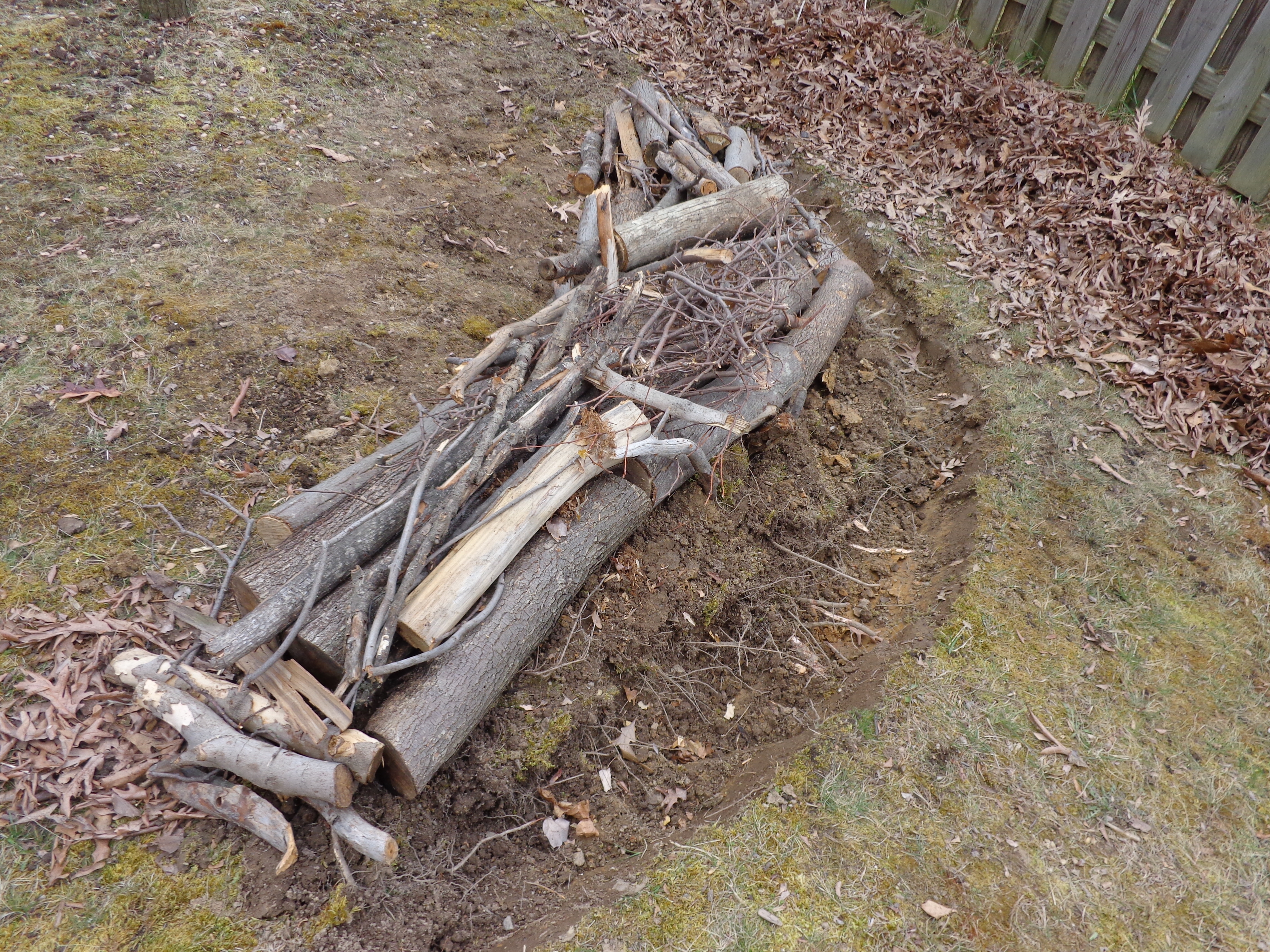
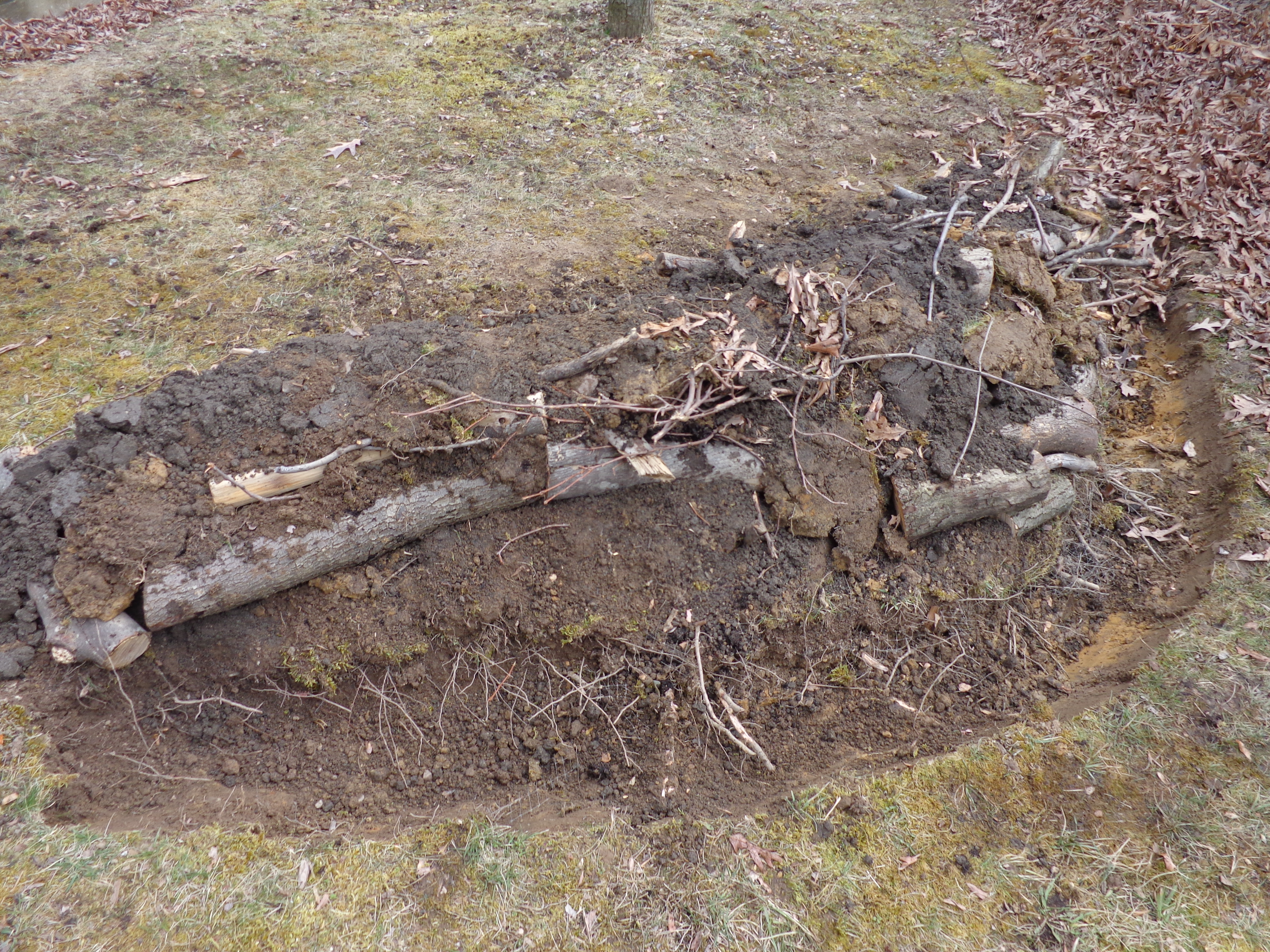
Adopting this method, one creates a swale (ditch) en contour, following the natural slope of the land and a berm next to the swale which has logs at the bottom and is covered with manure and soil. This becomes the raised bed into which one plants the vegetables.
I went about this on my own, and was very curious to see whether my hugelkultur raised bed would work as I had wished.
One month has gone by and I can now share the photos of the hugelkultur bed and the vegetables I planted in it one month ago and which have grown in an exceptional manner.
Following are some pictures I took while I was constructing the raised bed :
Placing the logs along the swale edge
Covering logs with manure and soil and compacting well with my hands as to avoid a landslide

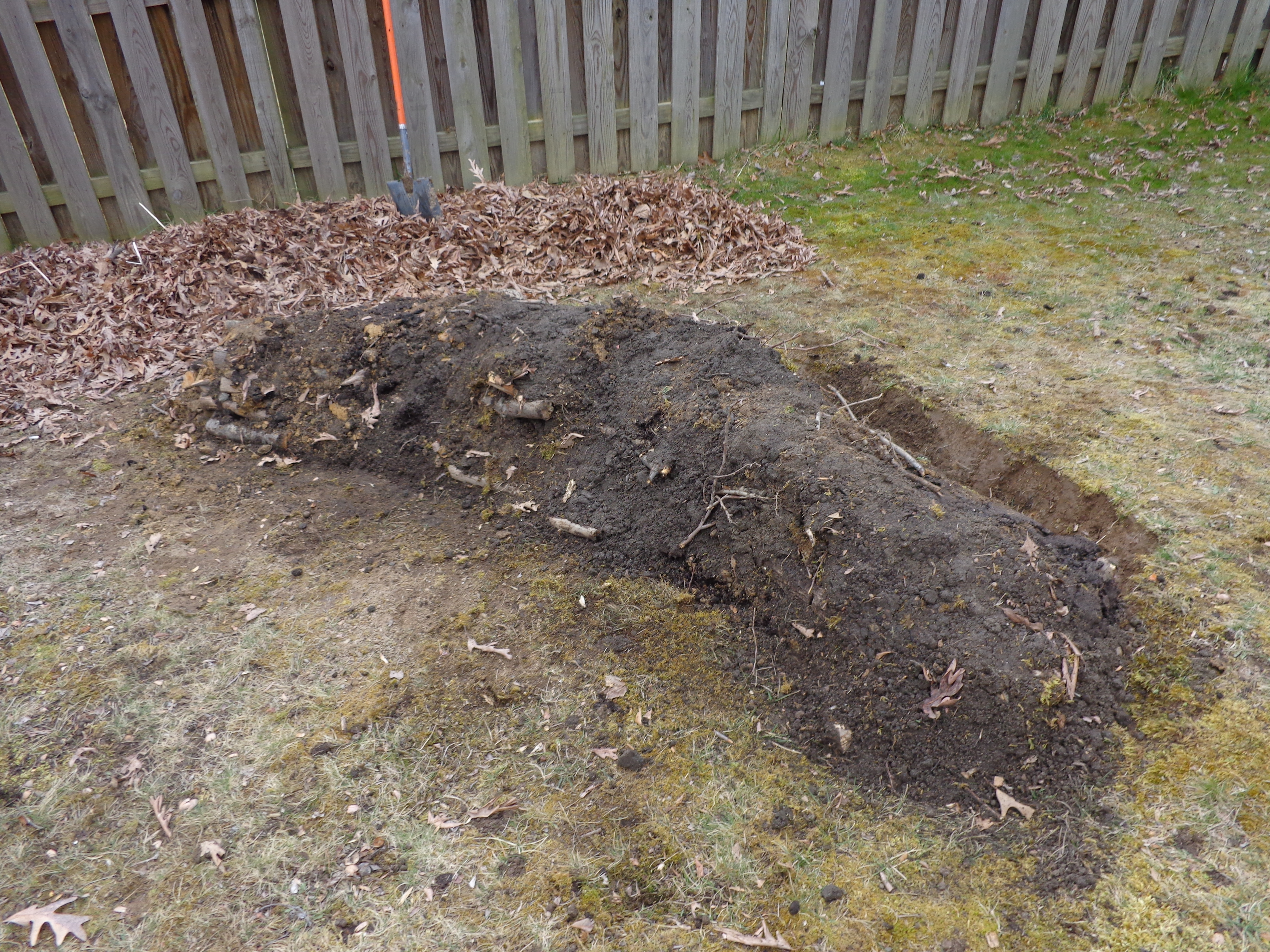
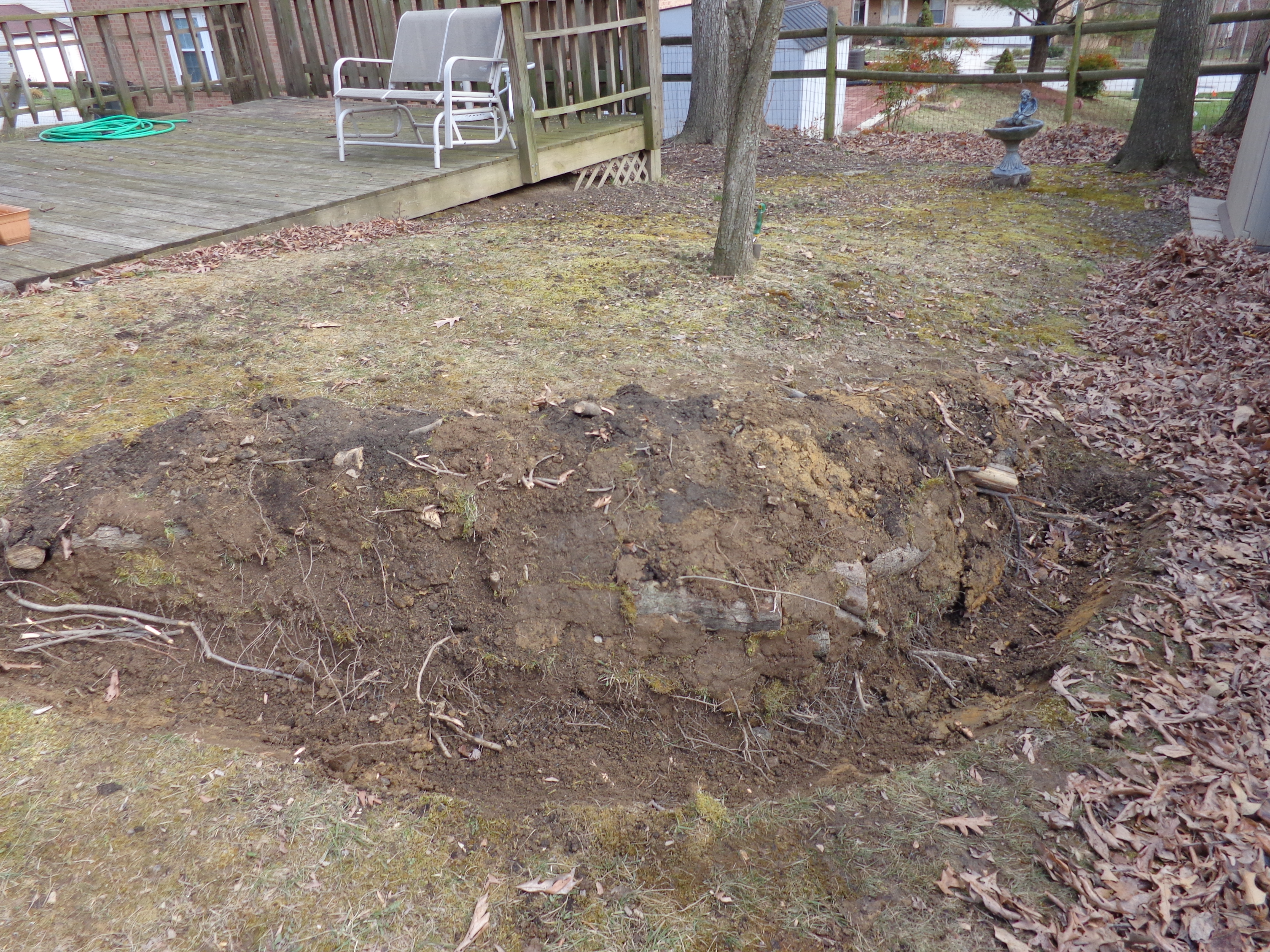
I covered the raised bed with mulch
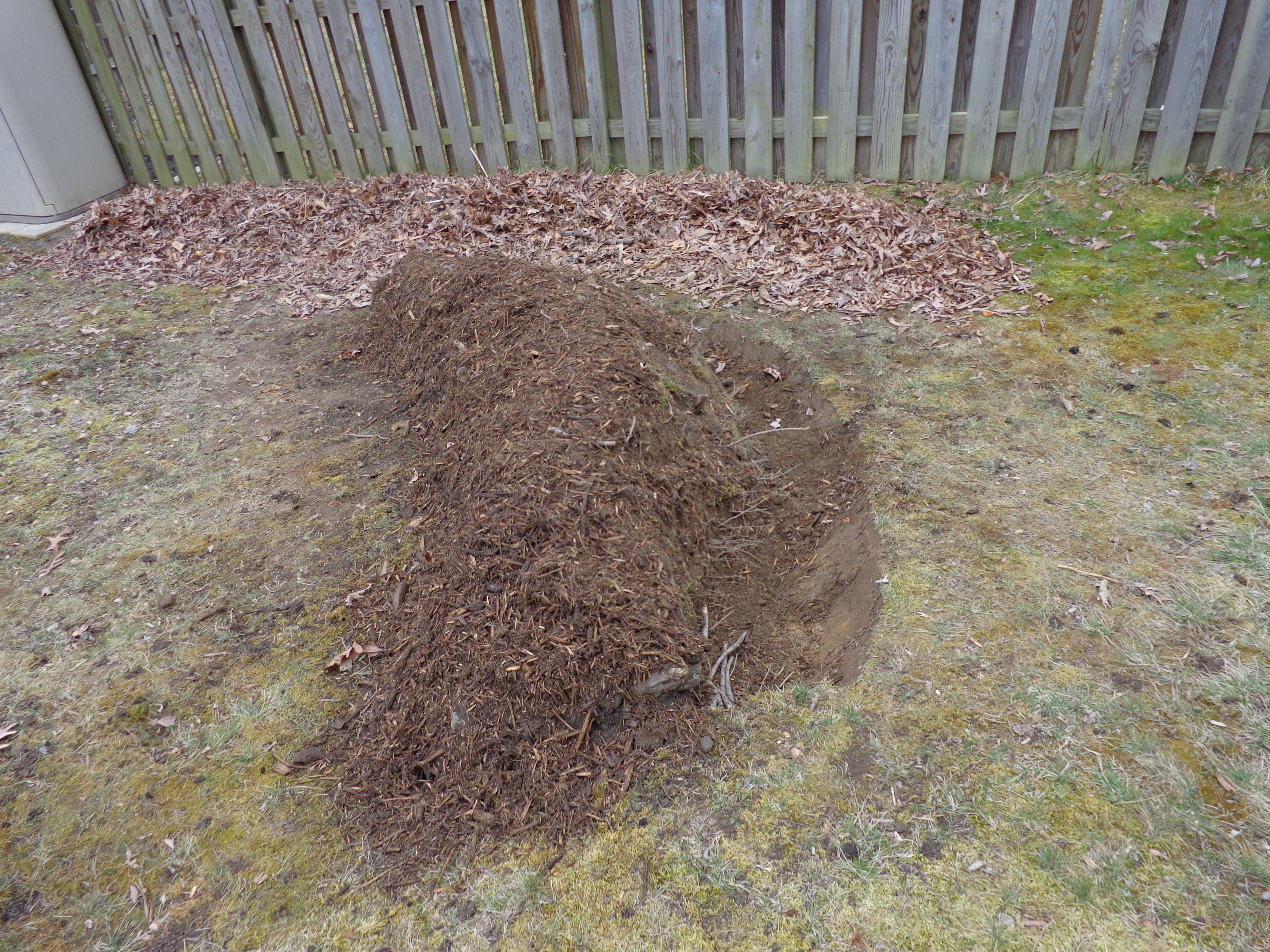
One month later……………….. fantastic vegetables
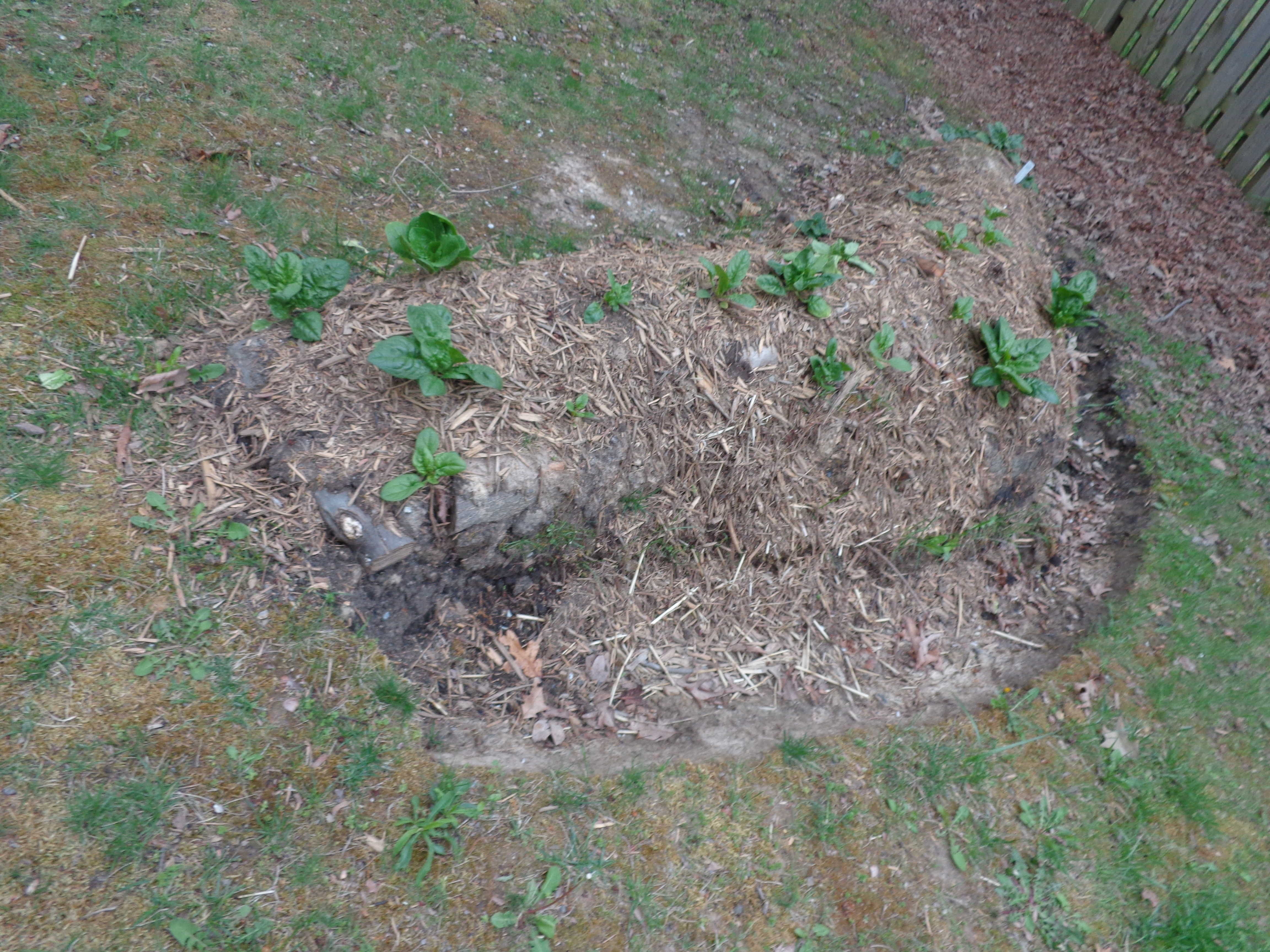
One spinach plant in my hugelkultur raised bed on April 25, 2013

April 25, 2013, below is a spinach plant I planted in the same original size as the one above, but into regular flat soil.
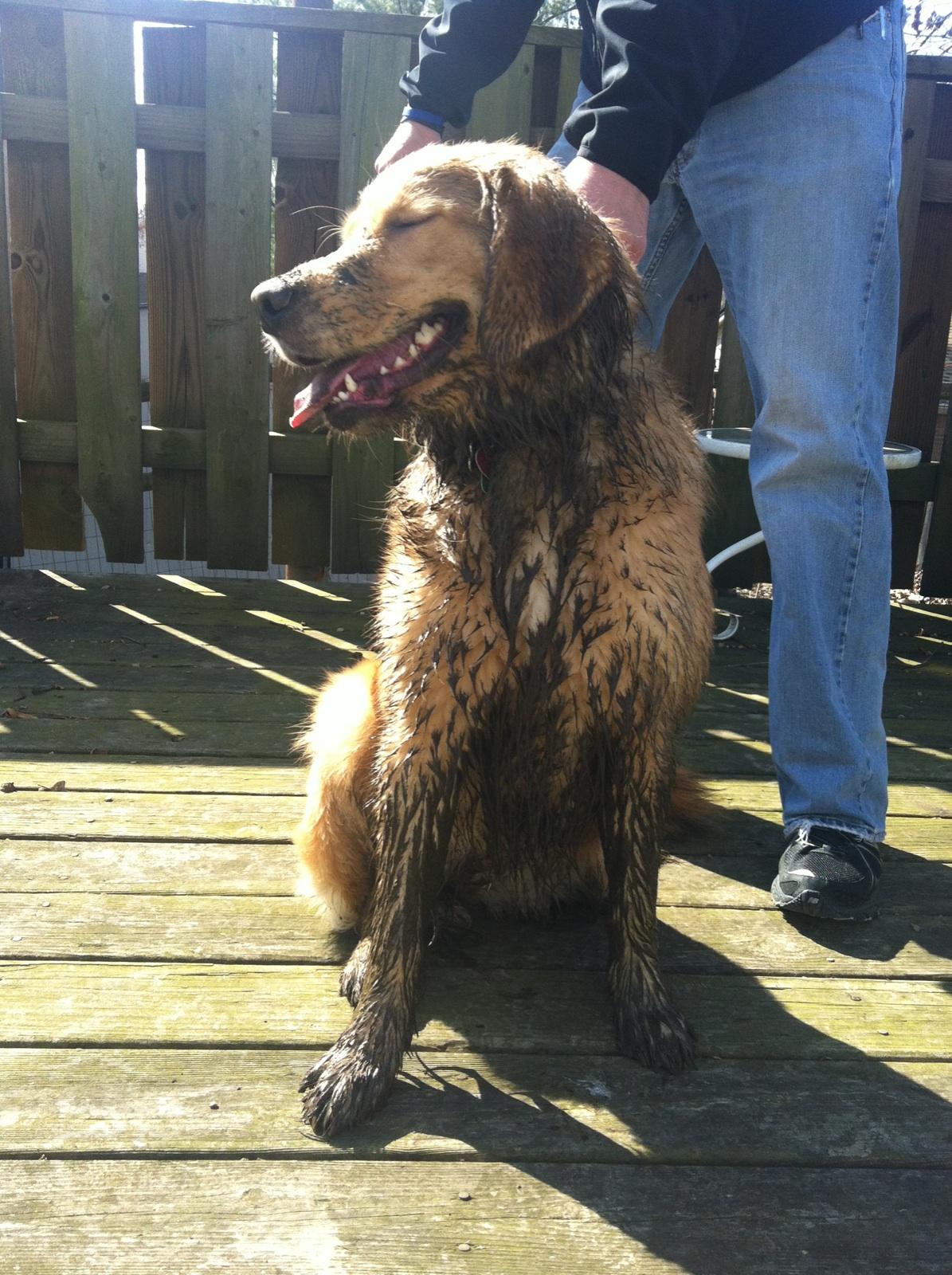
Of course, as the swale along the raised bed collects the rain water, it can be rather muddy after a nice rain.
Our friend’s wonderful golden retriever, Cameron, was playing in the garden one day and I got distracted and forgot the swale was muddy!!!!!!!!!!
Cameron has just found another use for the swale…………………………….
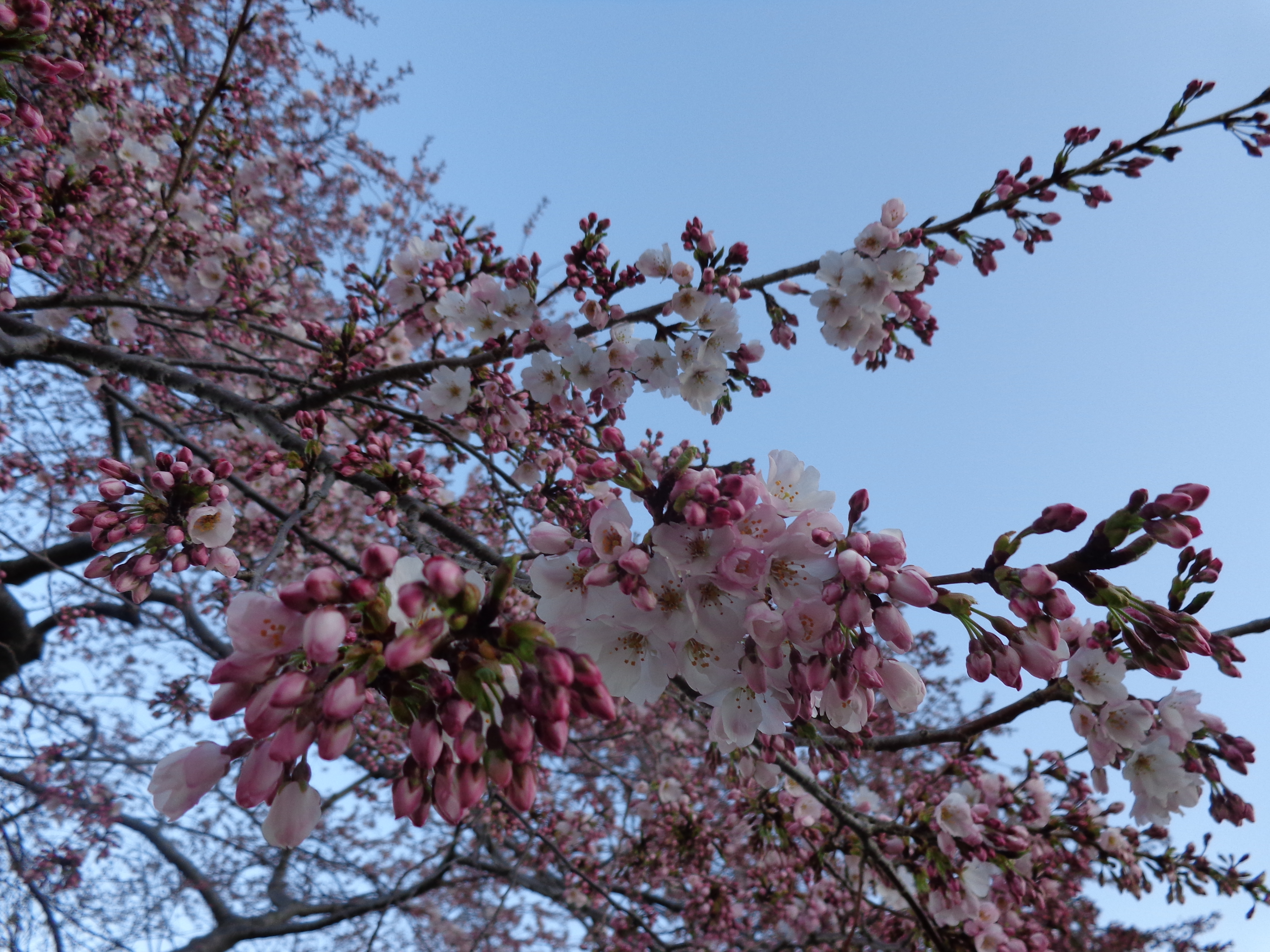
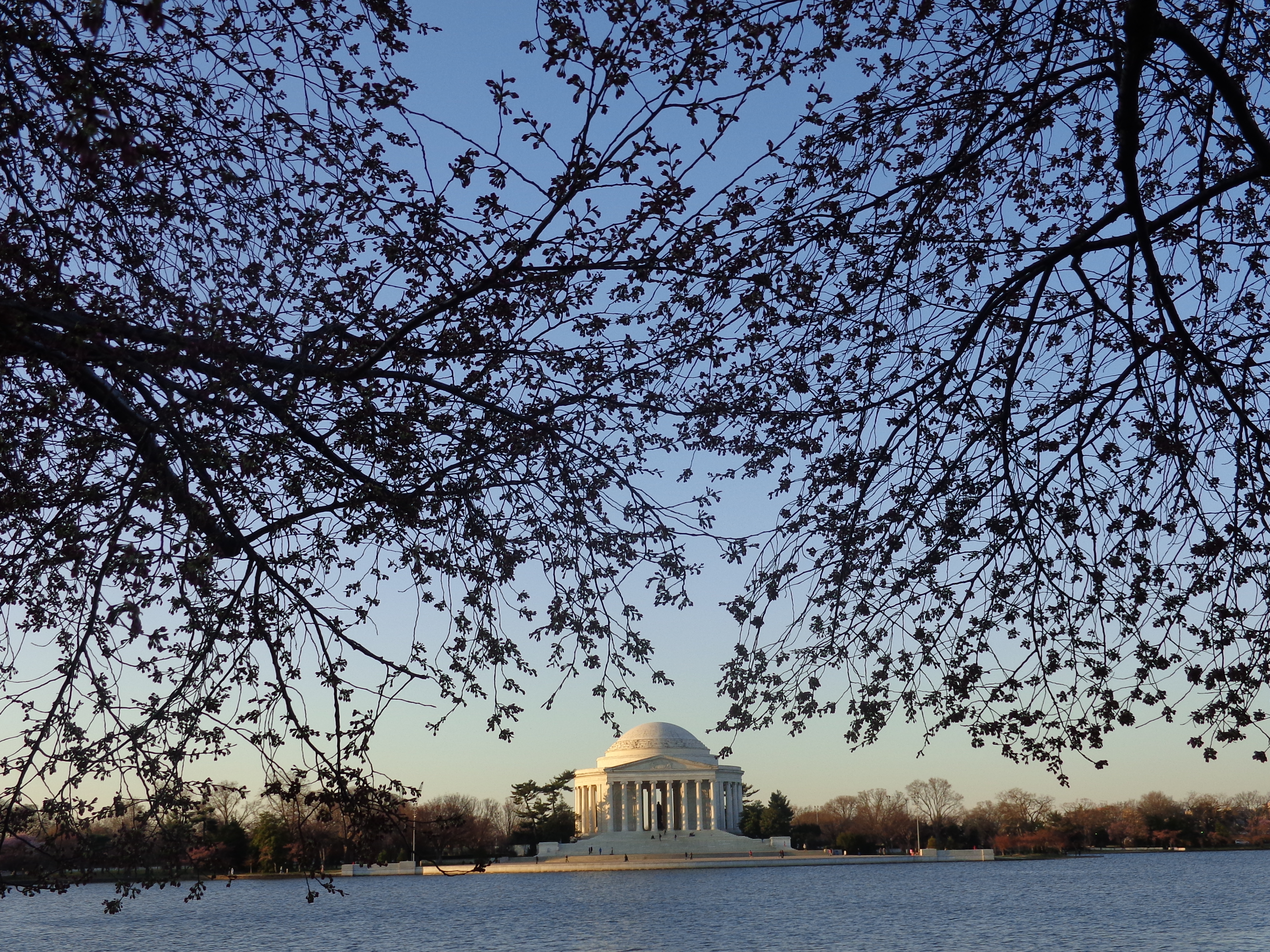
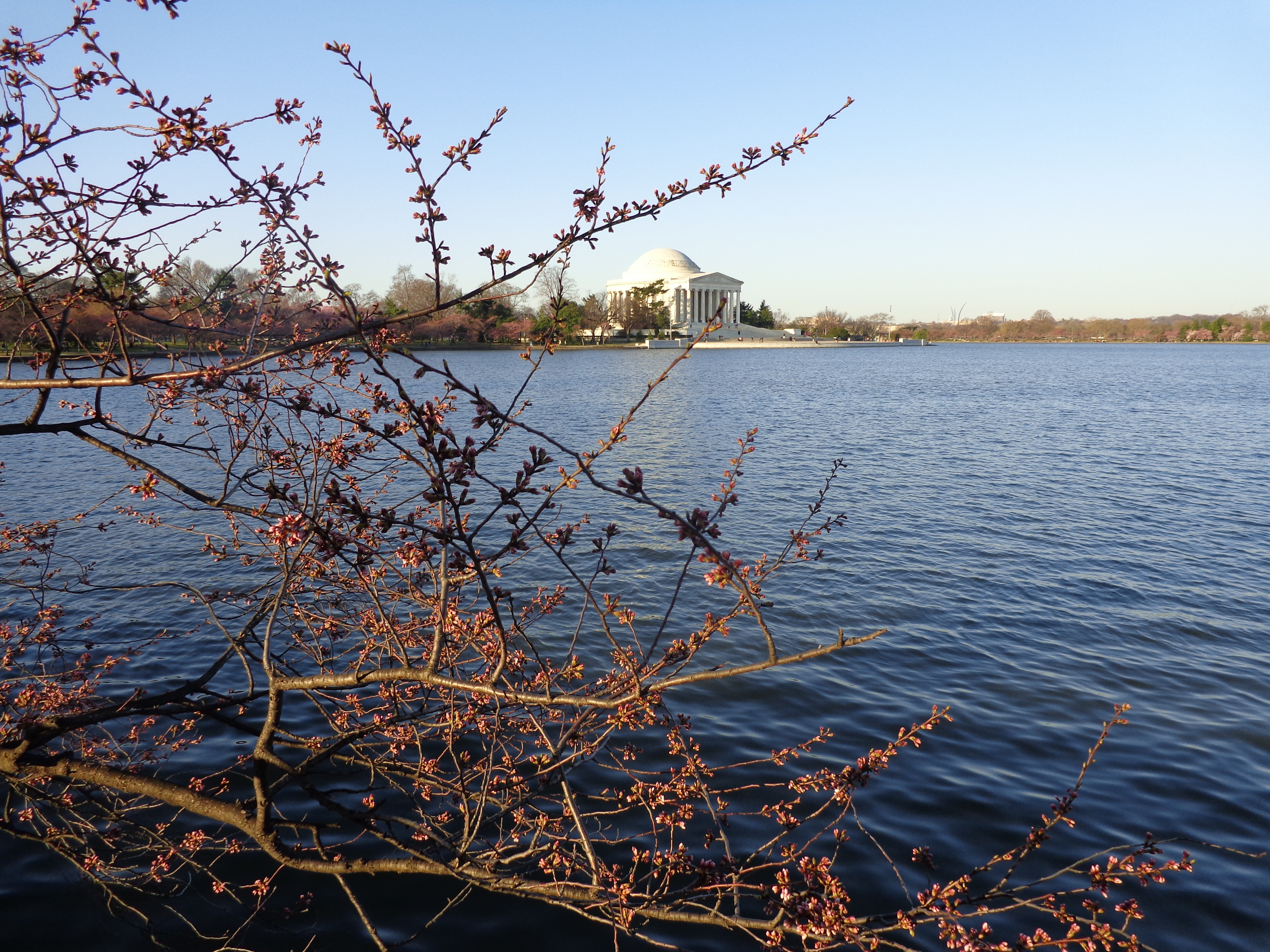
Each year, the Cherry Blossom in Washington DC, draws people from all over the USA,who come to enjoy the blooming of the many cherry trees adorning the perimeter of the Tidal Basin. As I knew the Cherry Blossom Festival would be starting this weekend, on Saturday, I decided to head to DC at sunrise, in order to beat the crowds. When I arrived in DC, I realized that due to the colder weather the area has been experiencing, many of the cherry trees were not blooming yet. I decided to enjoy a walk along the Tidal Basin and take in the natural beauty, enhanced by the silent and peaceful atmosphere. There were signs of the anticipation to what was to come and workers were starting to set up for the festival. Although only a few trees were starting to bloom, I was thinking of how enjoyable the whole experience was turning out to be. I could enjoy the natural beauty in silence. I thought of how crowded the event would become just a few hours later. I felt that although the trees were not in full bloom, their beauty, their suggestion of what was to come was just as beautiful.
As I walked along the waterfront, under the quiet, still natural beauty, I had a flash of one of my favorite Italian poems, Il Sabato del Villaggio by Giacomo Leopardi. The words of the poem, which I had memorized scores of years before, when I was a young student in Sicily, those words started running through my mind. I suddenly felt the message was holding true on what I was experienceing at that moment. The poem offers many metaphors about life. However, the theme that related to what was happpening to me at that moment was that often the celebration, the happiness tied to an event occurs in the anticipation of the event and not in the event itself. As I breathed the anticipation of what was to come on that Saturday morning I felt so happy inside and surrounded by beauty. I thought how much more enjoyable this experience was than finding myself caught up in the suffocating crowds that would be visiting that same site just hours later.
Tidal Basin – Jefferson Memorial

Cherry tree starting to bloom

Peaceful beauty before the crowds arrive

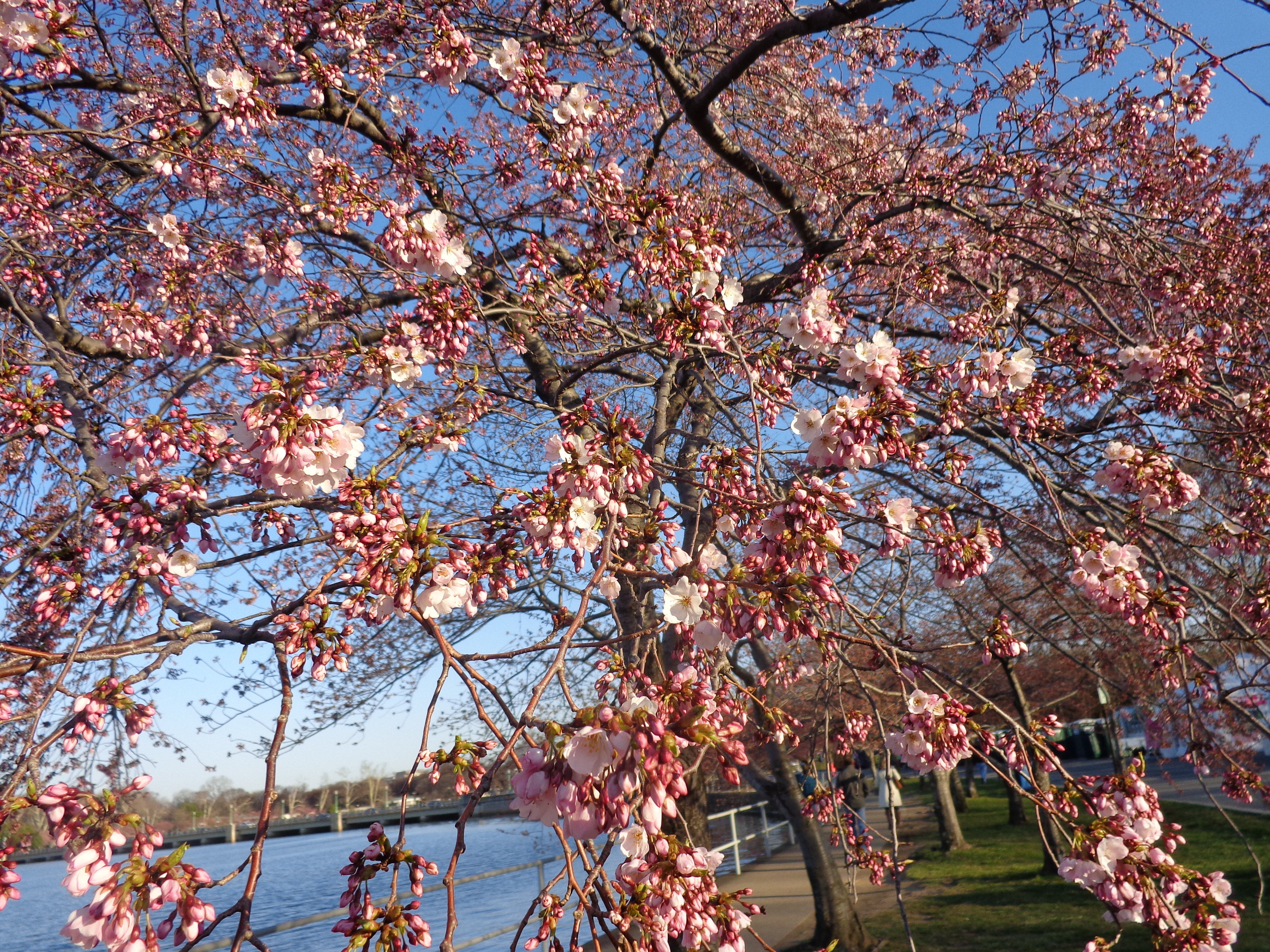
You can see the Cherry Blossoms in full bloom in this blog in a post of Spring 2012. At that time, as I was in Sicily, my neighbor Ann sent me the pictures which I posted.
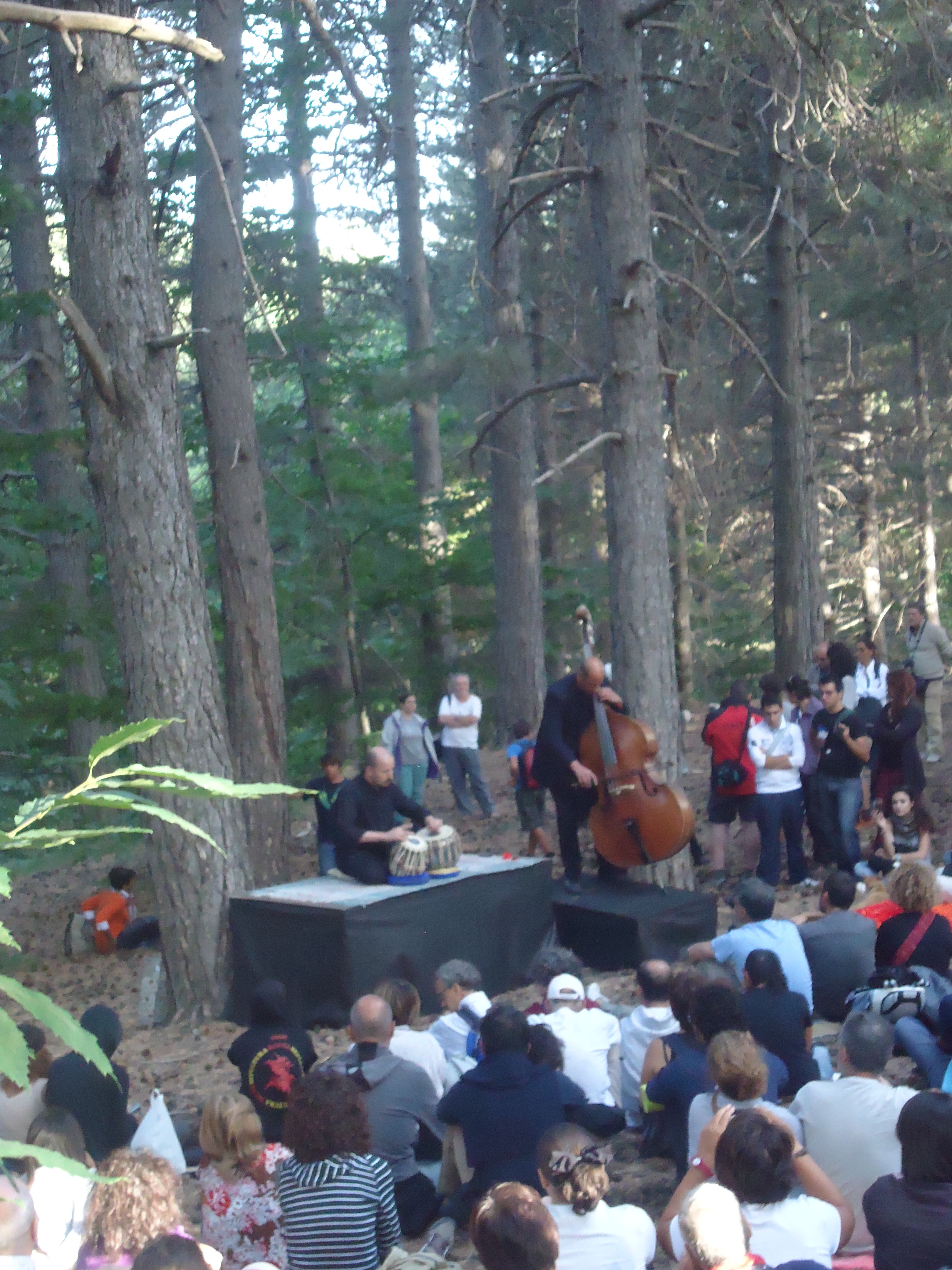
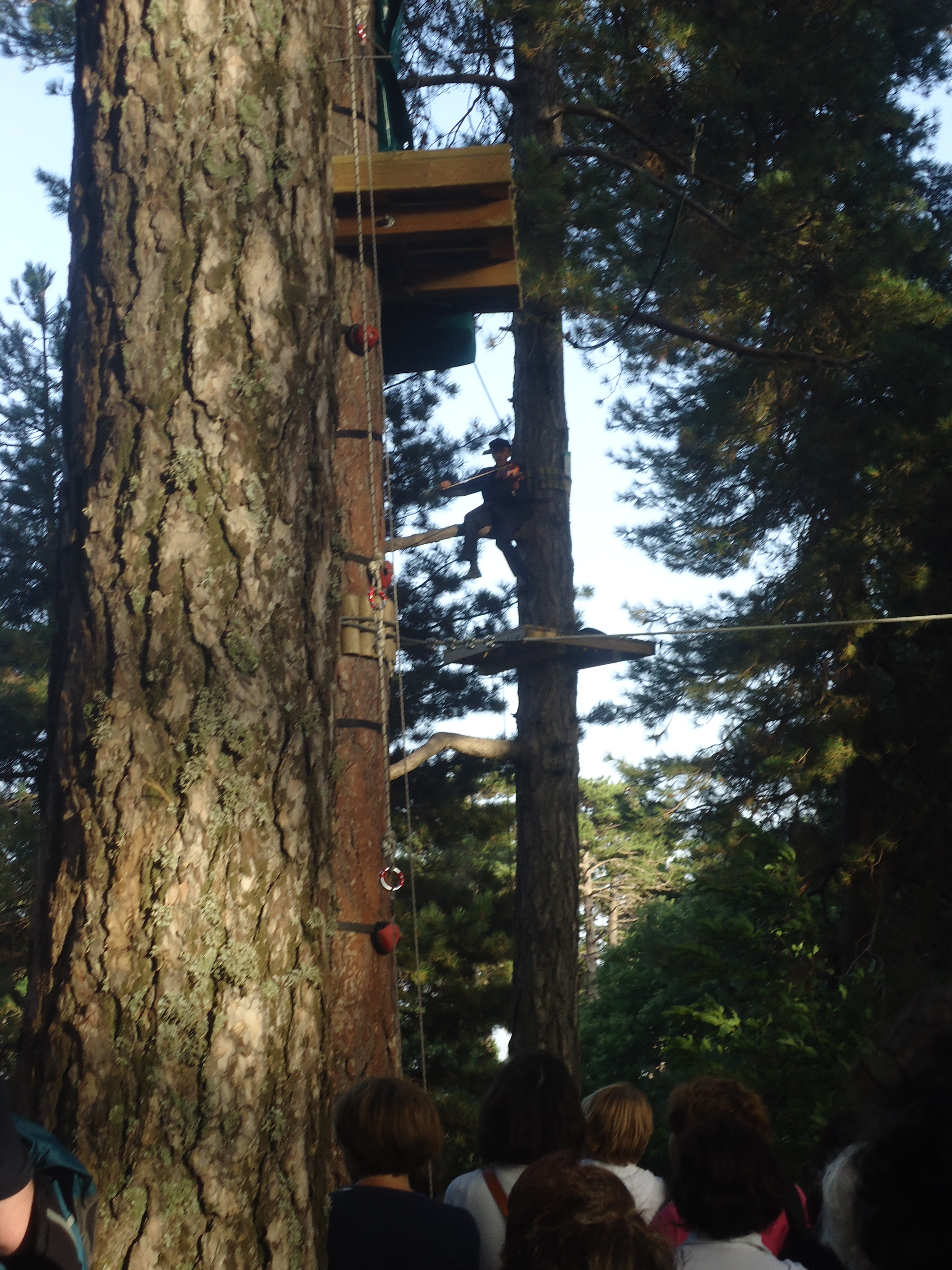
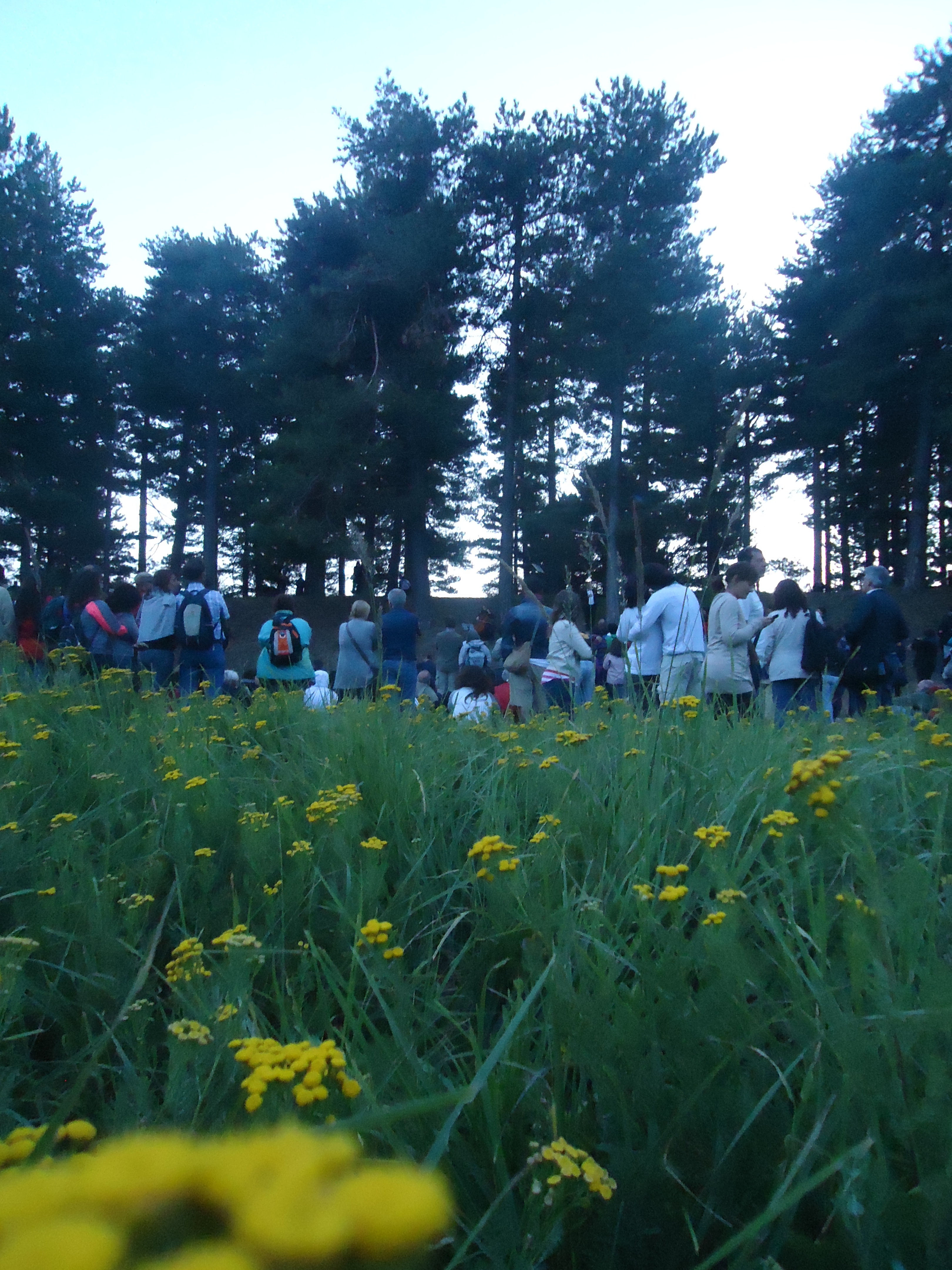
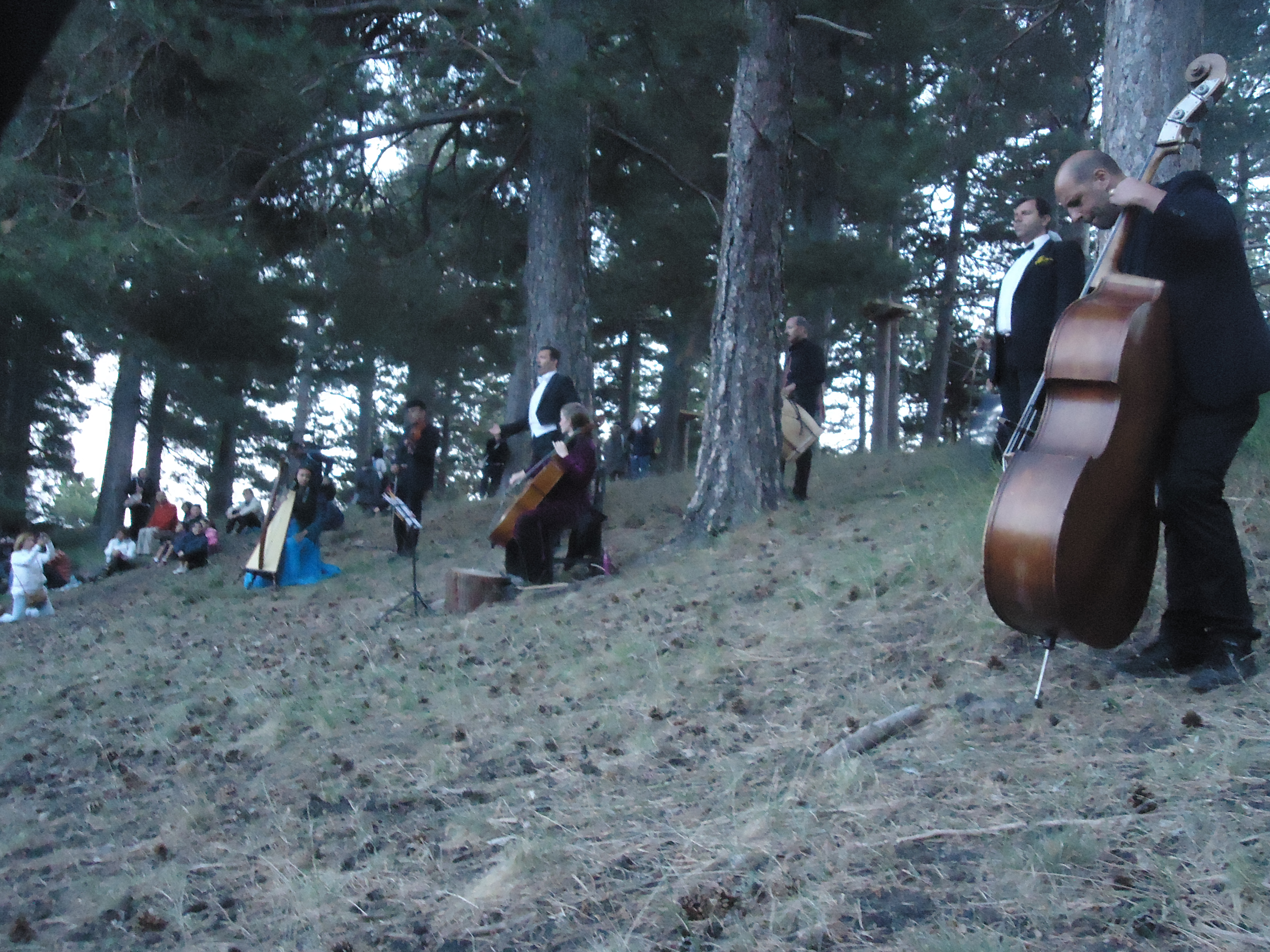
The towns on Mt. Etna offer a variety of opportunities to enjoy the performing arts. The pictures below were taken at the end of summer, when I attended a program in the woods on Mt. Etna, close to Nicolosi. During the program, which took place at sunset, there was story telling and music. At closing, the moon made its appearance!
Fiddler on a Tree
Moon
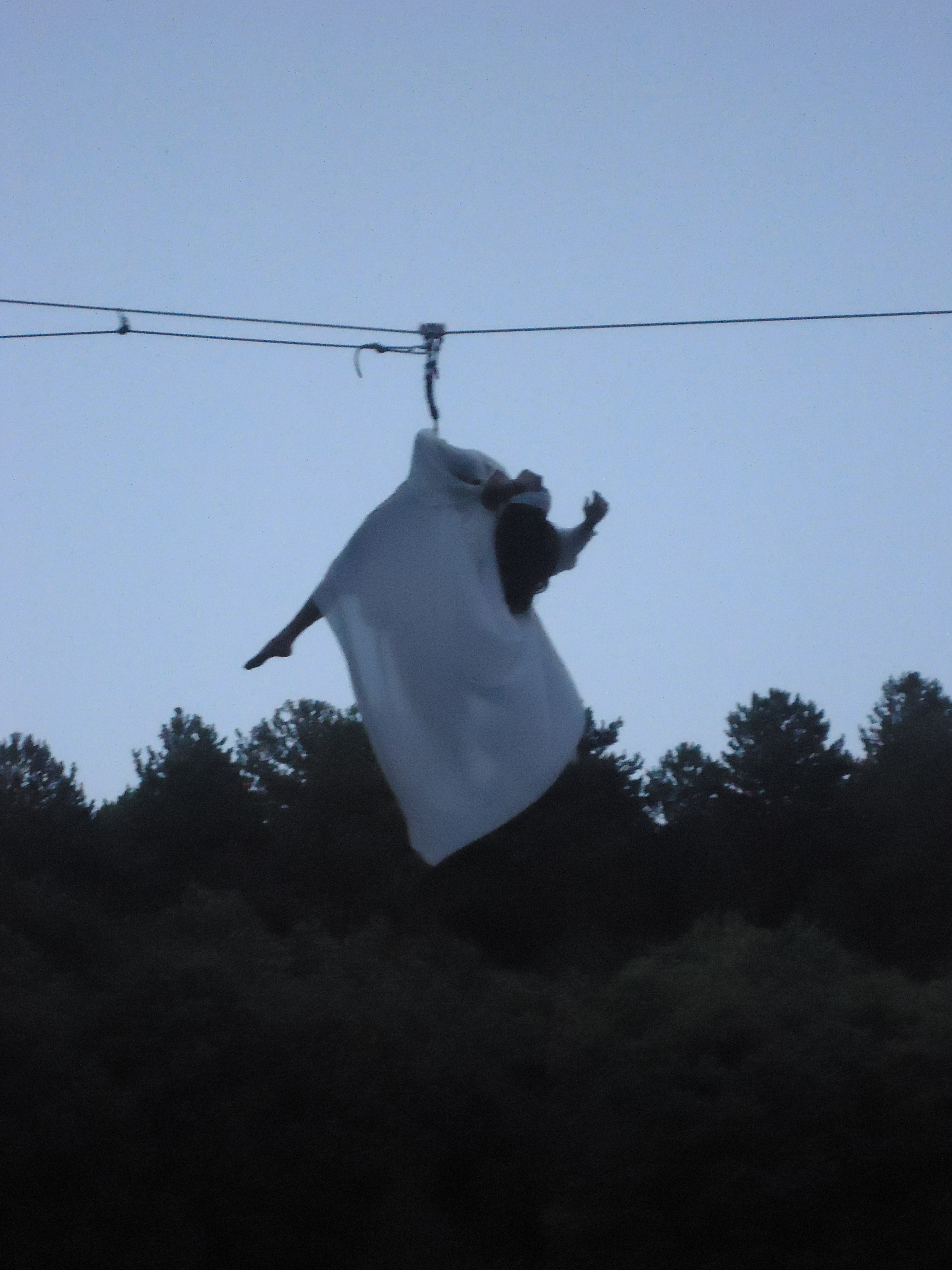
Leaving the woods
Just a few pictures of the coastline south of San Fransisco, California.
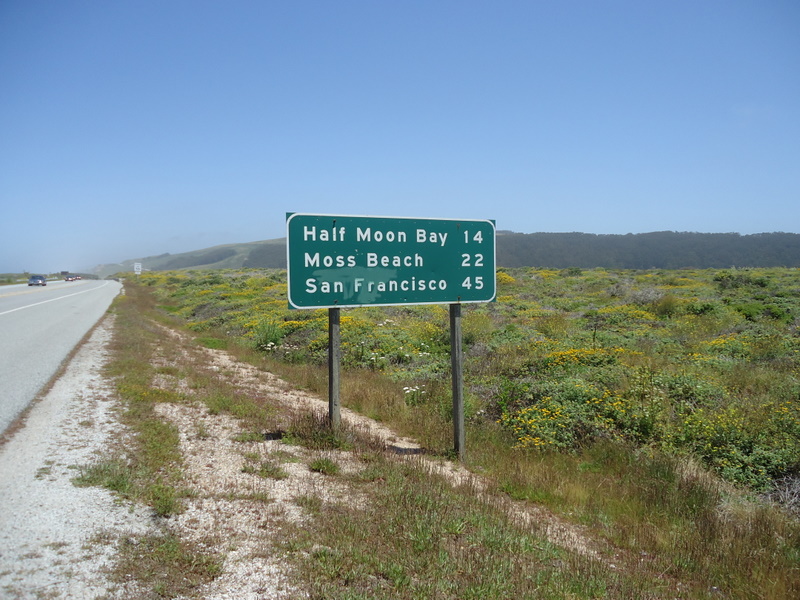
Half Moon Bay

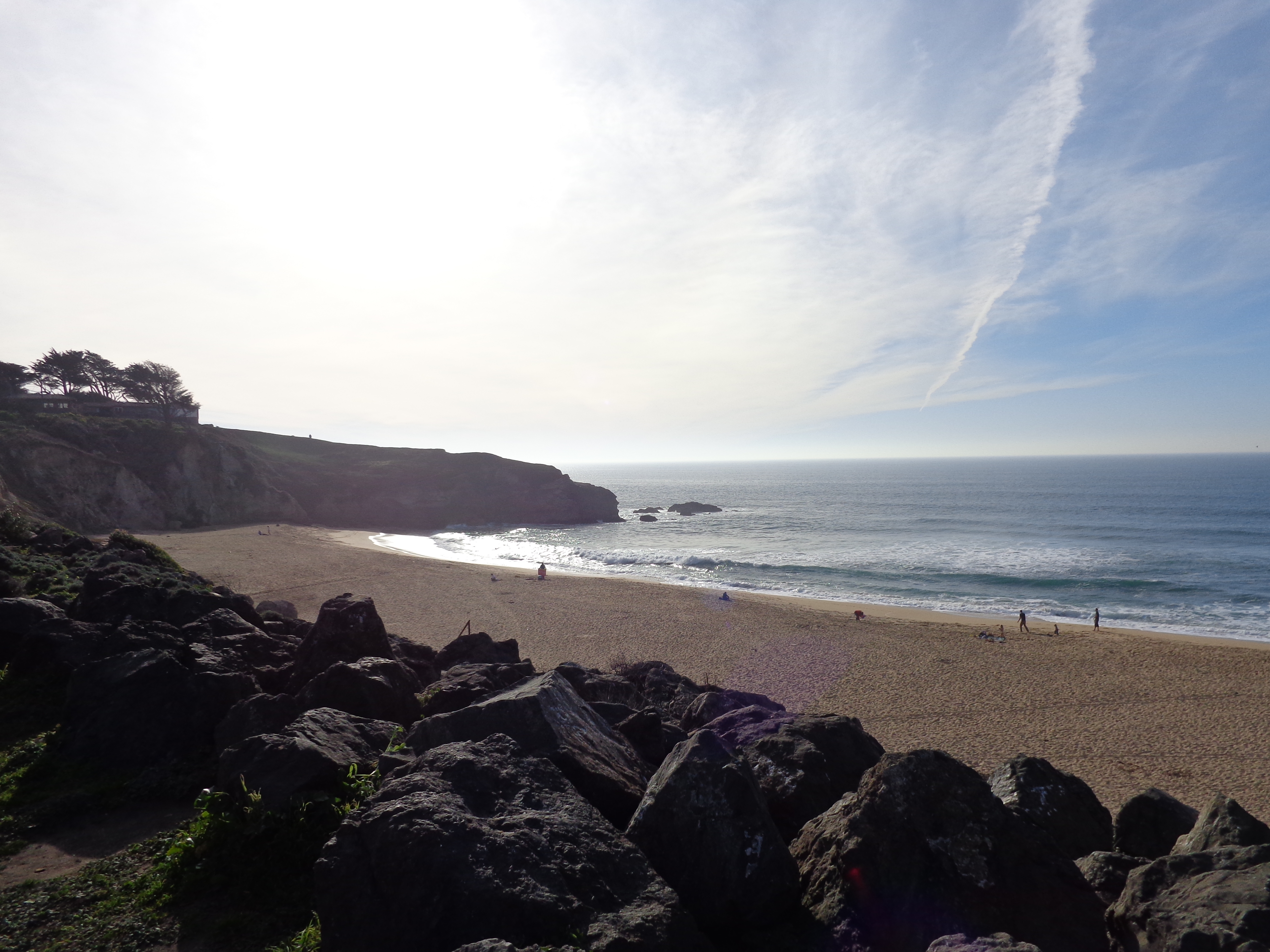
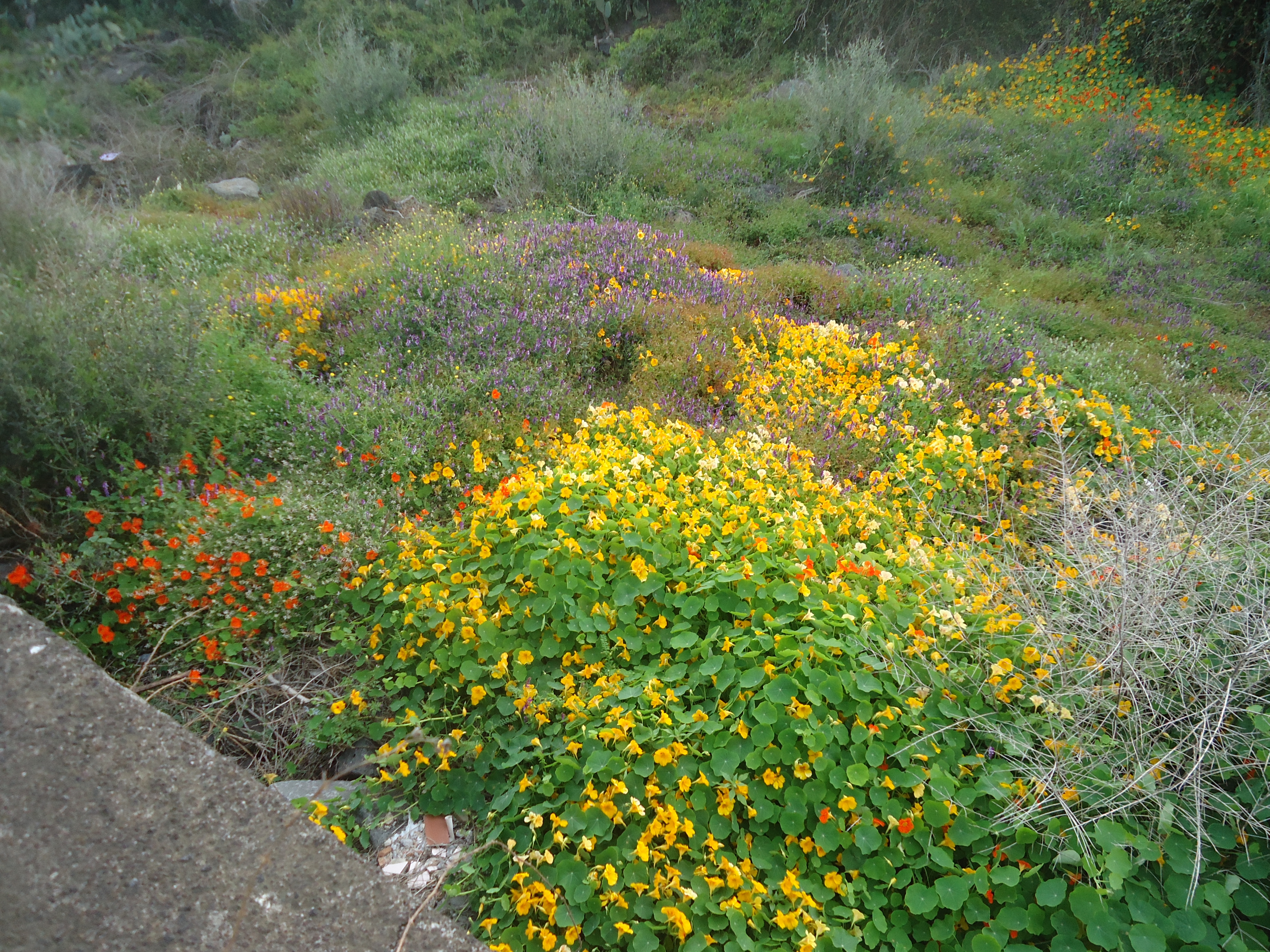
And the Wild Flowers along the California coast remind you of the ones close to the coast in Acicastello, Catania, Sicily
California Flowers
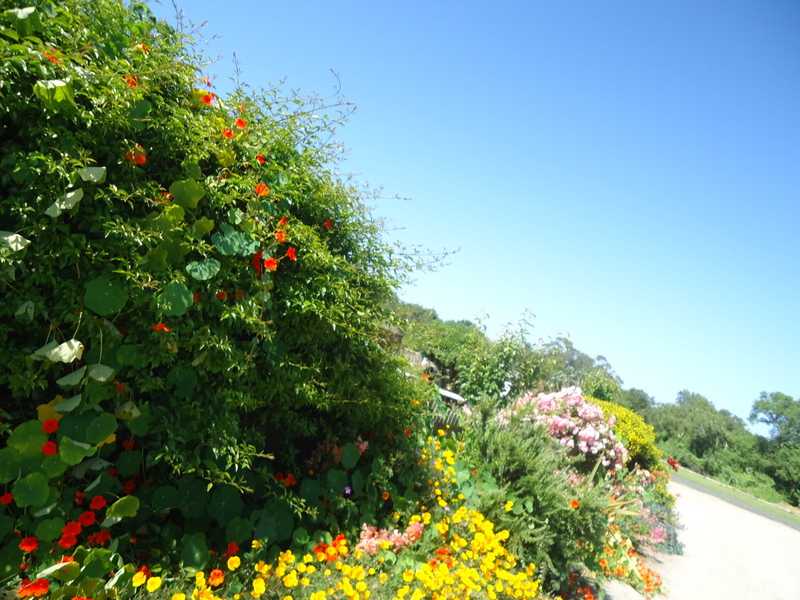
And below are Wild Flowers along the Coast of Acicastello, Catania, Sicily
Sicilian Flowers
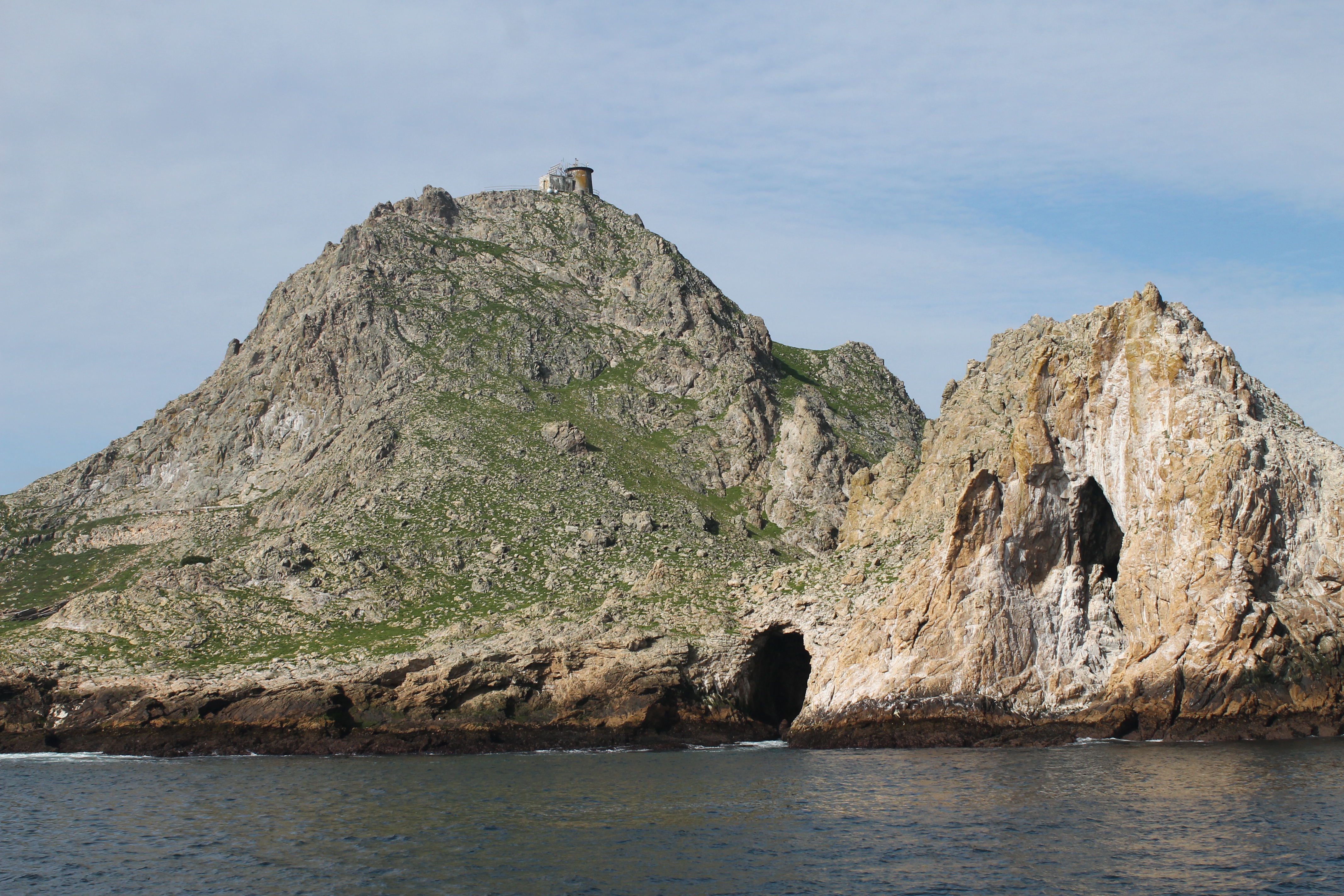
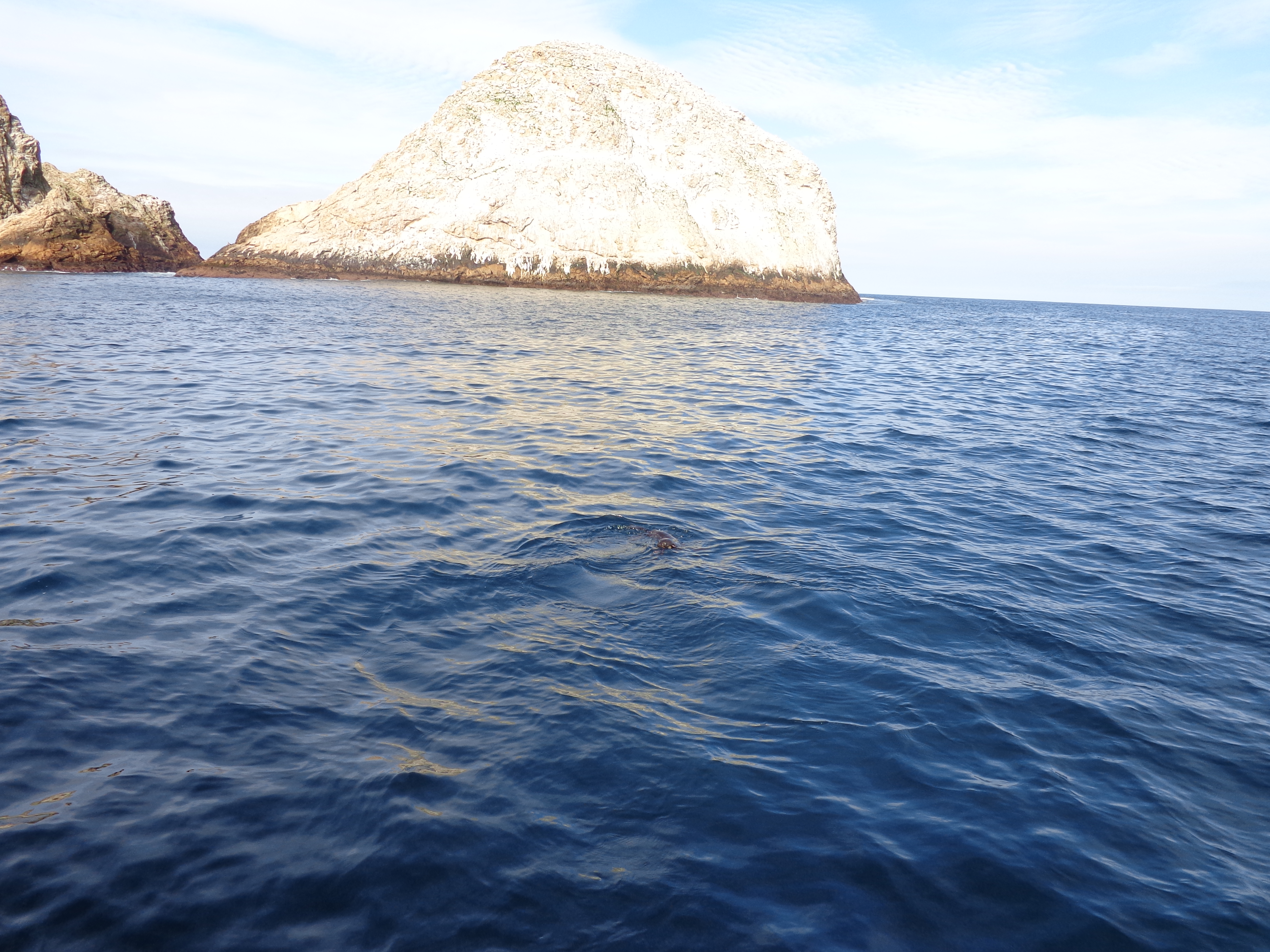
Farallon Islands 20 miles off the coast of San Francisco
Seals and sea lions are marine mammals which simply fascinate me! In 1995, immediately after visiting the Monterey Aquarium, I stepped out on a large wooden deck overlooking the coast and was mesmerized by the concert provided by the marine mammals basking in the sun. It was the first time ever that I encountered such creatures in real life. Then, in 2011, while walking along the Piers in SF, I ran into those animals again and just sat on a dock in awe observing them quietly as they carried out their usual activities. However, just the other day, back in California, I had an unexpected close encounter with them.
While riding a catamaran on an excursion to visit wildlife 20 miles off the coast of SF, I was pleasantly surprised to learn that four marine mammals were indeed traveling with me. They were one Sea Lion and three Northern Fur Seals, which had been rescued three months earlier at various areas along the coast. They had been found in pitiful conditions, for example, one just covered in tar! The Marine Mammal Center, a non profit based in Sausalito, had rescued them and after providing much needed care and rehabilitation, the marine mammals were now on their voyage to return to their natural habitat. They were pups. By talking to the caretakers, it was obvious the wonderful care the animals had received; furthermore, the caretakers were willing to share some stories and explained the steps taken to ensure the marine mammals experienced no attachment to their caretakers or to any other human, so their return to their natural habitat would be easier. Of course, during the rehabilitation months, the animals had also practiced the survival skills they needed to return to live in the wild.
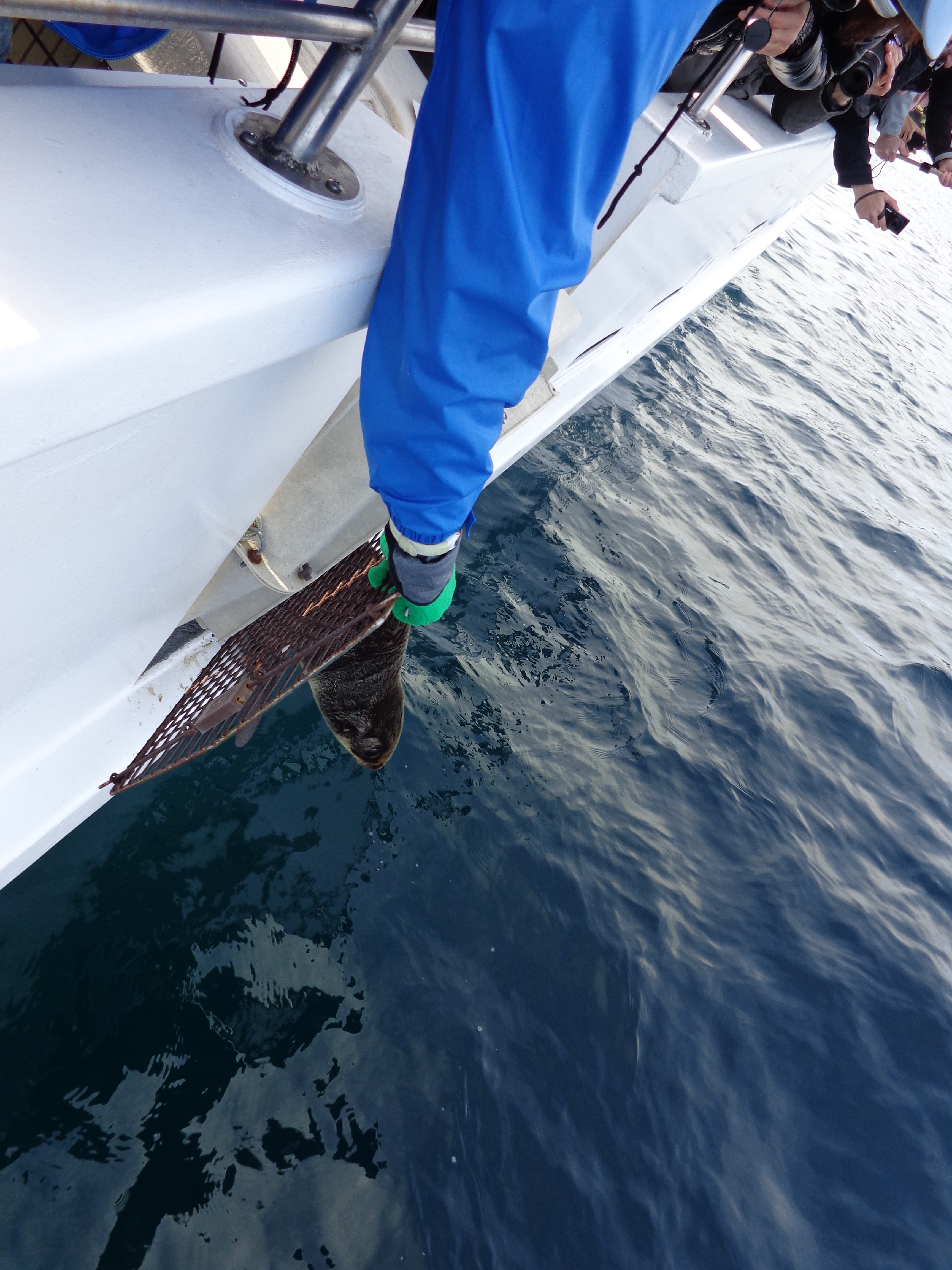
So, as we reached the area around the Farallon Islands where they were to be released, all present watched in silence. One by one, the kennels were opened onto an open doorway on the catamaran, and each mammal gently encouraged to exit the kennel.
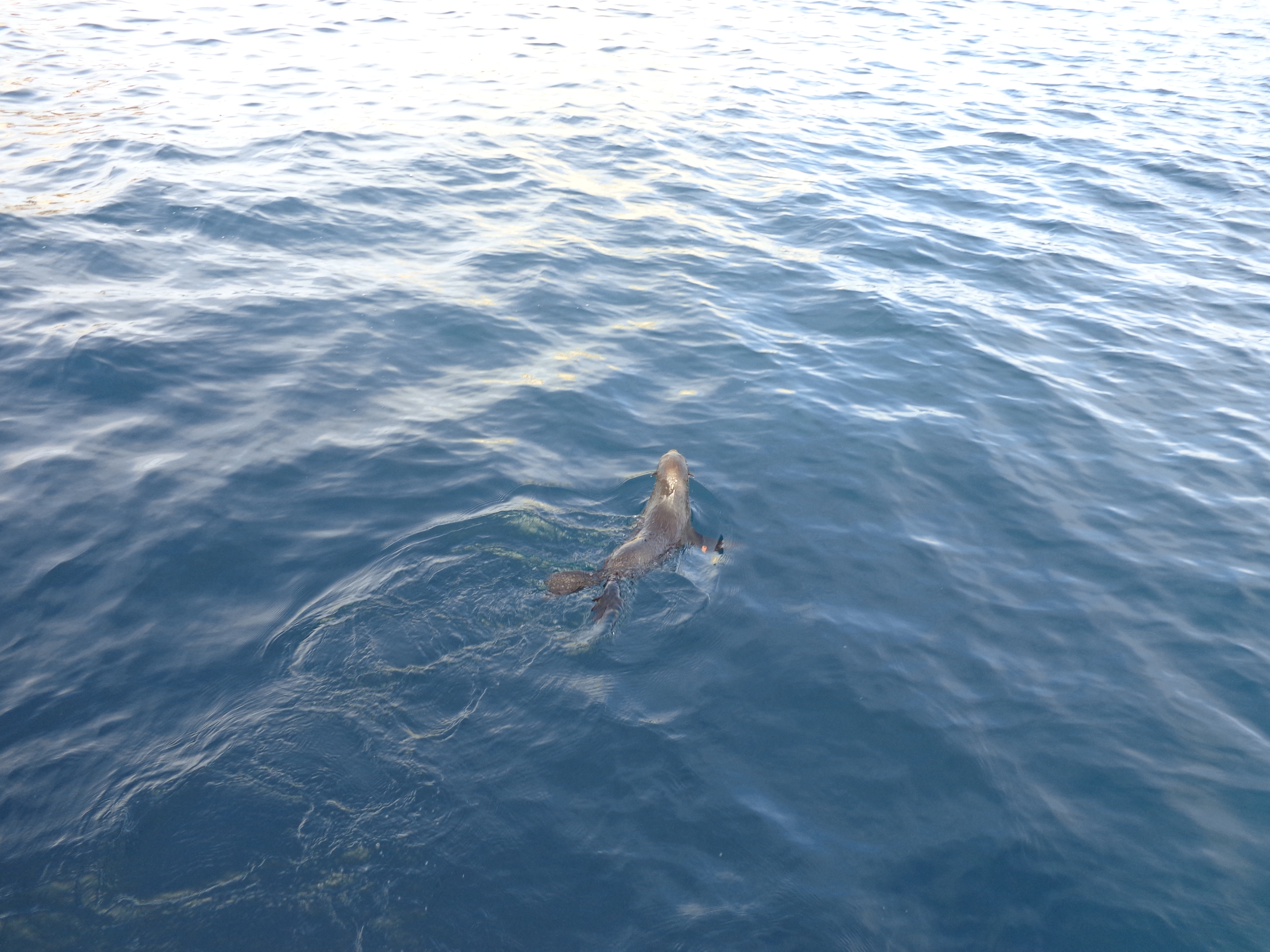
All aboard quietly watched the mammals swim away. After it was all over, I stopped to talk to the caretakers who had carried out the release and learned the names the mammals had been given during their rehabilitation time; those little ones swimming to freedom were Goldsby, Eggnog, Sassy Sasquatch and Little Gobbler!!!!!!!!!!

Some locations captured on camera during a recent visit to San Fransisco…………..

Dolores Park in Mission

Walking around and through Little Italy
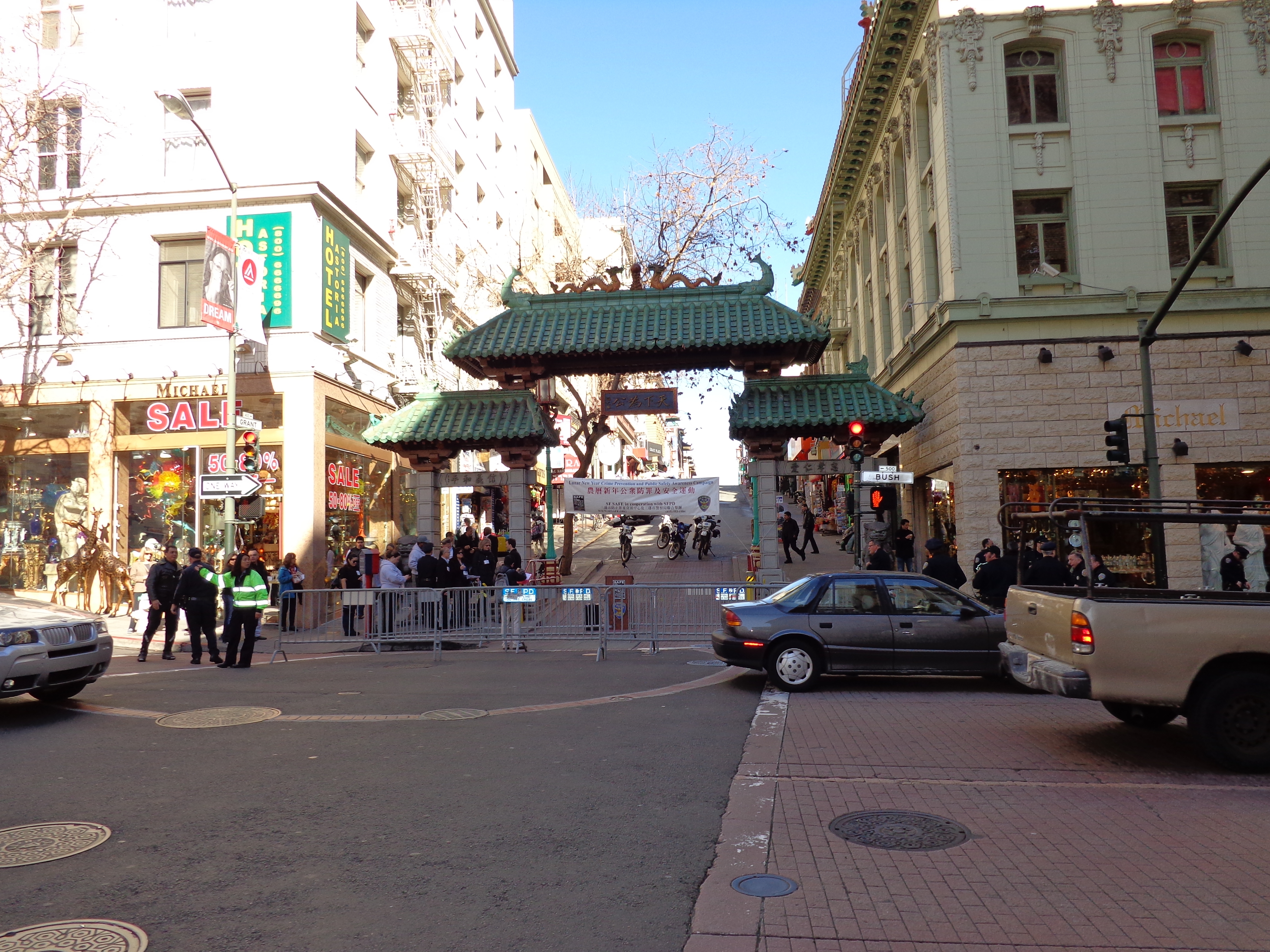
Approaching Chinatown

Walking up and down Lombard Street


Sailboats racing in the Bay

SF seen from its hills
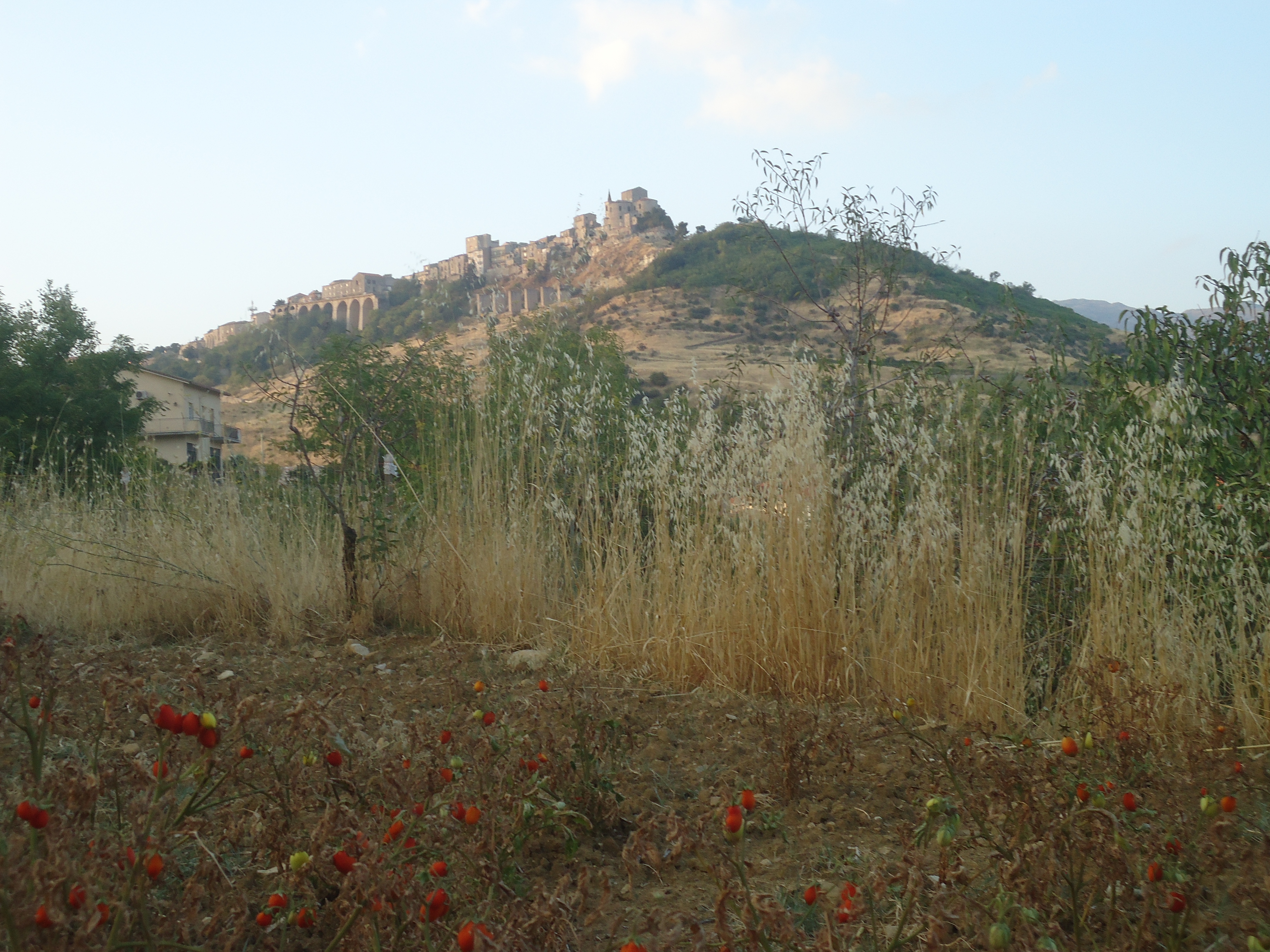
Teachers never stop teaching – They just switch audience!
I start this new category on the stories I have heard in the course of my explorations around Sicily from people that I just happened to meet, but that have left an impression on me.
During my visit to Casa Madonnie, on the Madonie Mountains, while visiting Calogero, I met a lovely 81 year old lady, his mother, Pina. During my visit, I had several opportunities to interact and talk to Pina, and was intrigued when I learned she too had been a teacher. While we were talking, I realized she had that “inner greatness” and that I wanted to hear her story and share it, thus I got her permission to do so.
At first, Pina told of the times, sixty years ago, when she started her teaching career in that remote area, right there in the middle of the Madonie Mountains. She spoke of the challenging circumstances she endured and her story certainly proved to me that it was her will to succeed, her perseverance and strength that made it all work out for the best.
Pina is 81 years old today and she is such an interesting and charismatic lady that her spirit still brings joy to those around her. As we sat at her kitchen table, I asked how she had started her teaching career and immediately Pina started sharing her story. She started her teaching career in that mountainous region of Sicily where transportation from one area to another was certainly a challenge sixty years ago. In order to acquire any teaching assignment, teachers needed some experience which would give them credentials. Consequently, Pina started as a substitute teacher in the areas surrounding Petralia, her hometown.
As a substitute teacher, she would travel seven kilometers to teach. At times, she walked a good part of the way, but she soon had a friend who would give her a ride on his motorcycle. Soon, she realized she needed to acquire experience as a teacher with her own students so she sought her own students. After finding a group of students to teach, she started teaching and would go to their homes to teach. She was not paid during the assignment, but would get paid only at the end of the assignment, after the students passed an exam, which was given formally by an official of the school district. By teaching this way, the teacher earned the credits required to obtain her own teaching assignment in a school.
The following year, Pina got a teaching job in a town called Verde, 15 kilometers away from her hometown. She was so proud to recount how she travelled to the town on horseback, with her infant, both wrapped in a cape. At this point, I couldn’t get the picture out of my mind: A mother and her infant, both wrapped in a cape, riding a horse across the mountains! It was at this point of Pina’s story that I realized what a strong woman I was talking to and the richness of her life experiences. Pina told me how she rode the horse for three hours across the mountains and felt triumphant when she entered the town. Her word choice emphasized the sense of pride she still feels today in recalling the experience. In that assignment, she was teaching a total of ten students and they all ranged from first to fifth grade. Everyone worked together in a one room schoolhouse. Pina’s husband collaborated, as he taught History and Science, whereas Pina taught all the other subjects. Pina slept in the classroom and she explained how the effort was put forth by all the families of the students and how they would help with the caretaking of the infant and provide food and any other necessities for the teacher. Pina stayed in that place for months and it was at Easter that she returned for the first time to her home in Petralia. On that first trip home, she recalled, she rode with her husband, on a motor-cycle. When they rode home, there were four passengers on the motorcycle!
At this point, Pina explained that the motorcycle they were riding was a Harley, which had been left behind at the end of WWII by the American troops. As Pina explained some details regarding those times after the world war, she mentioned that when the war was over and the Germans and Americans had left, their vehicles quite often were left behind. The locals would then take these vehicles and fix them to use as transportation. Consequently, there were German DKV motorcycles and American ones available as the Harley Pina rode at that time.
After completing the academic year in Verde, Pina returned to the town adjacent to her hometown and taught there, in Madonnuzza. There she lived in a building she showed me, which used to be a clinic run by her uncle. Uncle left his practice in Madonnuzza and moved to the United States, exactly New Jersey, where his family still lives today.
Looking back, meeting and talking to Pina was a great pleasure and made me realize there are so many Sicilian stories to discover and share. As I travel off the beaten path, I realize how challenging life was for so many when transportation was surely not as accessible and easy as it is today. As I was parting from Pina, I learned that she is a writer and has written many of her own stories and poems to pass down to her family. What a lovely gift to have met her and I look forward to seeing her again when I return to Petralia.
During my explorations of Sicily, I have had the pleasure of meeting people committed to innovative practices, to promoting sustainable lifestyles and one of these is Serena. I met Serena at one of the farmers’ markets I love attending, some years ago, and then had an opportunity to interact with her and build a friendship. I volunteered on the APE project Serena was carrying out in February 2012 and wrote about it in Spring 2012, the title “Classroom in Nature.” Through this project, I had the opportunity to get to know Serena, spend time with her and her family, and realize how much she has done and still does, on an ongoing basis, to promote sustainability in Sicily. Serena is also one of the founders of the Cultural Association Siqyuillah and is constantly involved in projects that see her working in networks to bring awareness on sustainable practices in Sicily. Among other projects, over the past few years, Serena has been instrumental in putting together courses in permaculture to promote its practices in Sicily.
Serena lives in Furci and runs her own B&B, La Zagara, in that town, together with her mother, Rita. Furci is a quaint little town on the Ionian Sea Coastline, north of the city of Catania; the beach stretches along one side of the town. I stayed at the B&B La Zagara while working on APE and experienced, first-hand, the warm hospitality one finds there. Rita and Serena offer authentic Sicilian hospitality, which makes one feel “at home”, and I personally enjoyed delicious culinary creations prepared with that special touch. Breakfasts include homemade jams and marmalades made from the fruits Rita and Serena grow in their organic garden. At the B&B, http://lazagarabeb.wordpress.com, guests can choose to stay in one of the rooms available or have one’s own apartment with its own kithen and bathroom facilities. I stayed in one of the apartments with the other volunteers and at night we all enjoyed cooking typical Sicilian dishes, enjoying those cooked by Rita, and sitting around the fireplace sharing stories.

The town of Furci is a quiet coast town. Each time I have visited the town I have been pleasantly surprised by its peaceful atmosphere, one in which the visitor can sense the easygoing lifestyle of the local people.
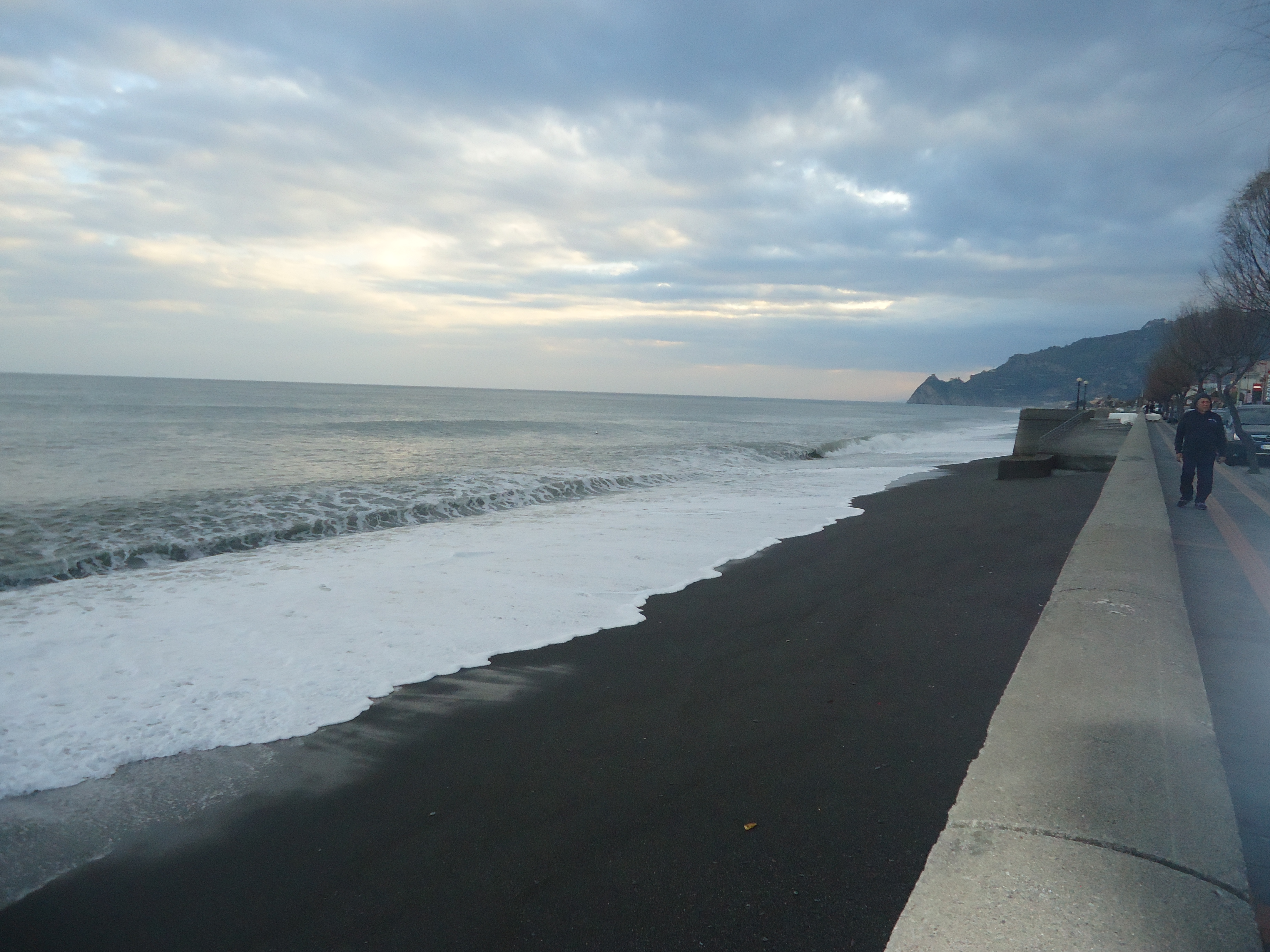
Furci Coastline

A short drive from Furci, up the mountains, one reaches Savoca, a town perched on the top of a mountain and famous for its catacombs and the locations where scenes from the movie “The Godfather” were shot. The town has paid tribute to Francis Ford Coppola as he chose this town as a location for his movie.
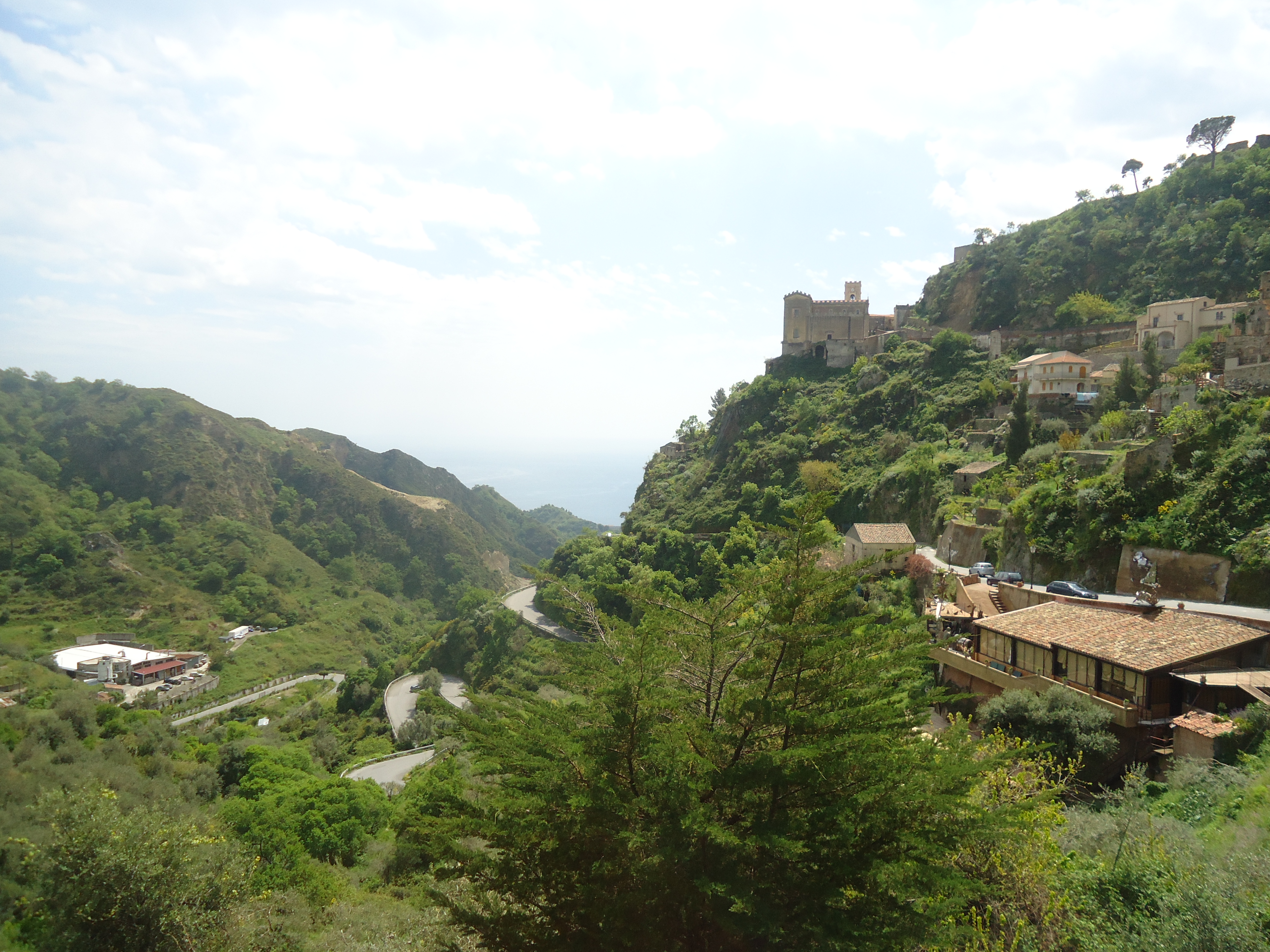
Town of Savoca Perched up on Mountain Dominating Coastline
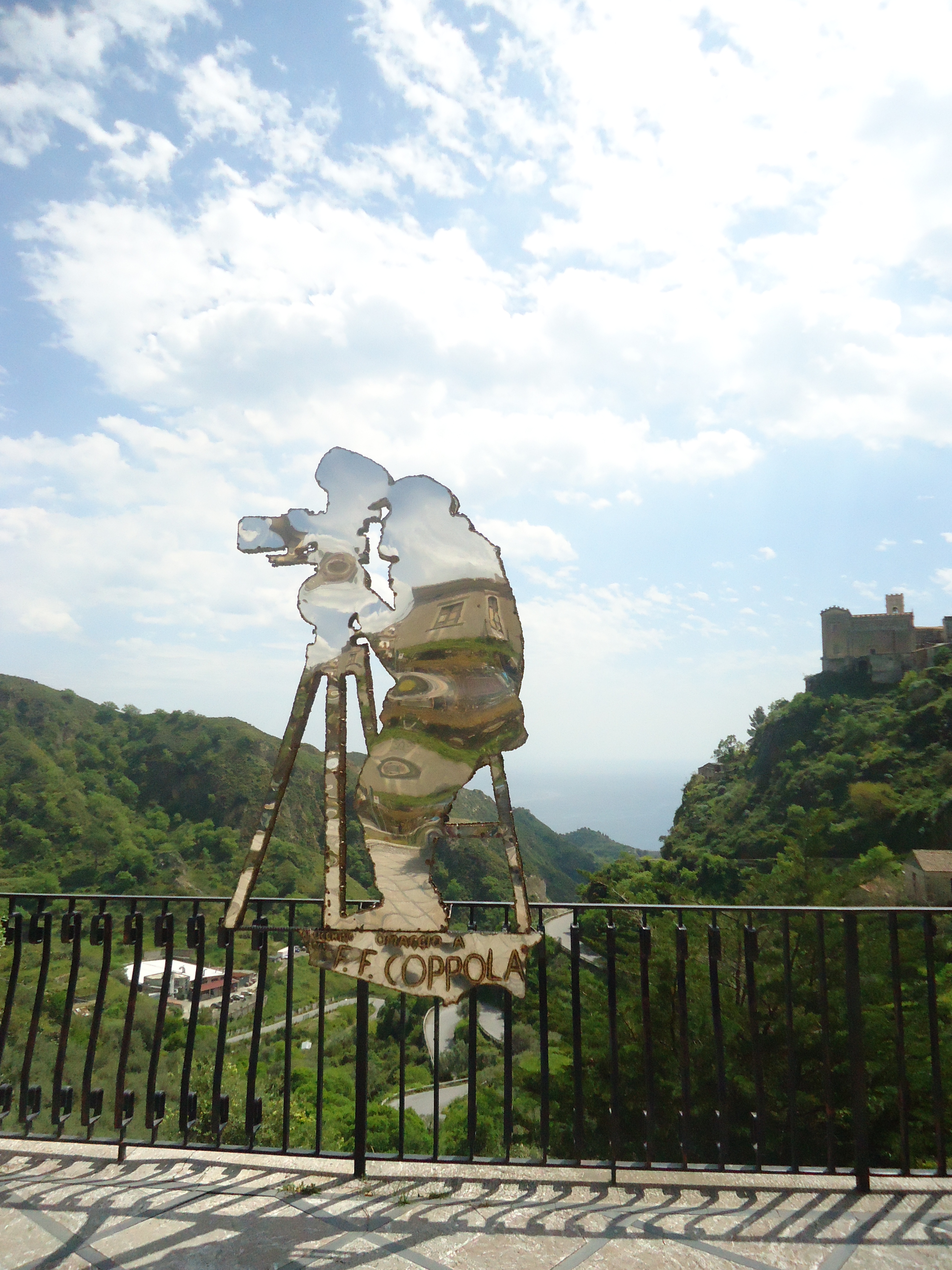
Artwork as Tribute to Francis Ford Coppola
Not far from Savoca one can drive up to Forza d’Agro’, with its breathtaking views of the coastline, and then there is Taormina, dominating the coastline from above, its Greek Theater and majestic views of Mt. Etna in the backdrop.

There is obviously much beauty in Sicily, both in its natural landscapes, which unfold their many layers to the exploring visitor, as well as in its people, who are true examples of warm hospitality!
The Pescheria in Catania, the fish market, which takes place every day Monday through Saturday, is one of the daytime attractions and is frequented by regular locals and also by so many visiting the city. A visit to the market is an experience in Sicilian folklore. There are vendors promoting their products and trying to get the attention of anyone passing by and there are people just hanging around watching. Many local people have their own vendors they trust and buy their fish from and a newcomer should best shop around.
Fountain at the main entrance to the market coming from Piazza Duomo

At one point, I saw these people watching from above and wandered what was happening. I soon realized they were just hanging out watching the people interacting in the market.

Following is a picture of “telline” that are found in the Ionian sea close to Catania. Cooked with fresh tomatoes they make great condiment for spaghetti.
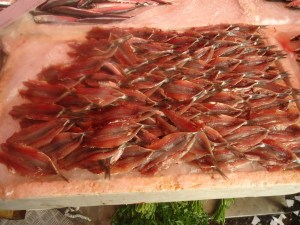
Sardines are shown here ready to be stuffed for the typical Sicilian dish “beccafico”.
Fresh tuna……………..

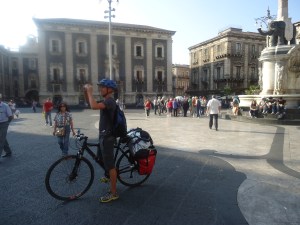
As I left the market behind and crossed the Duomo Square, I noticed this young tourist riding his bike and just wondered where he had ridden his bike from. He seemed to me as one from northern Europe!
Pictures of Libertinia taken by Lidia over the years……….
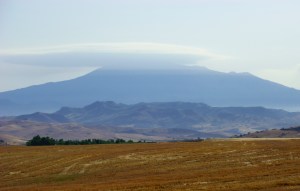
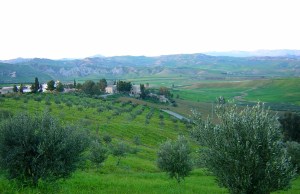

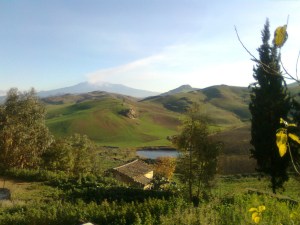
Driving towards the belly button of Sicily, Enna, which stands perched upon a hill at 1,000 meters above sea level, looking out at the many hills dotting the area all around it, one reaches Libertinia. The roads one travels to reach Libertinia are rugged, many unpaved, and one realizes the remoteness of this area and the strong will of those who still live and/or work here. This is a beautiful drive offering views of hills, pastures and open fields. The day I drove this road, there was cattle grazing on the fields surrounding the road I drove and some had even ventured onto the road making me pay special attention to avoid any direct encounter! I was driving those roads as I was on my way to meet Lidia Tusa. Lidia runs an olive oil producing business, Mandrerosse, with her uncle Alessandro, a business which was started almost one century ago by grandfather, Sebastiano Tusa. The name, Mandrerosse, comes from an old Sicilian term “mannera”, which was the name for the fence built to contain the animals mannera got its name from the materials used to build the fence which were local red stones.
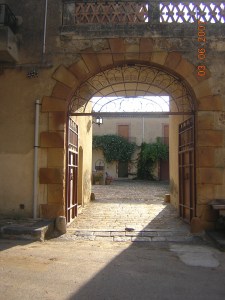

Grandfather Sebastiano and his brothers
Grandfather Sebastiano started working on this land together with ten other people in the 1920’s, and at that time, they leased the land from its then owner, a senator, Senator Pasquale Libertini (thus the name of this location, Libertinia). Back then the estate encompassed 10,000 hectares and consisted of three feiffs. Over the many years that have gone by since the 1920’a lot has changed. Today the family business is an organic olive oil production business run on a small portion of the original estate. During my visit, Lidia’s Uncle Alessandro went over the rich history of the family and its connection to this land. It is obvious that there is pride in the recollection of the many years of Tusa family tradition and their strong ties to Libertinia.
Today, Lidia and her Uncle Alessandro manage the olive groves and olive oil production. They own Societa’ Agricola Mandrerosse and produce about 5,000 liters of olive oil a year. Their business has been an organic olive oil producing facility since 1997. As we sat at the kitchen table and discussed the many aspects both of the business and olive oil production, one could sense the hard work that has gone into keeping a family business alive. There have been many challenges and historical changes but one thing remains and that is to produce the best quality olive oil.
As Uncle Alessandro explained to me the olive oil production, he specified the steps that are taken to ensure quality control of the product, from initial picking, transporting to olive press facility, packing and transportation of the oil to its final destination. The olive oil is sold in some cities in the north of Italy and exported to some European countries.
I heard a lot of technical information during my visit but would like to share three important elements regarding precautions any olive oil consumer should take in order to ensure that their olive oil does not go bad. First, in order to maintain olive oil at its best condition, one must not expose it to light; next, one must never allow the olive oil to come in contact with oxygen in the air, and finally the ideal temperature for conservation should range between 8 and 18 degrees centigrade.
After the enlightening conversation with Uncle Alessandro, with interesting comments added by Lidia’s mother , Lidia and I took a ride through the town of Libertinia adjacent to the rural family property. Lidia explained how, in the 1920’s, a village had been built adjacent to the Tusa family property. The purpose of the village was to create a community where people would live closely and each home built was allotted a piece of land not far from the home which they could farm. Unfortunately, this project did not meet its initial purpose and many of the residents of the Libertinia village emigrated to mainland Italy. A lot has changed over the years here, but the beauty of the land still remains.
Green olives are usually picked in October and the ones that turn black are simply green olives that have ripened.
One of the pleasures of spending time in Sicily has been to revisit old customs I observed as a child. One of them, was watching my grandmother crack fresh olives in October and carry out the process of marinating them. So this year, after buying my fresh olives at the local famers’ market, I asked my friend, Rosi, if she would help me with the process of marinating the olives.
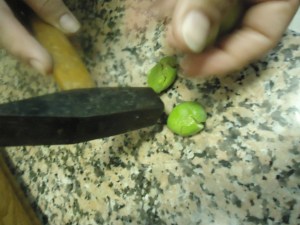
The first step was to crack the green olives using a hammer.
ttp://rosannaandolfoparkinternationalblog.me/?attachment_id=1885″ rel=”attachment wp-att-1885″>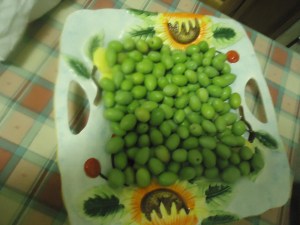
a href=”http://rosannaandolfoparkinternationalblog.me/?attachment_id=1887″ rel=”attachment wp-att-1887″>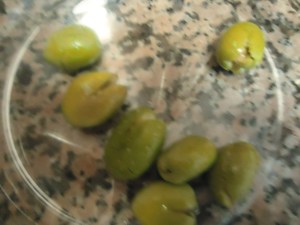
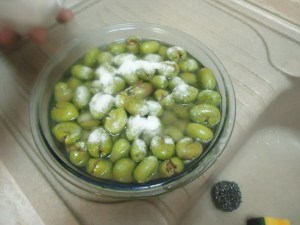
Then Rosi placed them in a bowl, sprinkled coarse salt over them, covered them with water and let them stand for one week. Each day, Rosi changed the water and while many add more salt, in this case, that was not done.
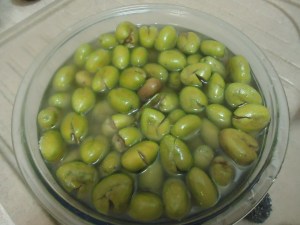
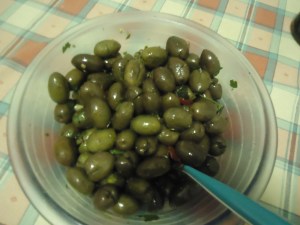
After one week that the olives had been soaking in water, it was time to season them. Parsley, garlic, red pepper, and olive oil were added to the olives tossing well. Then the olives were placed in a jar and by following these steps they keep well. Scrumptious and fresh!!!!!!!!!!!!
I have been interested in learning about natural building for a while, so when I saw that a weekend class was being offered in Montelepre, Sicily, I decided it was time to sign up and get my first hands on experience. The class was held at the Thar do Ling Center in Montelepre, run by Simona and Danilo, and the instructor was Angela Granzotto, who teaches this class in several locations across Italy.
The purpose of the class was to learn how to make Natural Earth Plaster and I must say I couldn’t have had a better instructor and group to work and learn with. I enjoyed the class very much, enjoyed the hands on experience and will try to do the whole experience justice in sharing some highlights from the class. I hope the pictures can show some of the steps..
Most of the materials had been prepared ahead of time by our instructor and the hosts of the event. The first evening a power point presentation explained the basic principles of the process that would be carried out in the class. On our first morning on the project, after a wonderful breakfast provided by our hosts and prepared by Delia and other friends, we all joined Angela, outside the building, for an overview of the course and the materials to be utilized. Angela explained the different combinations that could be created in making the mixture for the earthen plaster and basically the main components of the mixture: earth (soil), sand, and clay and then straw and/or manure to add fiber to the mixture. All the materials had been acquired locally. Utilizing different amounts of each component of the mixture and showing the group the end result of the mixture and its specific characteristics, Angela taught the group specific strategies and practices that go into this process. The process was very helpful in showing exactly what each formula in mixture would offer in the final plaster composition.
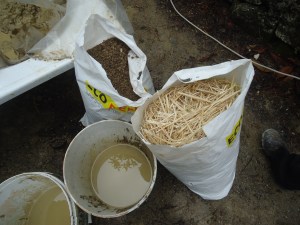
Experimenting with different dosages of each component allowed a first hand look at the result of the plaster and its structure once it dried
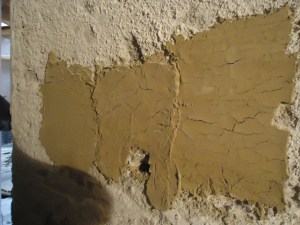


The group proceeded to practice both the combining of the components of the mixture and the process itself of mixing and then the actual method to adopt in placing the mixture on the wall as plaster. Both these processes were very helpful and a great way to practice the entire process first hand and another great point was that there was plenty of practice on how to use the tools.
The building the group was working on has been undergoing renovation for several years now and many of the materials adopted have been removed from the structure and are being reutilized either in their original form or transformed, as in the case of the crushed tiles added for pigment. One interesting fact I learned was the use in this process of the liquid acquired from prickly pear blades. These blades were cut up and cooked and then the juices from this process utilized for their adhesive nature. This was one of the experiments that took place.
Finally, the whole experience was very interesting, totally enjoyable and one that I would love to repeat someday, hopefully on my own construction. The instructor, Angela, was absolutely wonderful and a great teacher who presented the subject in an interesting way and guided her pupils thoroughly. The food we all enjoyed during the breaks was superb thanks to Delia, Ludovica, and more volunteer cooks.
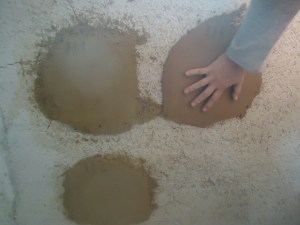
Experimenting with different dosages for the final plaster layer; it was so silky at the touch!
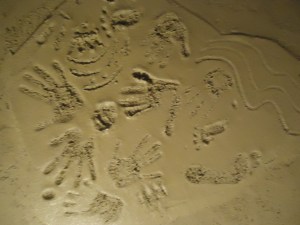
We all left a mark!
 Sicily & MORE Explored by Rosanna