“Not all those who wander are lost.” J.R.R. Tolkien
Where do I begin? I started this blog with no idea of what it would be like after one year. I just wanted to return to Sicily finally having the time and resources available to explore this beautiful place I love and where I grew up. This is my 105th post on this blog, so I would like to take a moment to stop and reflect. I have received feedback from many people and will use it in constructing my reflections.
After living away from Sicily for so many years, I felt the urge to travel around this island, and see as many places as I could in the time available to me. I had no idea which direction my explorations would take. I had no set plan. I just had a desire to encounter people, places, traditions, food and more and describe them the best way I could.
This land is a land of contrasts. There are layers here that are well worth running through. Both in its history, the result of the influence of its many inhabitants over the centuries, Greeks, Romans, Vandals, Goths, Byzantines, Normans, Spanish, and Bourbons, as well as in its natural landscapes which range from deserts to mountain ranges, to valleys and gorges, to rivers and waterfalls, and include the highest active volcano in Europe, Mt. Etna. Then, of course, the coastline which is so diverse and to name a few includes the lava rock beaches close to Mt. Etna, white rock beaches in the southeastern part of the island, golden sand beaches on the southern coast.
Over the past year, I have put over 23,000 kilometers on my car, by driving around and around. At times, I have taken a few days to explore one area and lodged in location, at other times, I have left home early in the morning and returned before dark. I have seen a lot, but I realize there is still a lot to see. Soon, I will be heading back to my home in Virginia, but plan to return to Sicily in 2013. In the future, I hope to still have the opportunity to continue these explorations as I feel I have just touched the surface. Nonetheless, there is so much I have seen and done and not had the time to write about yet, so I may do so while I am away.
Now, I would like to address some topics that come as a result of the questions I have been asked over the last few months. I have been told that while enjoying reading about my explorations some would have enjoyed seeing me in the pictures, too. I intentionally did not place many pictures of me in the posts as I wanted the description to be about the experiences and the places and not focus on me. However, I couldn’t resist, at times, and did post pictures of me skiing Mt. Etna when Etna decided to start an eruption behind my back or when attending a Sicilian wedding as I sat with shoes in hand and tired feet.
Furthermore, I have described natural landscapes, traditions, food, hotels, restaurants, B&B facilities, sustainable farming activities, with the sole purpose of sharing the stories. I have invested a lot of my time to carry out these activities and then write about them, but have done so with passion. When asked if I have received compensation from anyone, I have replied that the reward has come in the human interaction with so many wonderful people I have met and so many stories I have heard and shared with my readers. I am humbled by these encounters.
In reading the statistics on my blog over the last few months, I have learned that as of today, there have been 6,580 all-time views of my blog and since February 25, 2012, it has been read in 75 countries. I never thought of any of this when I started, but it is a great feeling to know that so many people in so many places have read about Sicily through my words and experiences.
Finally, I would like to thank my followers, those who have written comments on my blog, and all who have read my blog. I will just mention the top three comment writers, friends who belong to three different chapters of my life. There is Pamela De Leon, author of The Savage River Valley, Pamela and I met many years ago when we taught at the same school in Fairfax, Virginia. Pamela’s ongoing comments to my blog have been a great source of encouragement. Then there is Maria, my close childhood friend, who also moved away from our hometown of Catania and lives and works in the town of Caltagirone, well-known for its ceramics. Maria’s comments on my blog have been heartwarming. In one of my posts, I wrote about a medical school graduation, Sicilian style. The graduate was Gabriele, Maria’s youngest son. Then there is Holly, whom I met while living in Lubbock Texas, and who is accidentally the reason why I started a blog. When commenting on her blog in summer of 2011, I received a message from wordpress encouraging me to start my own blog, and so I did. Holly Easley is writing a blog about her cancer journey and by doing so offers a testimonial of hope to those who may be experiencing her battle. Last but not least, there are my followers and the many readers who either know me or just stumble upon my blog. Knowing that my descriptions reach so many out there is very rewarding.
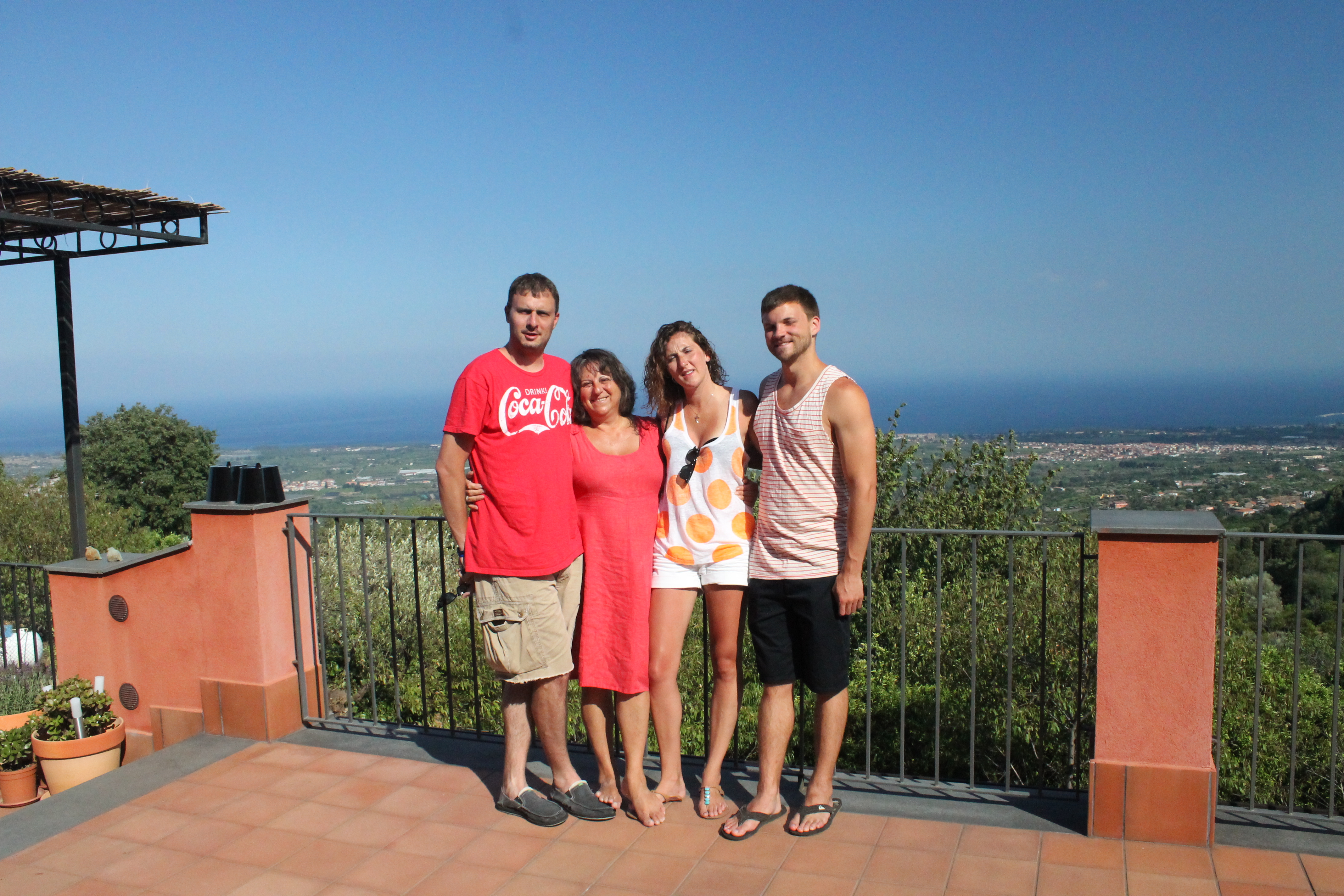
In conclusion, I will post a picture of the highlight of my travels this summer. It was when my children, Michael and Julia, and Julia’s boyfriend, Chris, visited me. First, we met in Pordenone where our family lived when the children were young. In Pordenone, we visited our dear friends, the Martins. Then Michael, Julia and Chris came to Sicily. We enjoyed fun times on the road together and made some wonderful memories.
This picture of us was taken at my brother, Mike, and his wife, Elena’s home in Piedimonte Etneo, on the foothills of Mt. Etna.
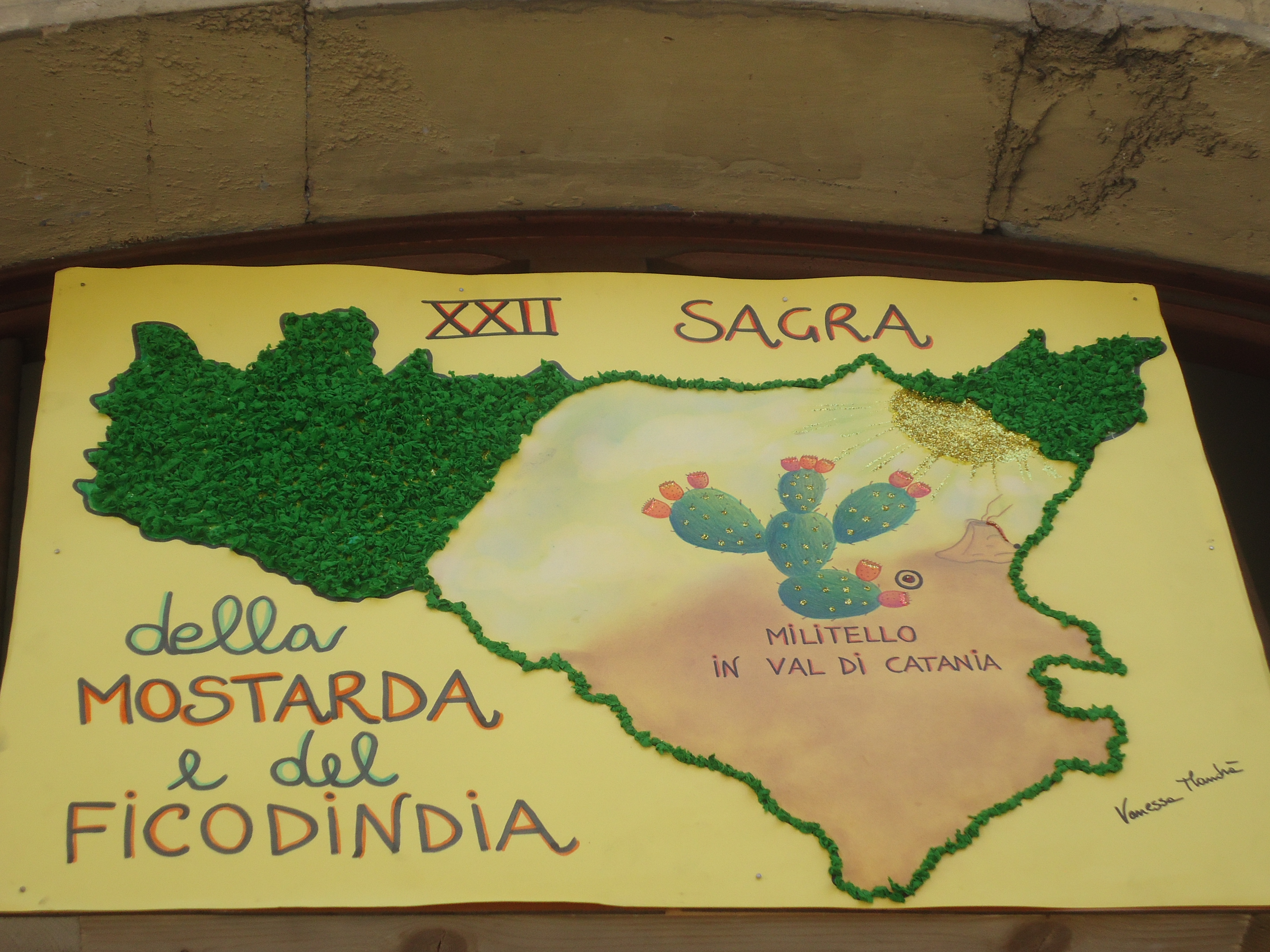
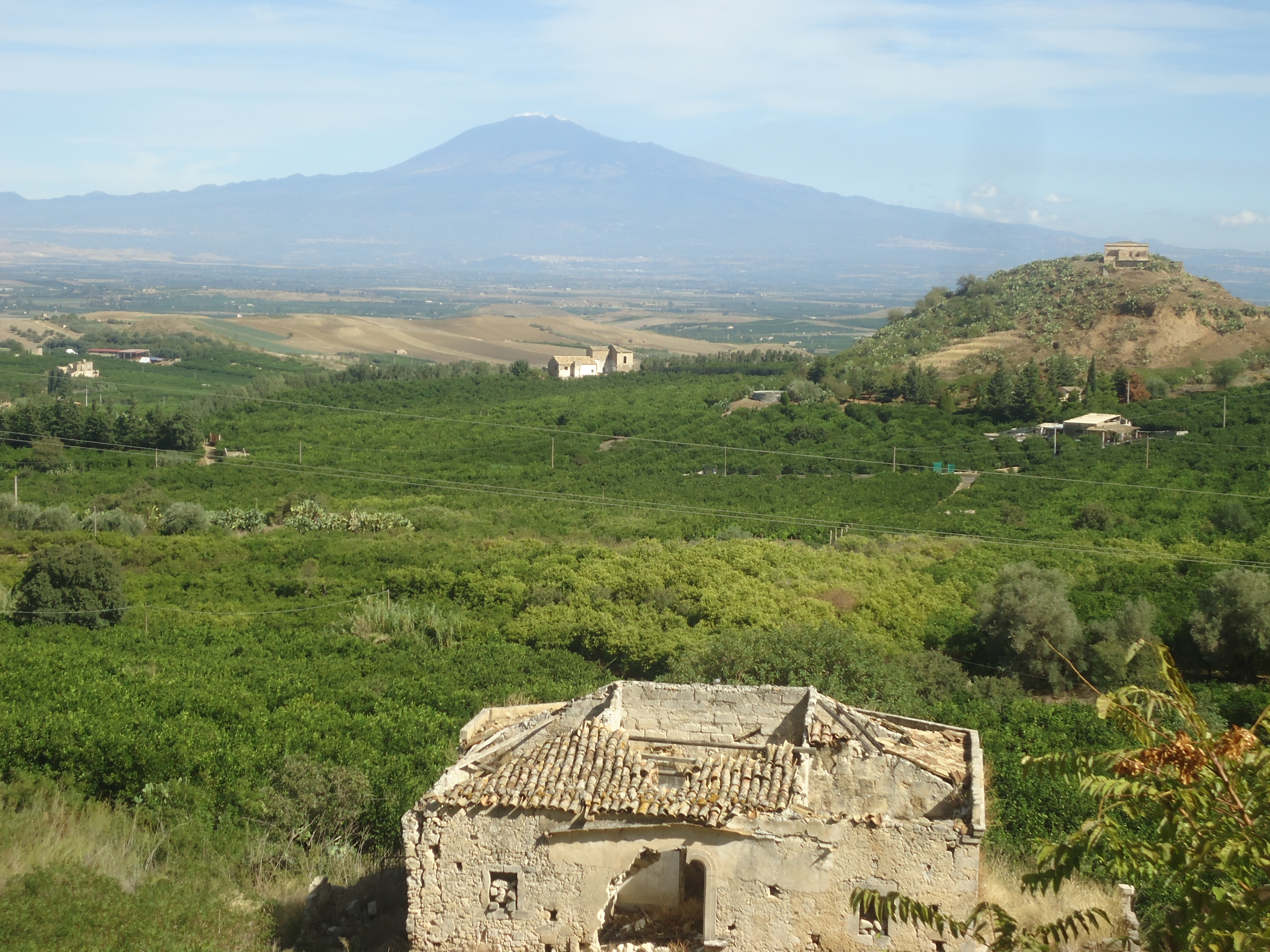
Each year, in the Fall, there are many festivals in Sicily tied to the foods of the season. One of them is the Sagra della Mostarda e Ficodindia(I have found it spelled Ficodindia and Fico d’India) in Militello, Val di Catania, a town which sits on a hilltop at about a one hour drive from Catania. The drive to Militello is a pleasant one as one drives through hills and valleys and at a turn, here and there, in the backdrop one can enjoy a gorgeous view of Mt. Etna.
Mt. Etna in the Backdrop along the Drive to Militello
A field of Prickly Pears with Mt. Etna in the Backdrop

I recently visited the town of Militello during its annual festival of prickly pears (fico d’india) and mostarda. It was a sunny day, quite hot for October, and the whole town was bustling with activities. There was music, vendors selling their goods of the season, children playing and people dancing in the main square. One the traditions is a parade of Sicilian carts up and down the main street.
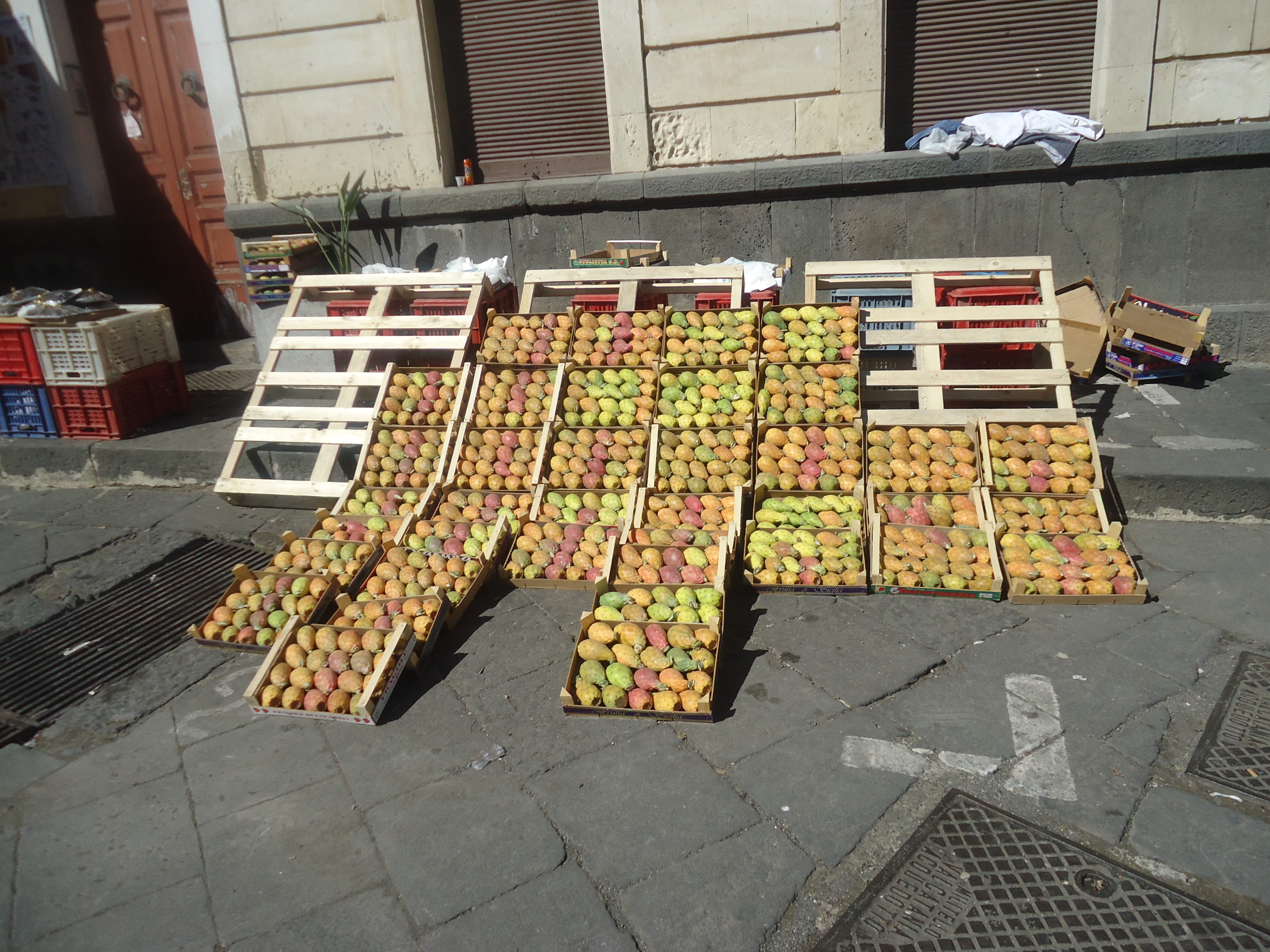
Prickly Pears
As I walked by one of the booths, the sounds coming from the loudspeaker caught my attention. I stopped to listen and heard a traditional Sicilian storyteller. In the early 20th century, storytellers “cantastorie” were quite popular in Sicily. Mainly represented by men, storytellers would travel around and alternate singing and storytelling on the streets. Some would carry around a board representing a visual of the events they described. The stories covered a variety of topics, from the events taken from chivalry literature to opera retold in the Sicilian dialect to stories of the popular tradition. This tradition of storytelling was quite common in the fifties and sixties but came to an end with the spreading of mass media.
As I walked on, I saw several vendors roasting chestnuts, selling different kinds of nuts as almonds and then there was the mostarda, after which the festival was named.
Chestnuts Roasting

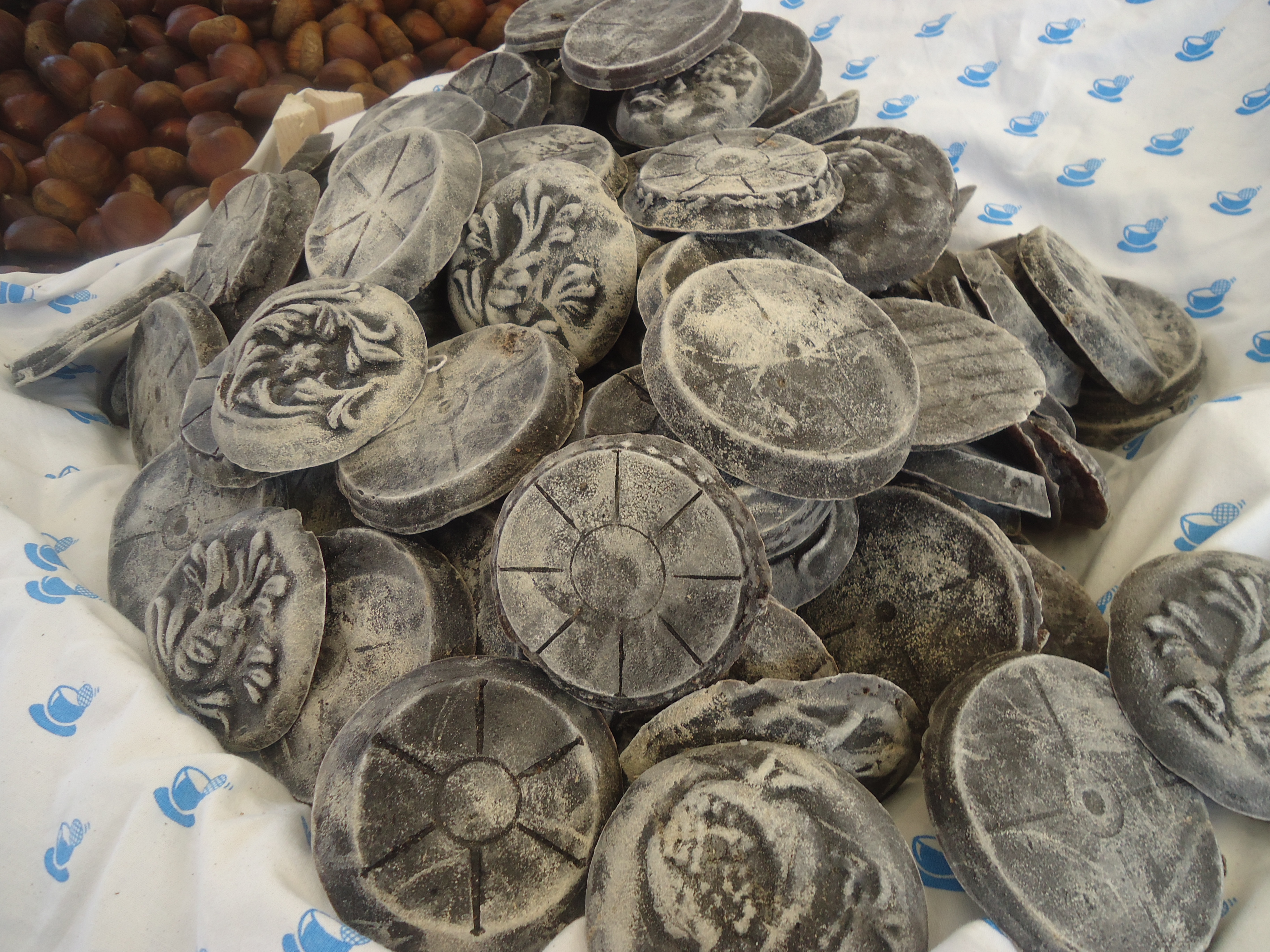
There are two types of mostarda that are prepared in the Fall is Sicily. Mostarda made with grape must and mostarda made with the pulp of the prickly pears. I love mostarda made with grape must and as a child I would watch my grandmother make it and place it to dry in the sun. Mostarda is made by squeezing the juice out of the grapes, placing the juice and corn starch in a pot and reducing the mixture over the stove. Then the thickened mixture is dried in the sun and the result is a thick, hard jelly.
Mostarda made with Grape Must
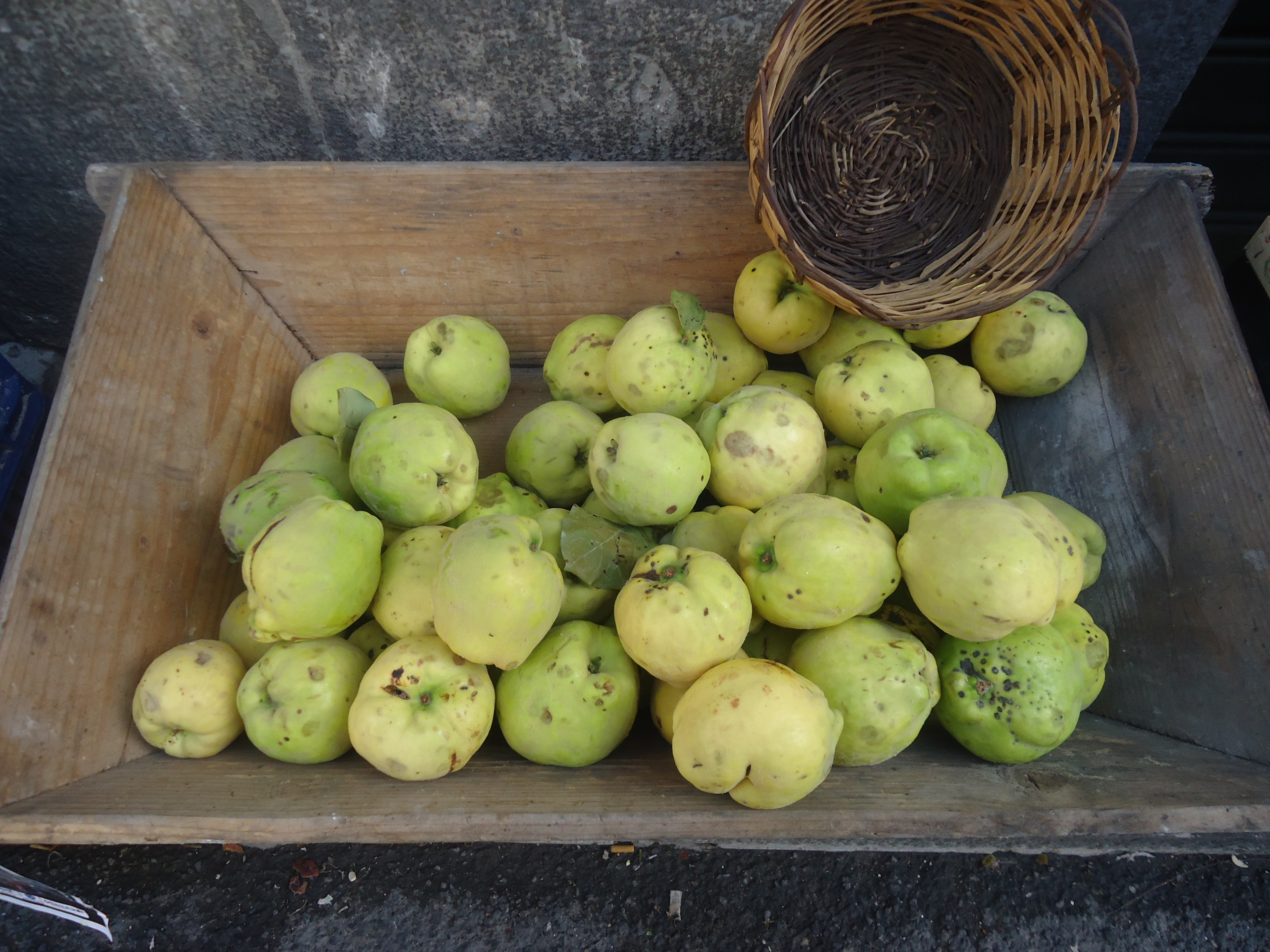
Next, I saw cotognata, made from mele cotogne, their name in Italian, which are quince in English. Quince is cooked in water and sugar, and then the mixture is strained, placed back on the stove and cooked until it becomes a thick paste. The paste is then placed in molds and it too is dried in the sun for 3-4 days. Then once it has dried, it is taken out of the molds and dried a little longer until it is firm. Cotognata is quite sweet!
Mele Cotogne – Quince
Cotognata made from Quince

Finally I walked to the main square and climbed the steps to the main church. From above, I could see the entire square. The sound of the music, audible throughout the square, guided the daytime dancers from tango, to foxtrot, to salsa.
Daytime Dancers in the Square


At last, the Sicilian carts which had paraded down the street in the morning, drove by heading to their final destination. They are behind the crowd and a close up picture was not taken as the battery in my camera died right there and then!!!!
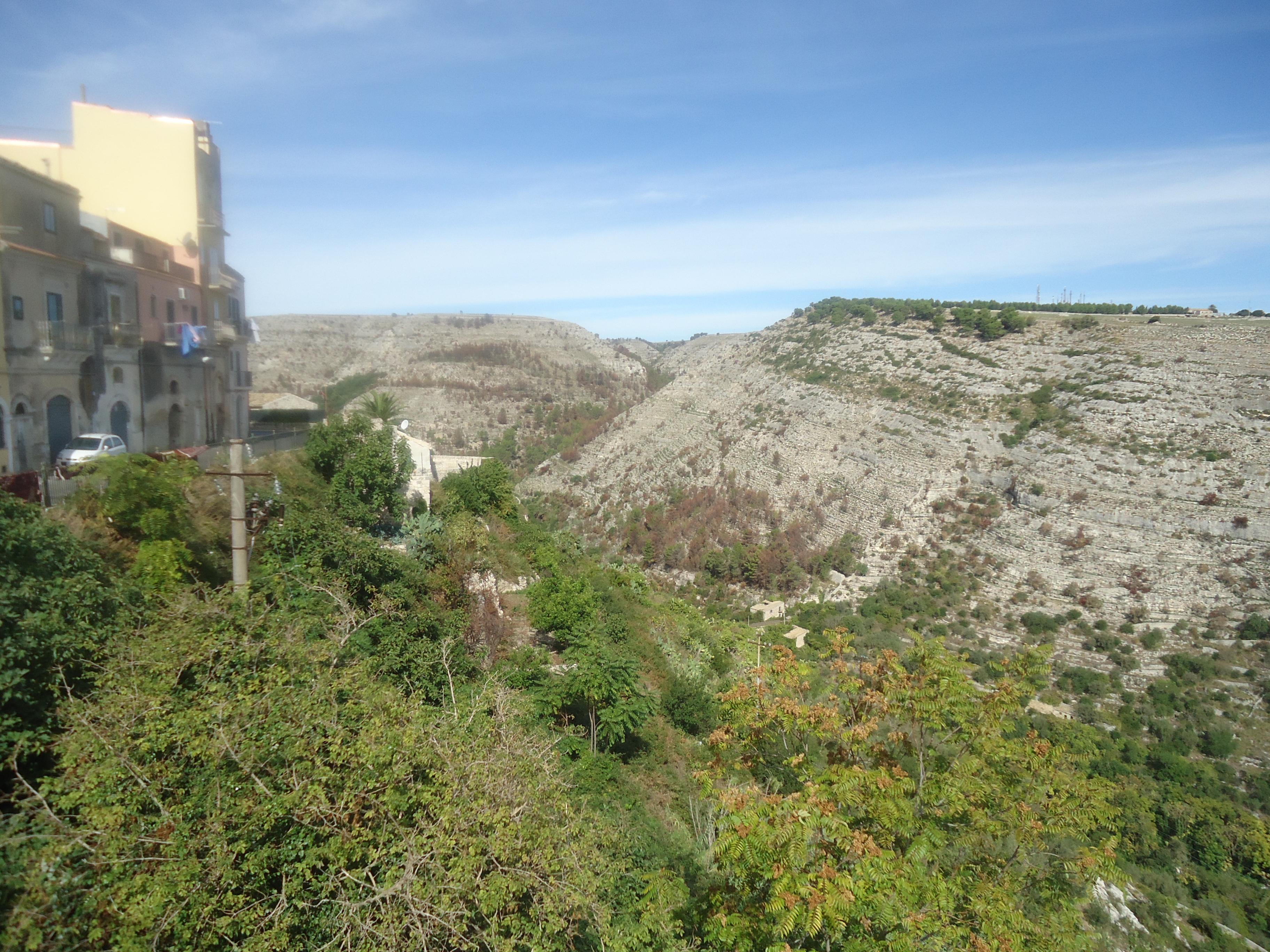
View of Valley from Ragusa
A visit to Alessandra and the ecovillage she and her friends are creating was a day immersed in nature, observing, learning and having Ale as a guide who with her vaste knowledge made the experience very interesting. This property is close to Ragusa on the Iblei Mountains. Alessandra cultivates this land with Ruben and Phil and they practice permaculture. The land, named Vallone delle Pezze, was abandoned for forty years as the owners moved to Denmark. Then, Phil, who lived in Denmark and was related to the owners, decided to return to Sicily, two years ago, and work at improving the land. He was joined by Ale and Ruben on this project. At that time, the Vallone delle Pezze was totally covered by brambles and it took Phil, Ale and Ruben six months to clear all the brambles manually and discover a fertile soil under all that cover.
They have planted trees and grafted wild ones that they found on the premises. They set up their vegetable garden creating mounds in which they plant the vegetables and the swales catch the water run-off. There is no flooding with this method. They have built a rocket stove for their cooking needs, a clay oven, and a compost toilet. They plan to build a home here soon. The day I visited there were two friends of Phil visiting from Denmark..
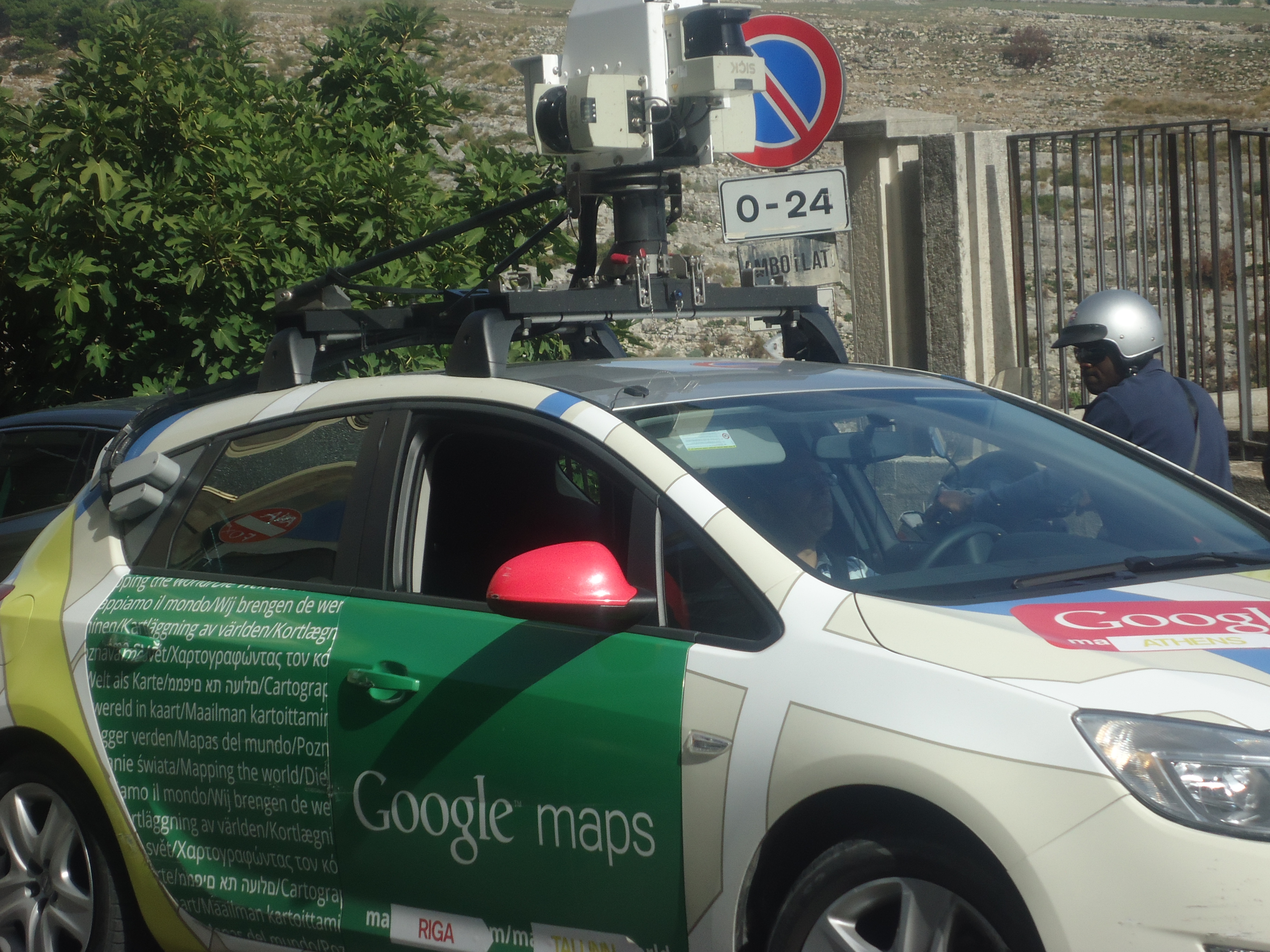
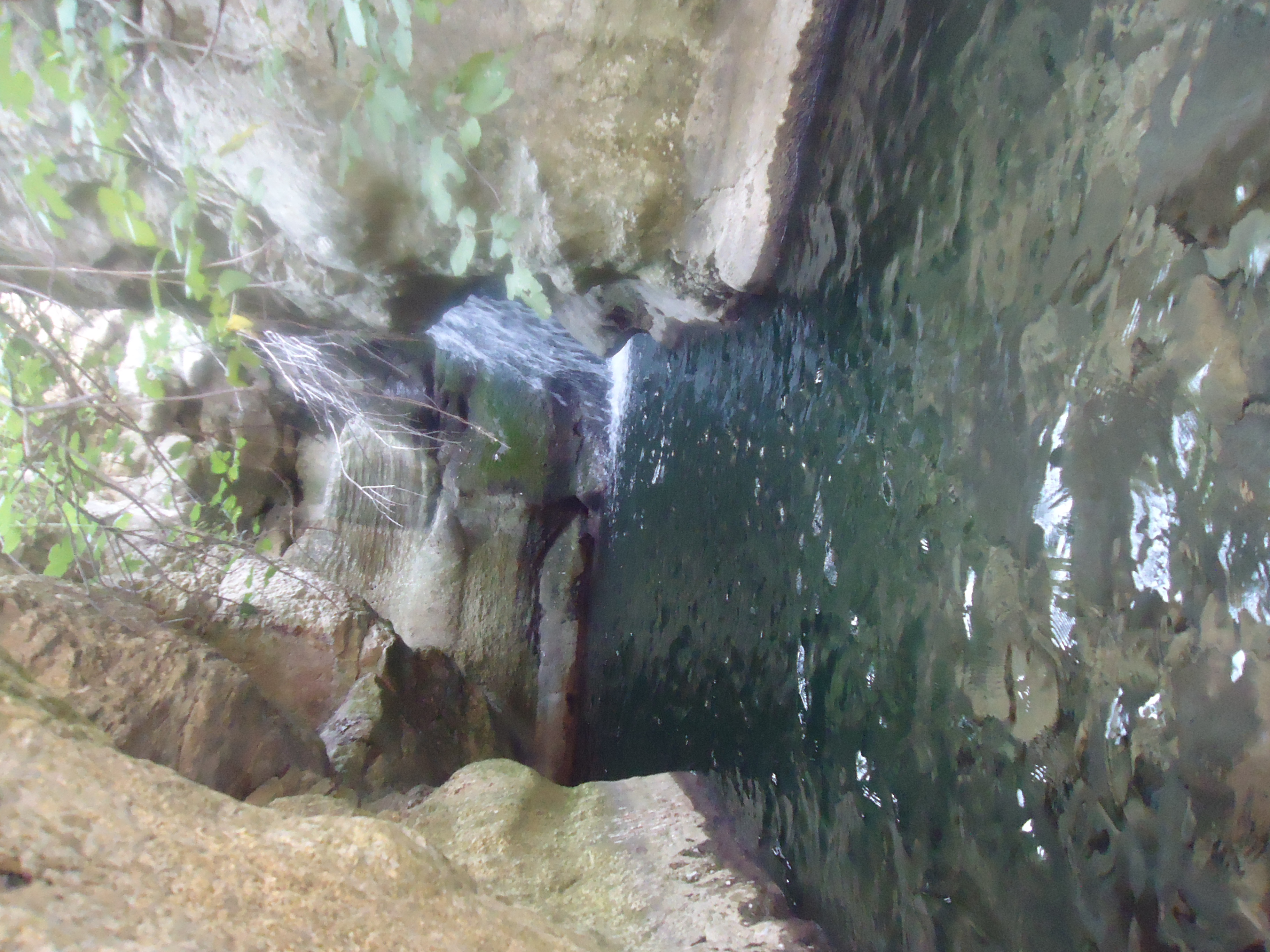
I met Ale in Ragusa and while waiting the googles folks drove by. Ale and I drove to the the vallone and as we arrived close to the property, we parked the car and took a walk. First, we went towards the river to see this waterway which has dug its way through a small gorge. The rock here is white and the vegetation so plush. We walked along the edge of the gorge and went to the point where we could see the waterfall.
How wonderful to have this waterfall next to one’s property! It is a plus on hot summer days.
After visiting the gorge, Ale and I walked to the farm which extends for two and a half hectares, both on flat areas and on terraces leading up to one of the hills overlooking the valley. Vallone means great valley. Vallone delle Pezze is the name to indicate pezze, what the locals call the layers of rock in this area. There are five layers of rock and the property lies on level four.
As we reached Vallone, we started what would turn out to be a fantastic lesson on wild vegetation of the area and farming practices. At first, we saw a tank in which leaves were macerating to be used as mulch to boost the soil’s immune system. As Ale told me, she uses fern macerated leaves although the absolute best would be to use nettle. The goal here is to achieve self- sufficiency and live in total harmony with nature; there is no waste.
Next, we looked at the rain water catching system used for their irrigation needs. There is a first set of large bins that collect the water from which the water flows with no need to use power and the overflow is caught by a second set of bins. They are looking for a solar powered water pump to use for the large in ground water tank which is six meters deep.
The plan is to build a fence made of cane all around the water tanks

In ground water tank six meters deep
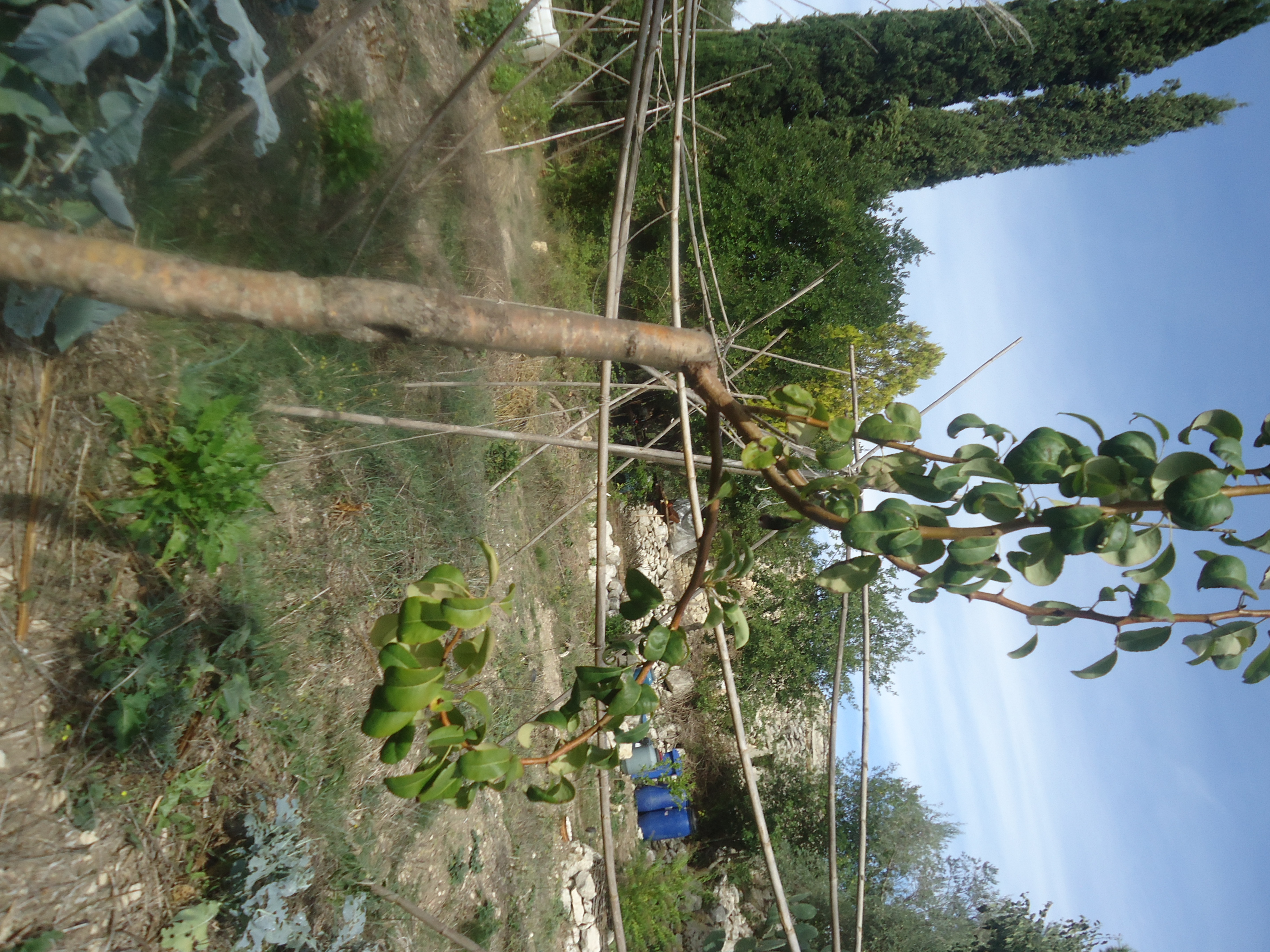
Along our walk, we observed some local types of trees. Here again the topic came up of how there are different names for plants from one area of Sicily to another; we saw “Bagolaro” which is the “Celtis Australis” here, but is called “Celtis Aetnensis” on Mt. Etna and then the “Melo Cucco” here, called “Caccamo” in the area close to Palermo. It was interesting to learn that they graft shoots into wild trees as this practice allows the tree to be stronger and need less water as it grows in its natural habitat; a tree grown at a nursery would be weaker. One example I saw was the Hawthorn which was grafted with a pear. Ale mentioned that in another area they are planning on doing the same to a wild pistachio tree into which a pistachio shoot will be grafted.
Hawthorn grafted with a pear
Ale explained the AIA area, which is the area where in the past the wheat kernel would be beaten by hand to extract the seed or the lentils from their pod and the wind would then carry the exterior part leaving the seed on the ground for picking. Now, there is a trellis and a small vine is growing.
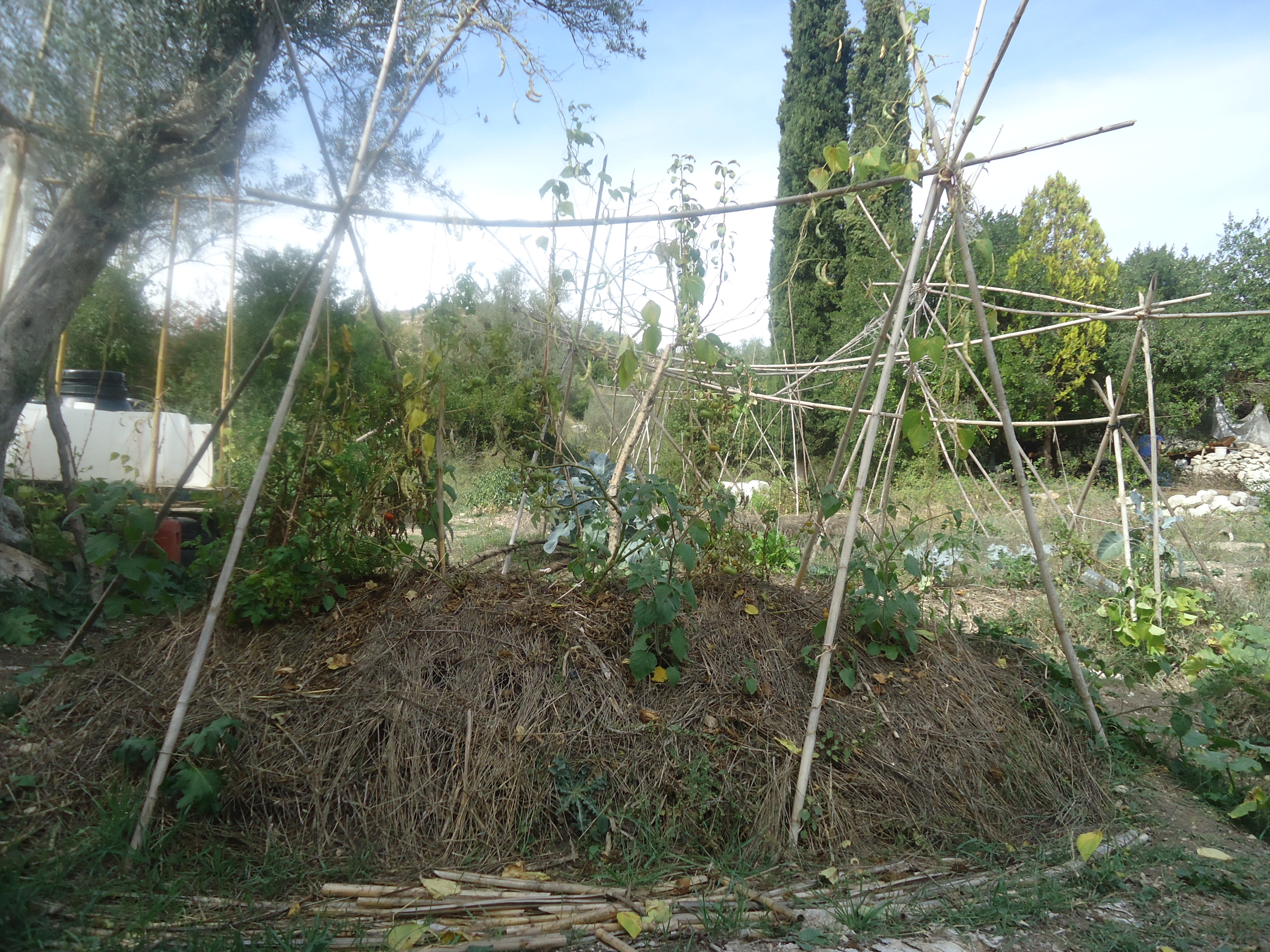
Next, we visited the vegetable garden. Here they have built some structures with cane and they can be covered with palm leaves in order to protect the vegetables from the hot sun rays resulting in less water needed to irrigate the land.
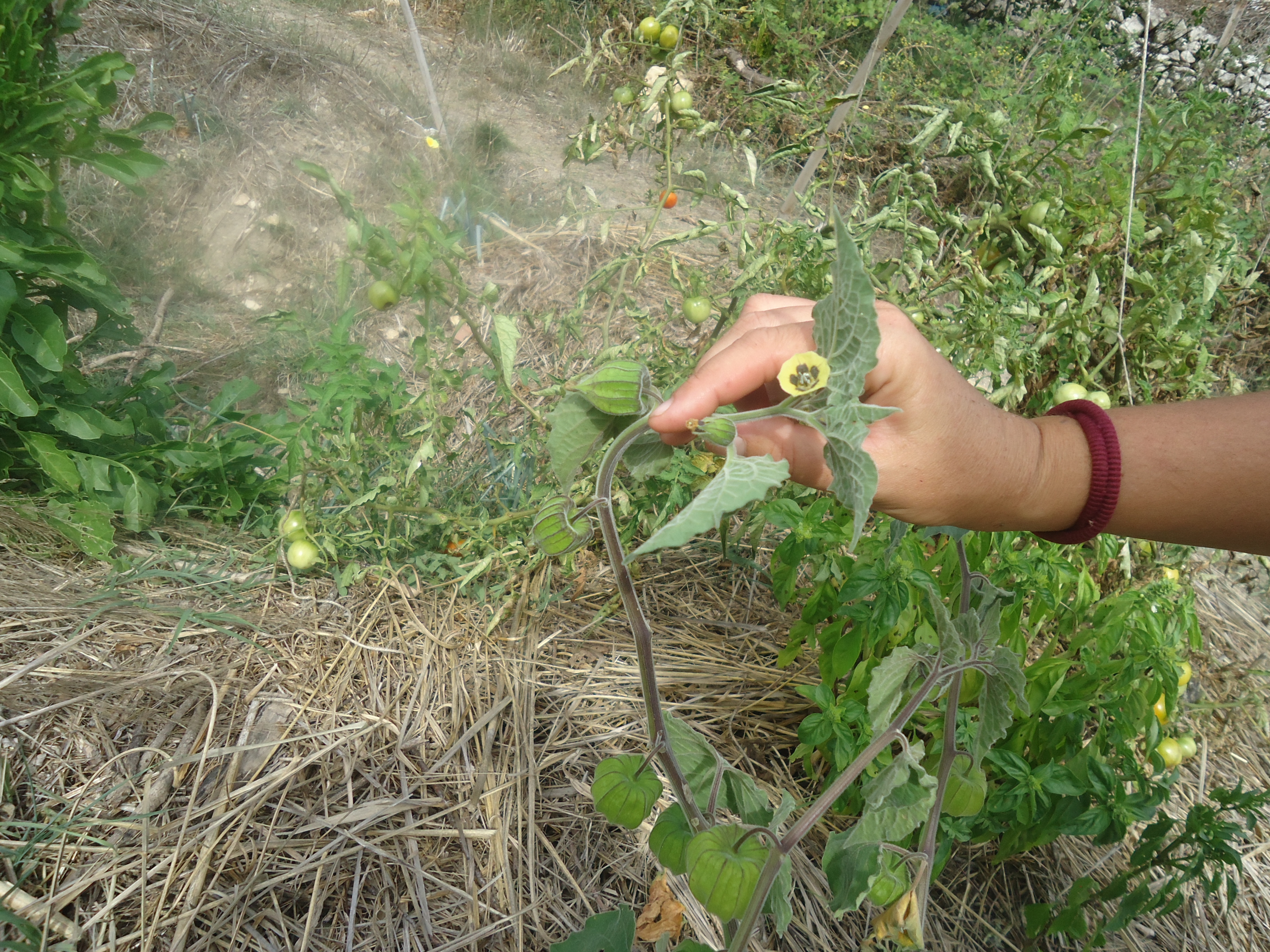
Alche chengi originally from Peru’ – so tastefal!

Alche chengi flower
The herb spiral is ideal as in a small area you can grow more plants – here there is mint, chives, citronella , parsley and red peppers; this is a work in progress and experimentation and Ale stated that the ideal spiral would have entirely perennial plants.

The Rocket stove has a ventilation combustion chamber; here they have used the brambles they removed from the land to cook on the rocket stove.

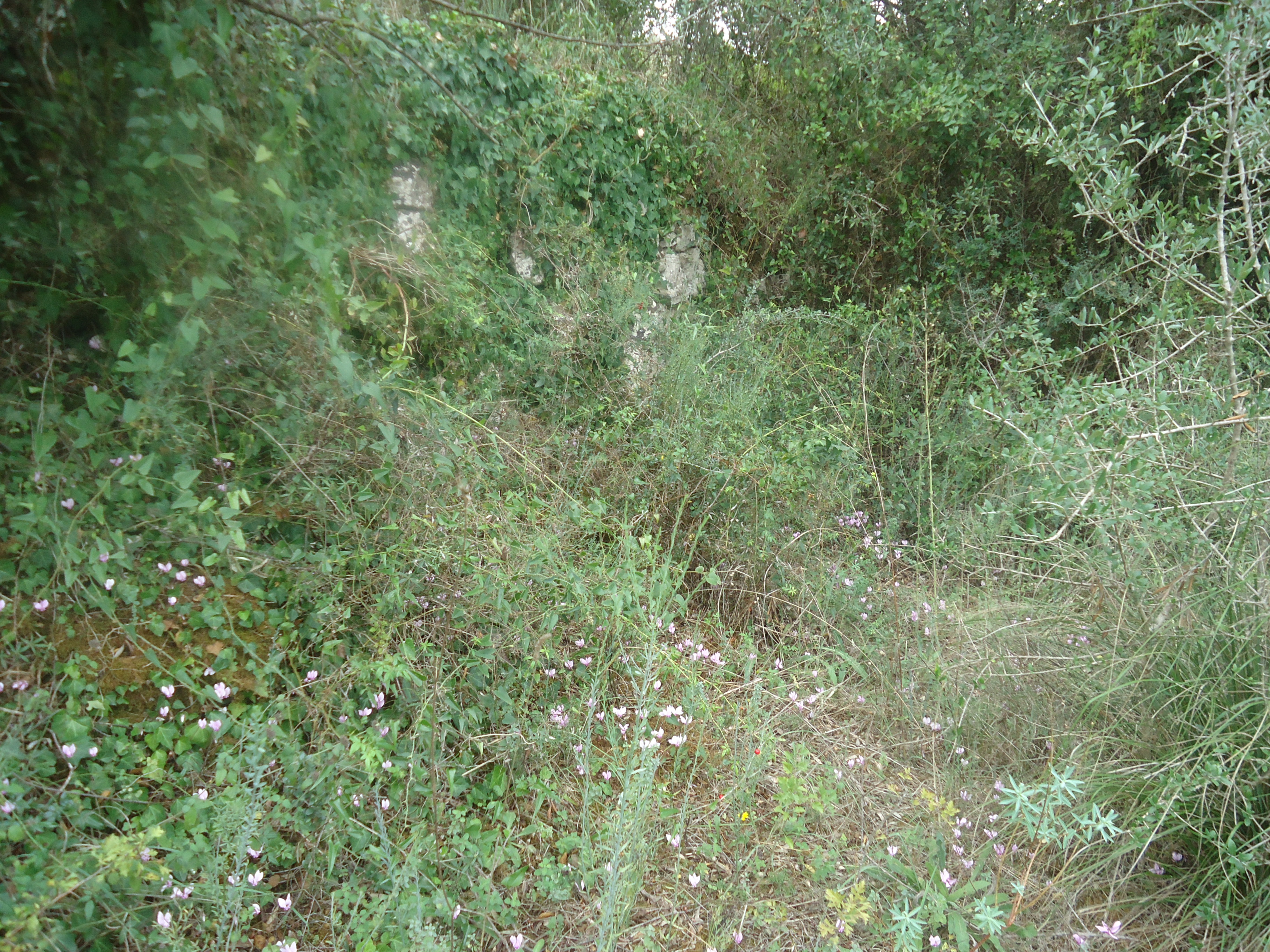
We walked all over the property and observed the different zones; we saw so many wild plants, as oregano, asfodelo, wild artichokes and then all the cyclamens.
Tiny cyclamens in the wild
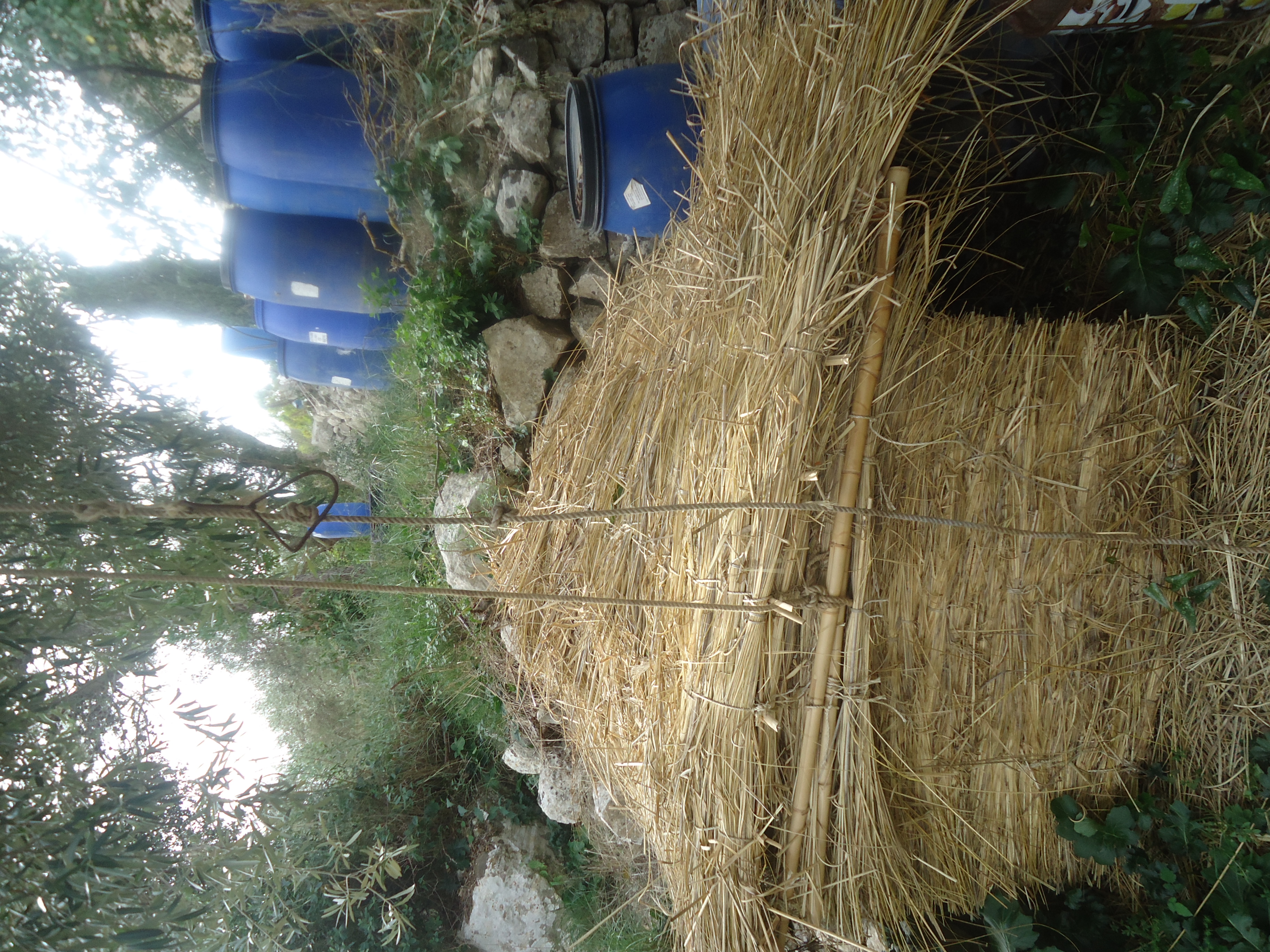
It was interesting to learn about compost toilets. In it waste is covered with dirt and ashes and then straw is placed on top. We checked the compost placed in a separate container which will take 7-8 months to become fetilizer. There was no smell at all and this was quite a surprise to me. Ale explained the chemical process of composting waste.
When we reached what is called in permaculture zone 5 of the property, I learned that this area is left to its wilderness. Everything in zone 5 grows following its own cycle and is left alone. In this forest, Ale pointed out a clearing in the forest caused by the fall of a large tree and the natural habitat that has derived from this.
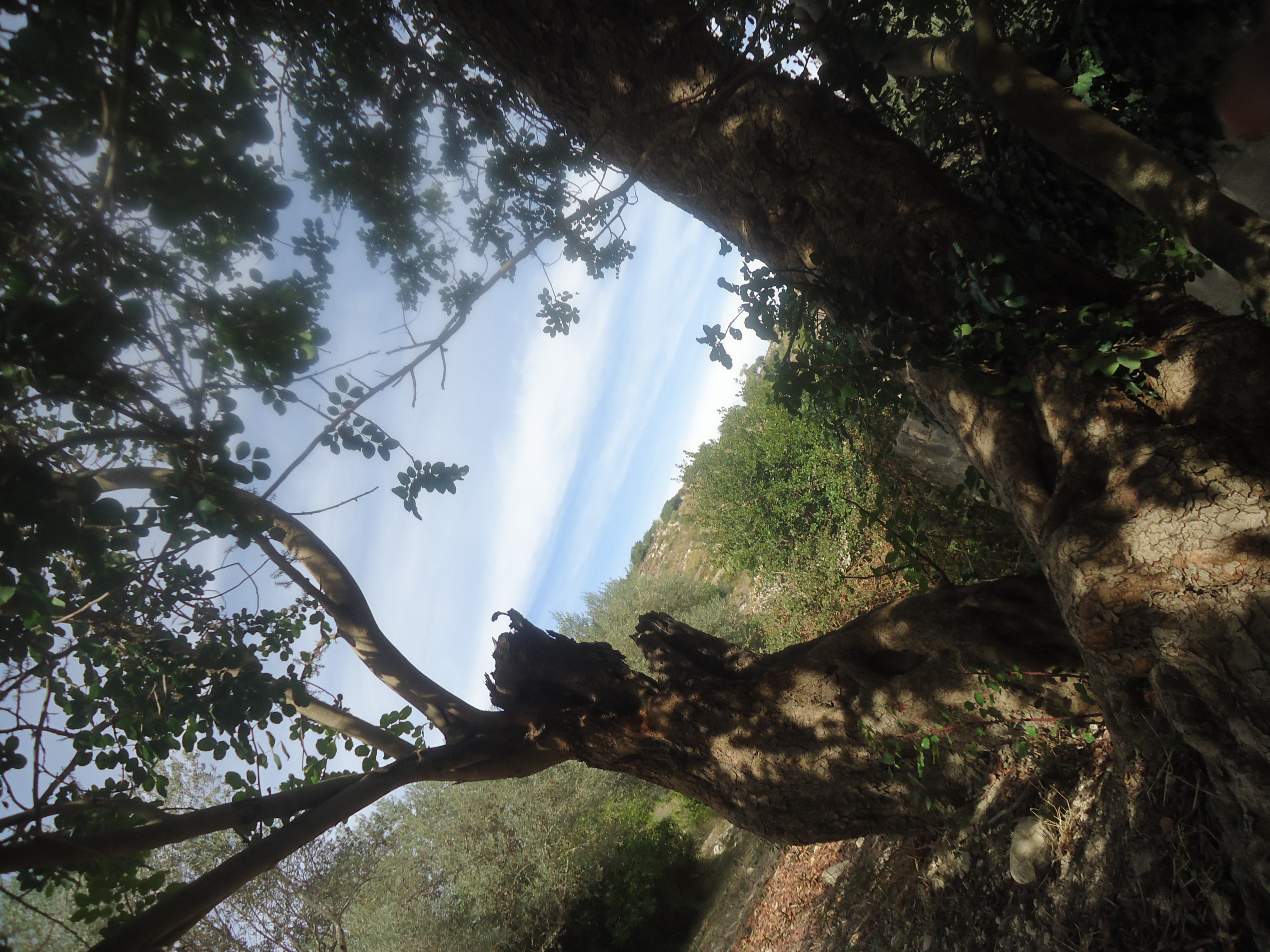
A Praying Mantis came by…..

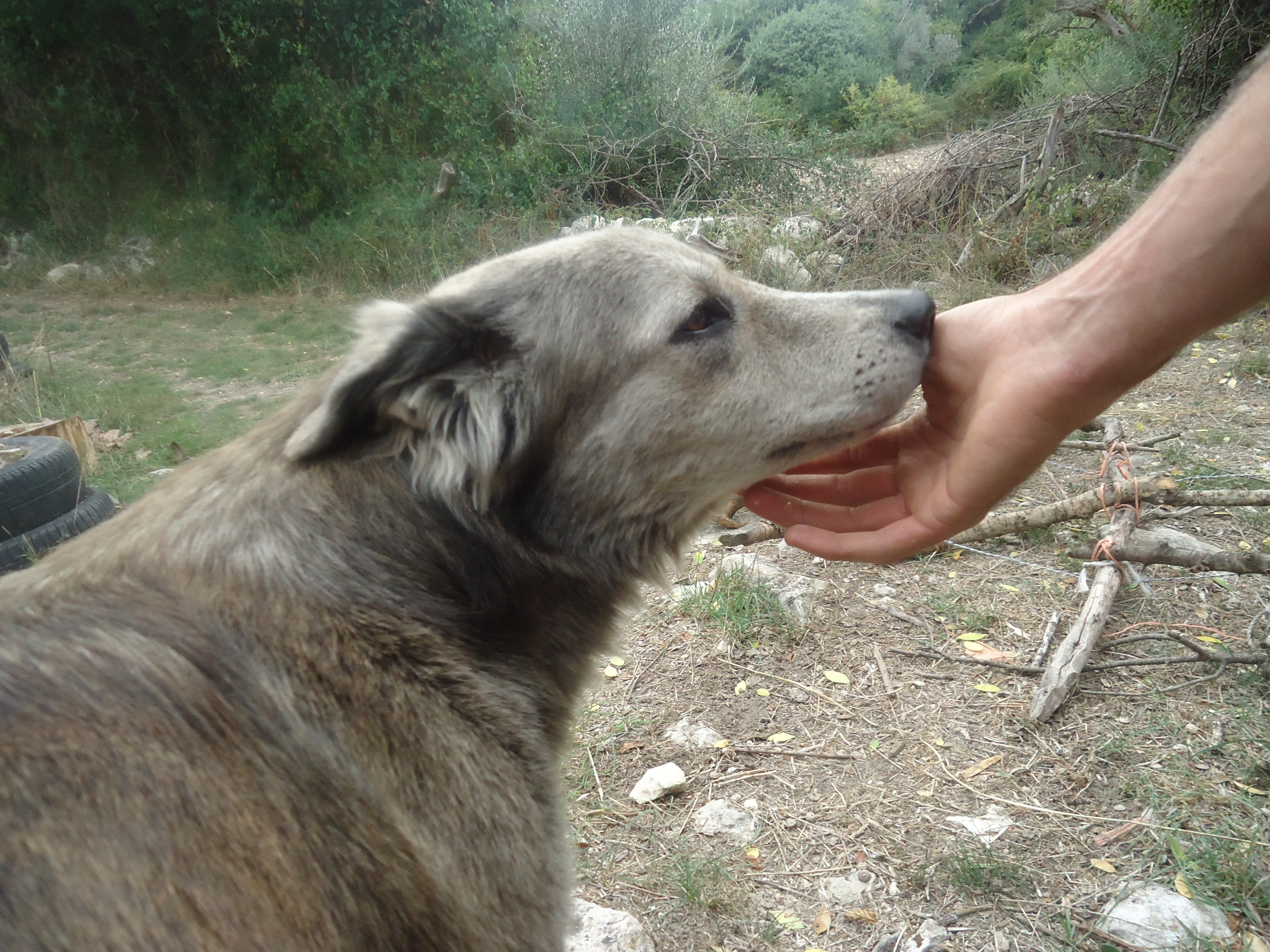
Finally, there is Lupa. Once a stray, she has found a home with some wonderful people!
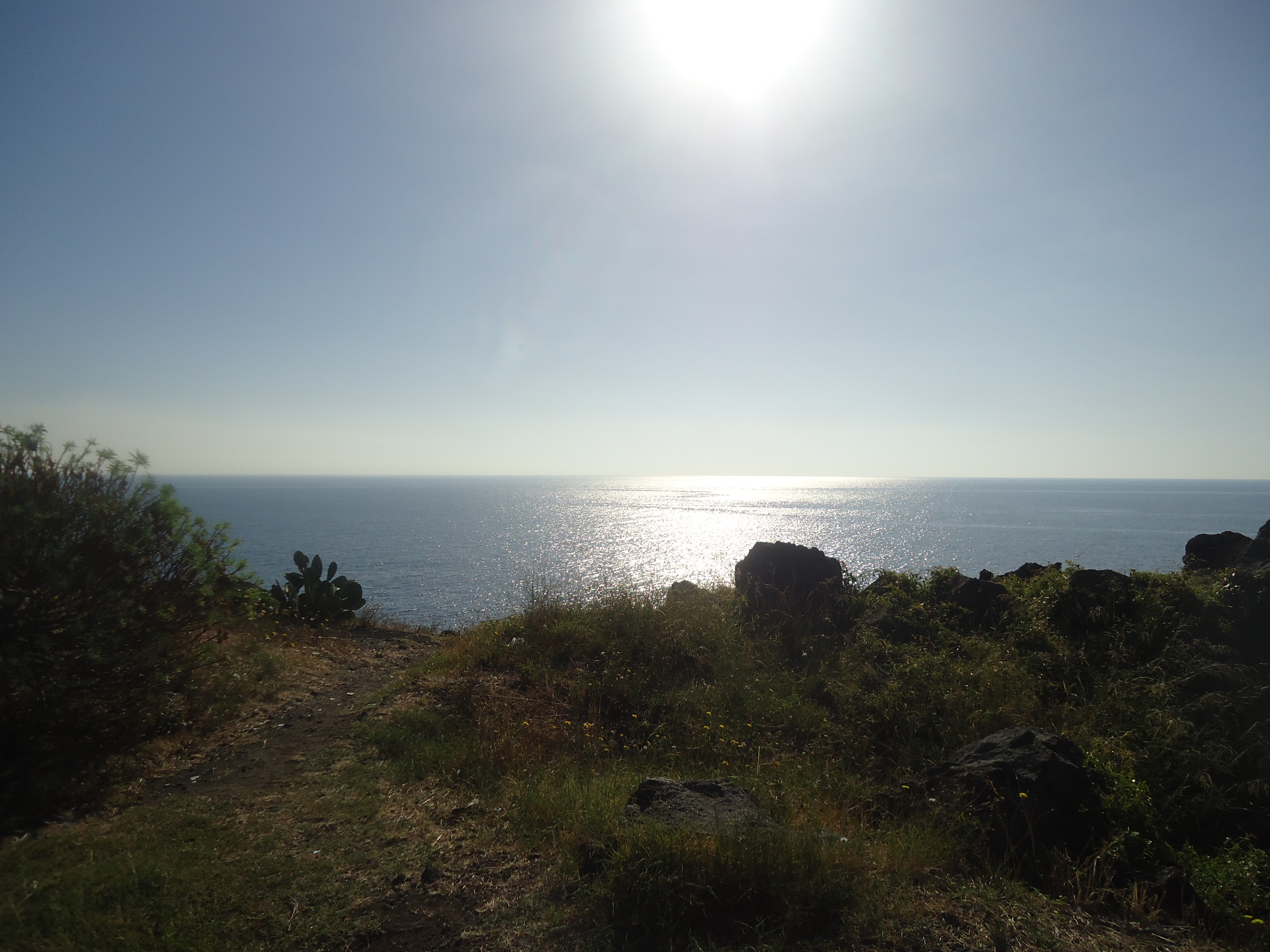
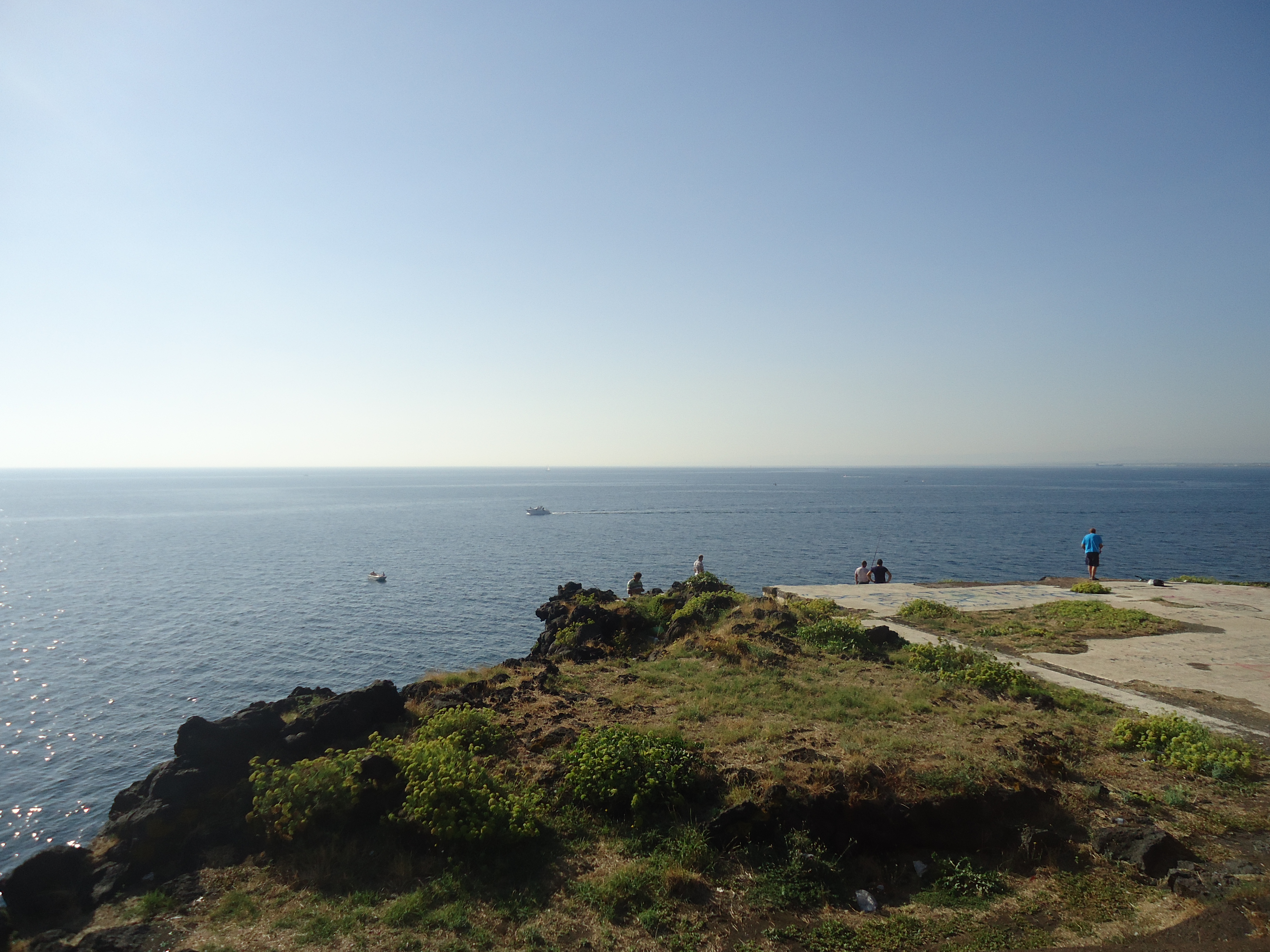
There are people who go swimming in Sicily year round. Some do it even if the water is cold as a group I see at this beach close to my condo. Yesterday was my first time swimming in October and the temperature of the air and that of the water were just right.
The following pictures show what some Catanesi were enjoying the first Sunday in October in Catania.



Each year, in October, the town of Zafferana Etnea, on the foothills of Mt. Etna, just a 20 minute drive from Catania, holds the Ottobrata. Ottobrata is a festival celebrating Sicilian food, arts and crafts, and it takes place every Sunday during the month of October. Most of the food available for sale is typical of the season. There are prickly pears, pomegranate, chestnuts, hazel nuts, and pistacchio. One can find the raw material and also their derivatives as creams, cakes, and pastries. There are olives and grapes. One of my favorite foods of the season is mostarda, made from grapes. There are craftsment displaying their goods and some may demonstrate their craft.
Below are some pictures taken on the first Sunday of Ottobrata 2012.
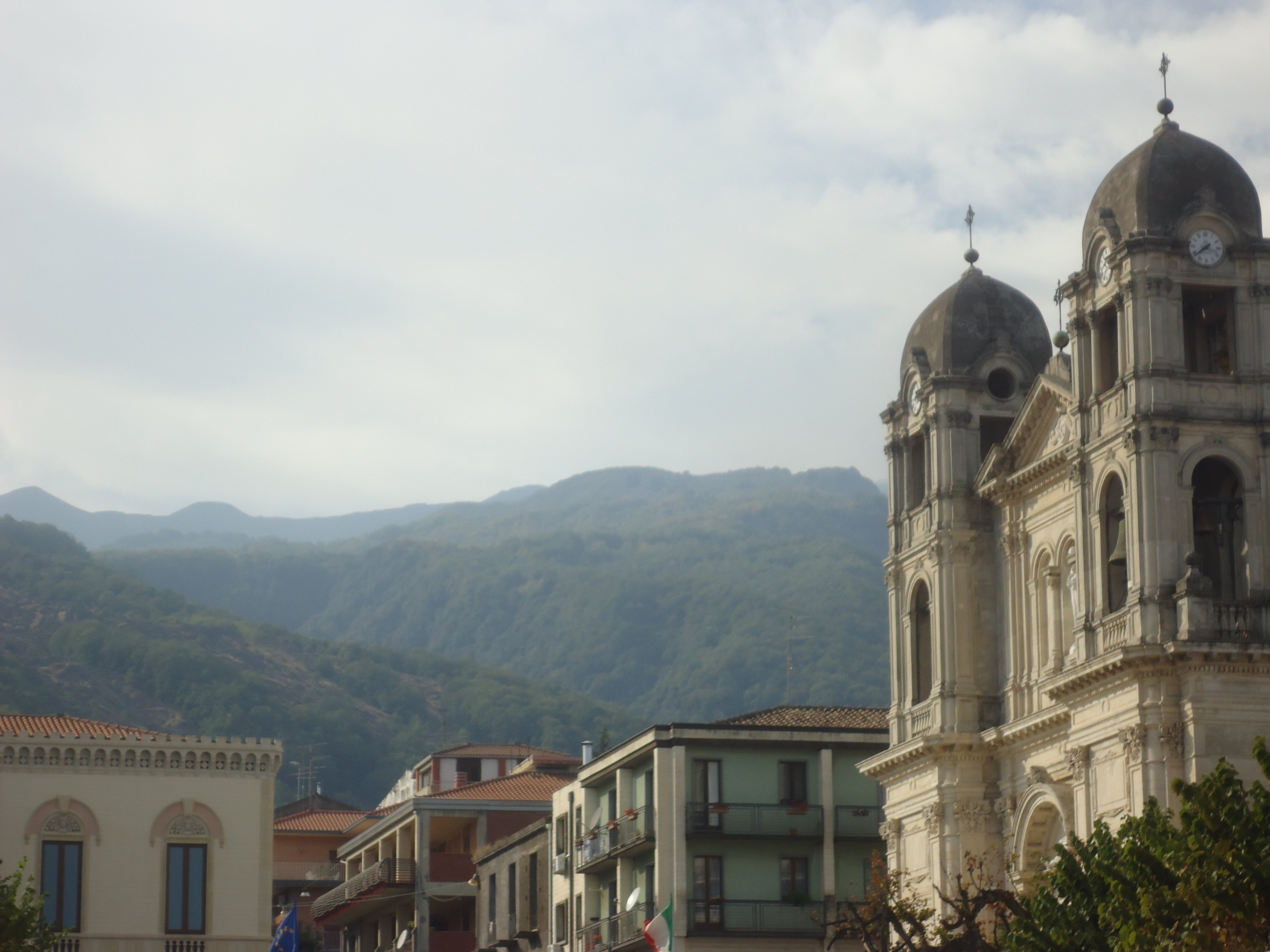
Church in Piazza Umberto

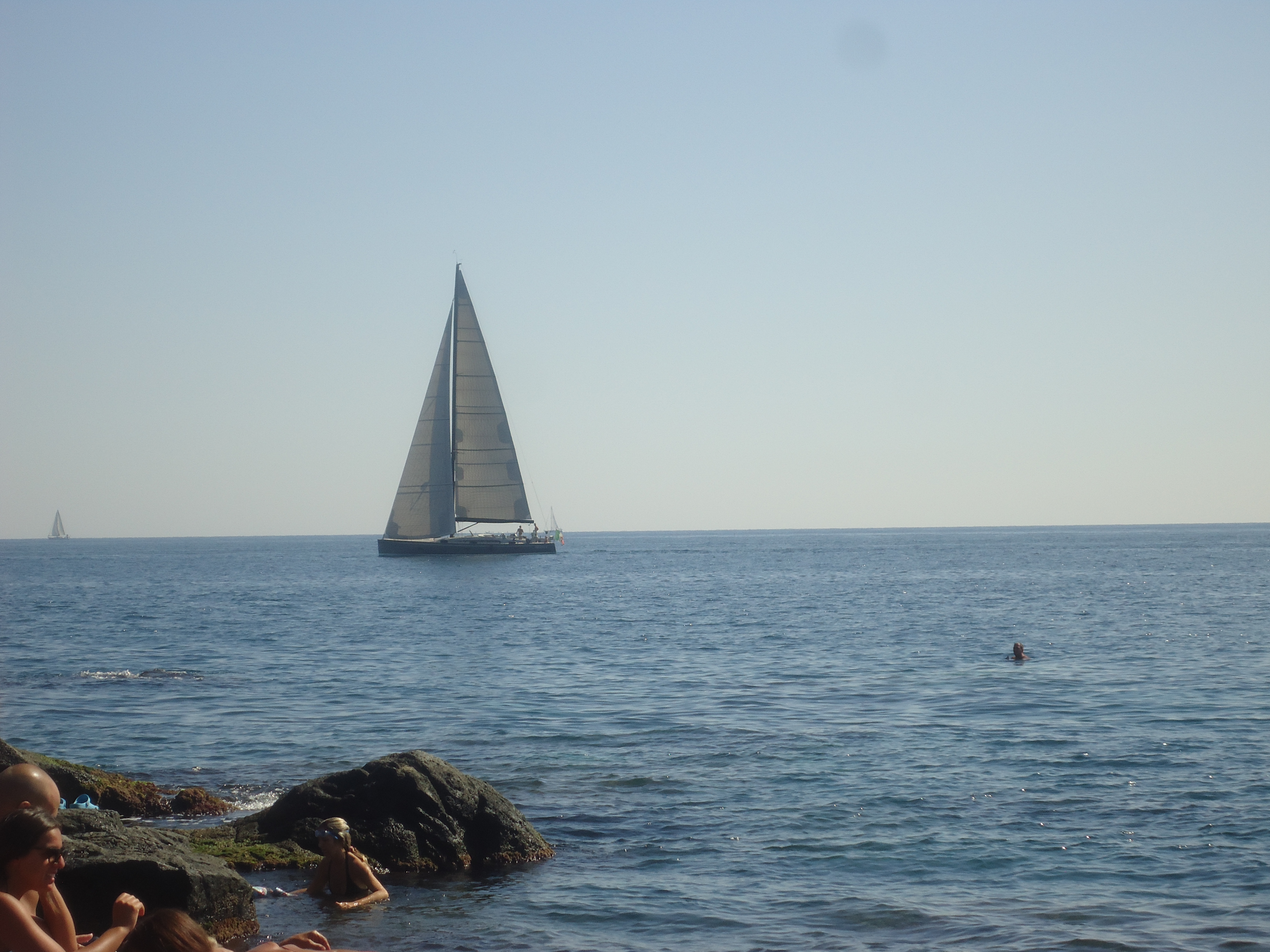
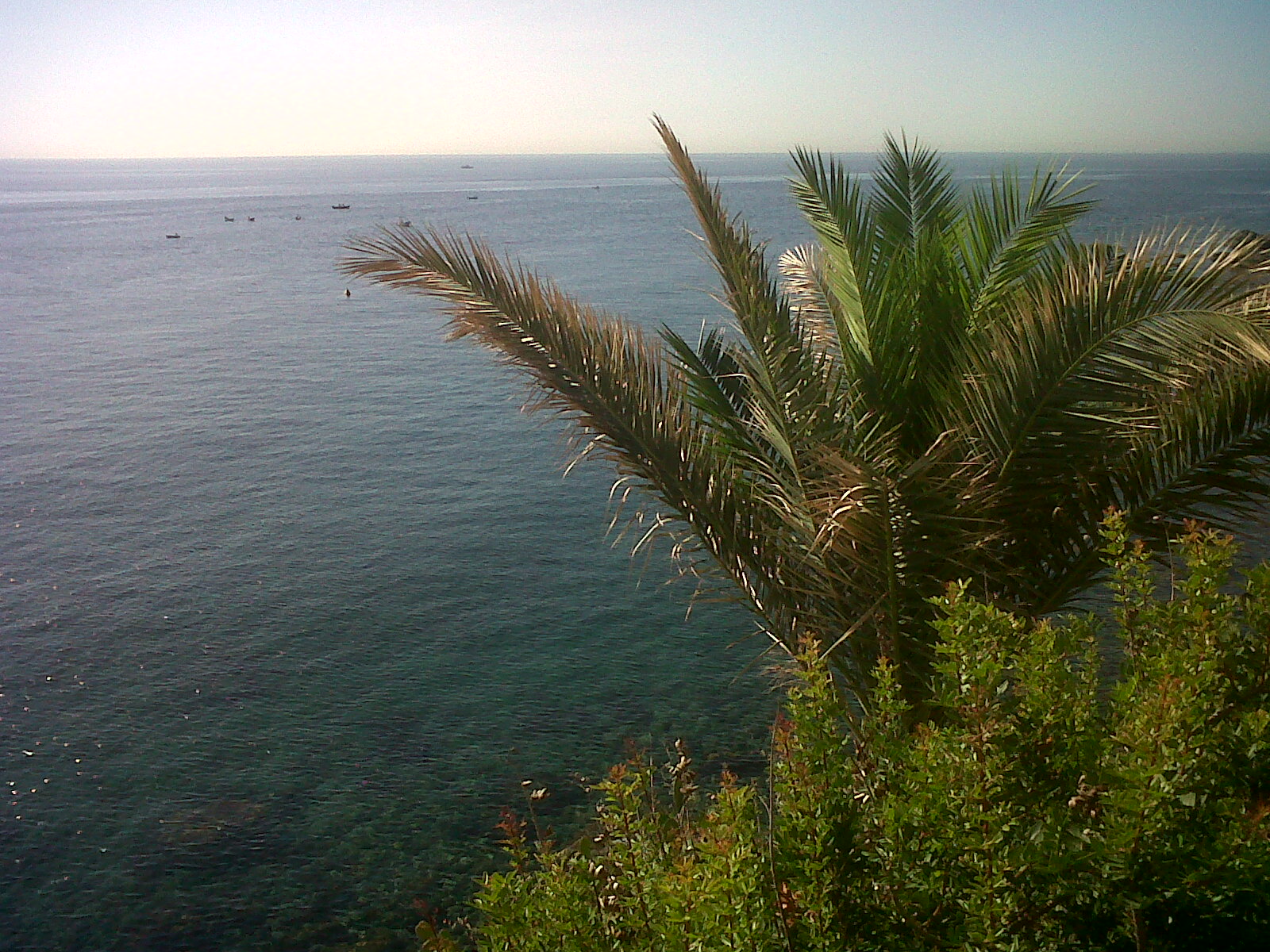
Villa Comunale offers a view of the Ionian Sea –

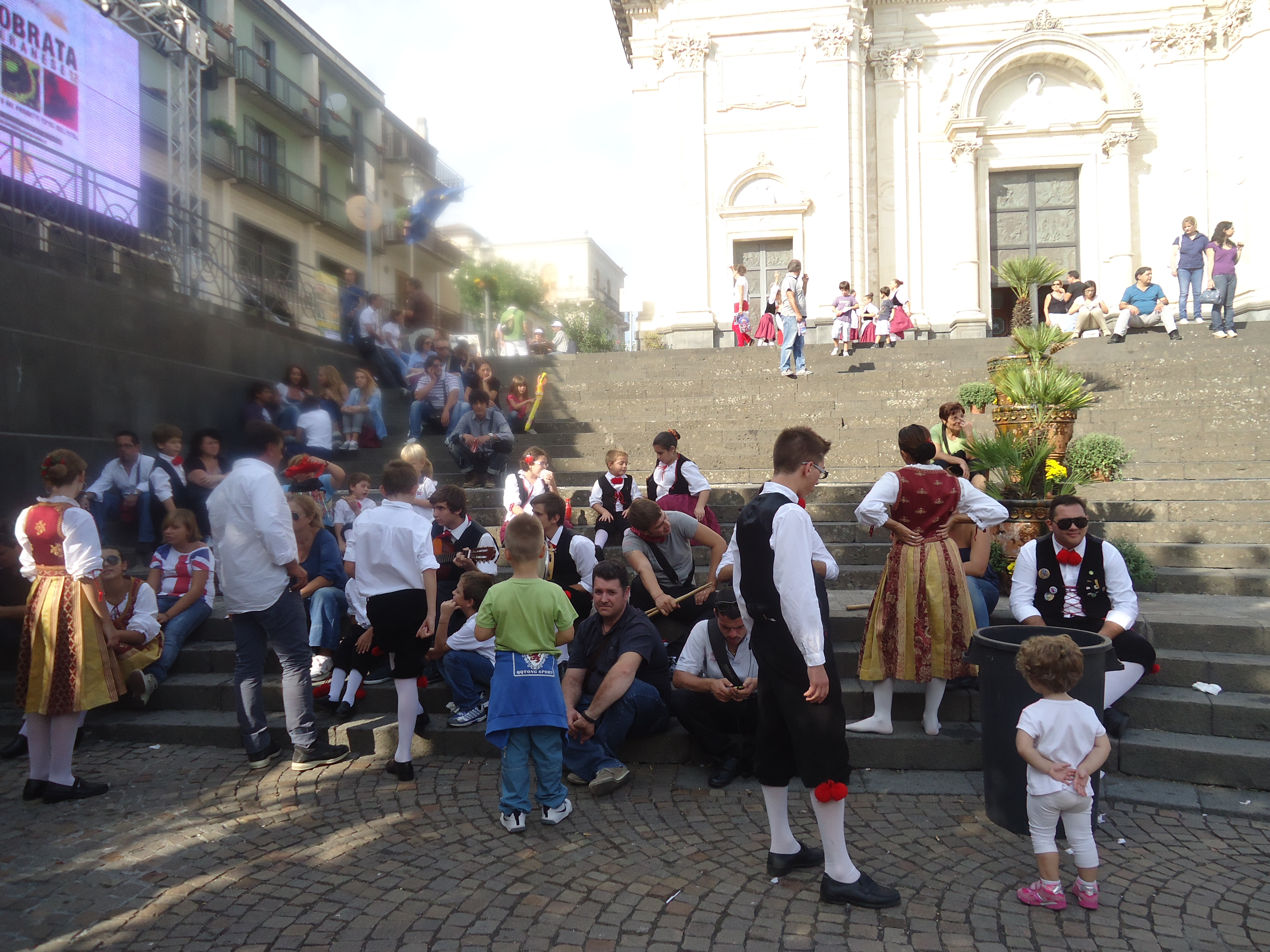
Sicilian Musicians and Dancers in the Traditional Costumes
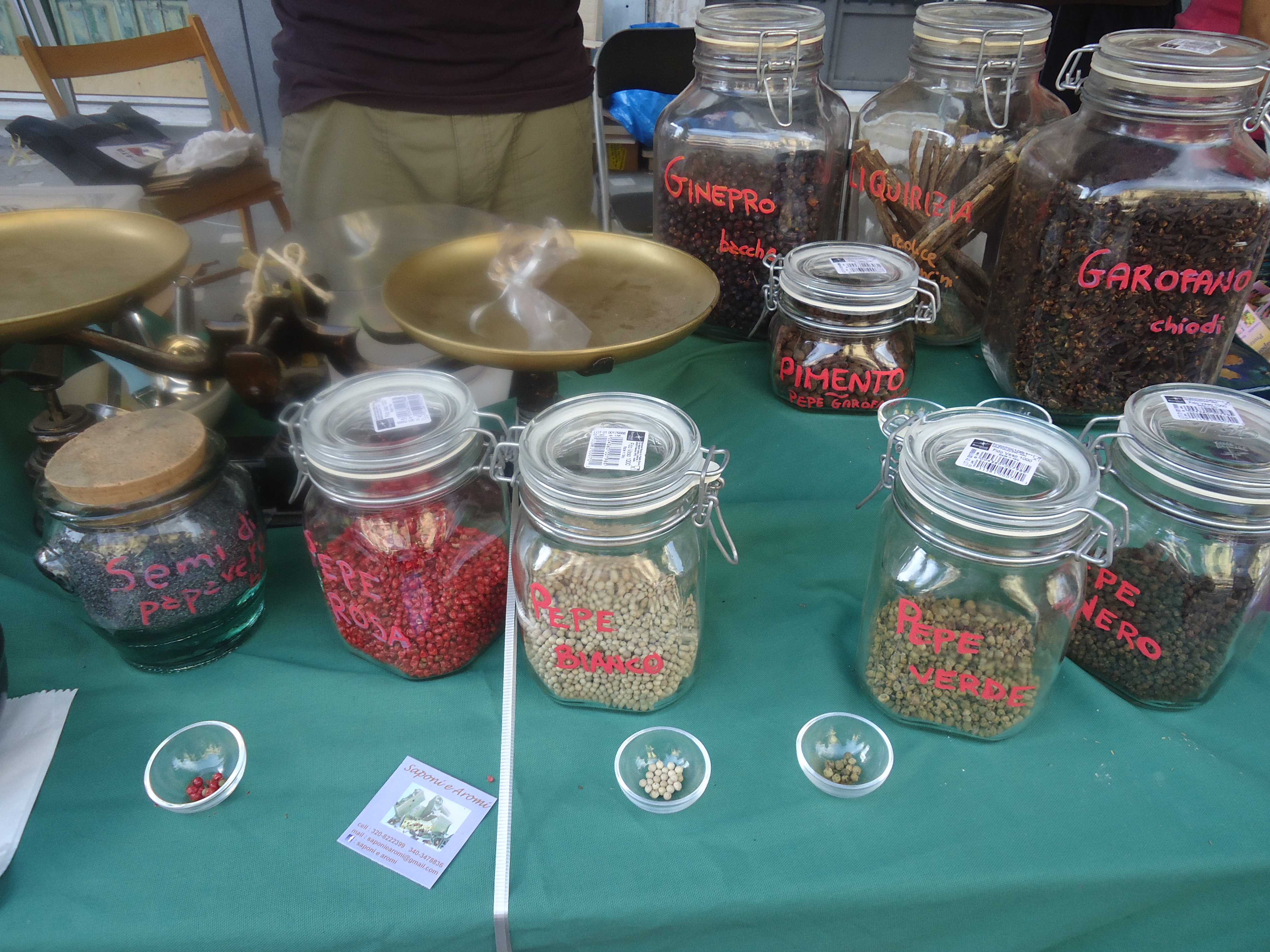
Spices and herbs – I bought cardamom for my soups and learned the seeds can be eaten raw as a natural candy – they are good!
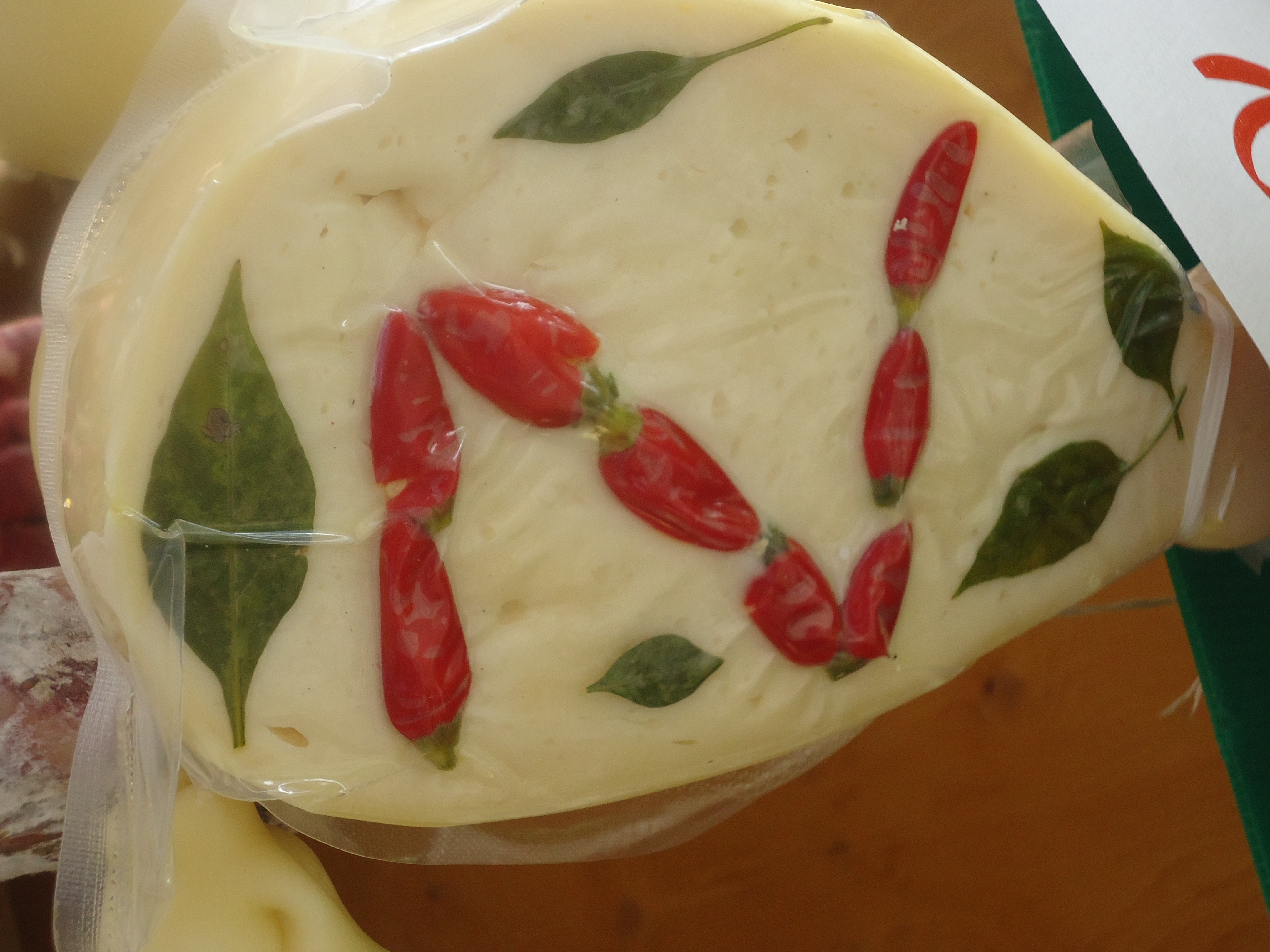
Provolone with red peppers and basil leaves
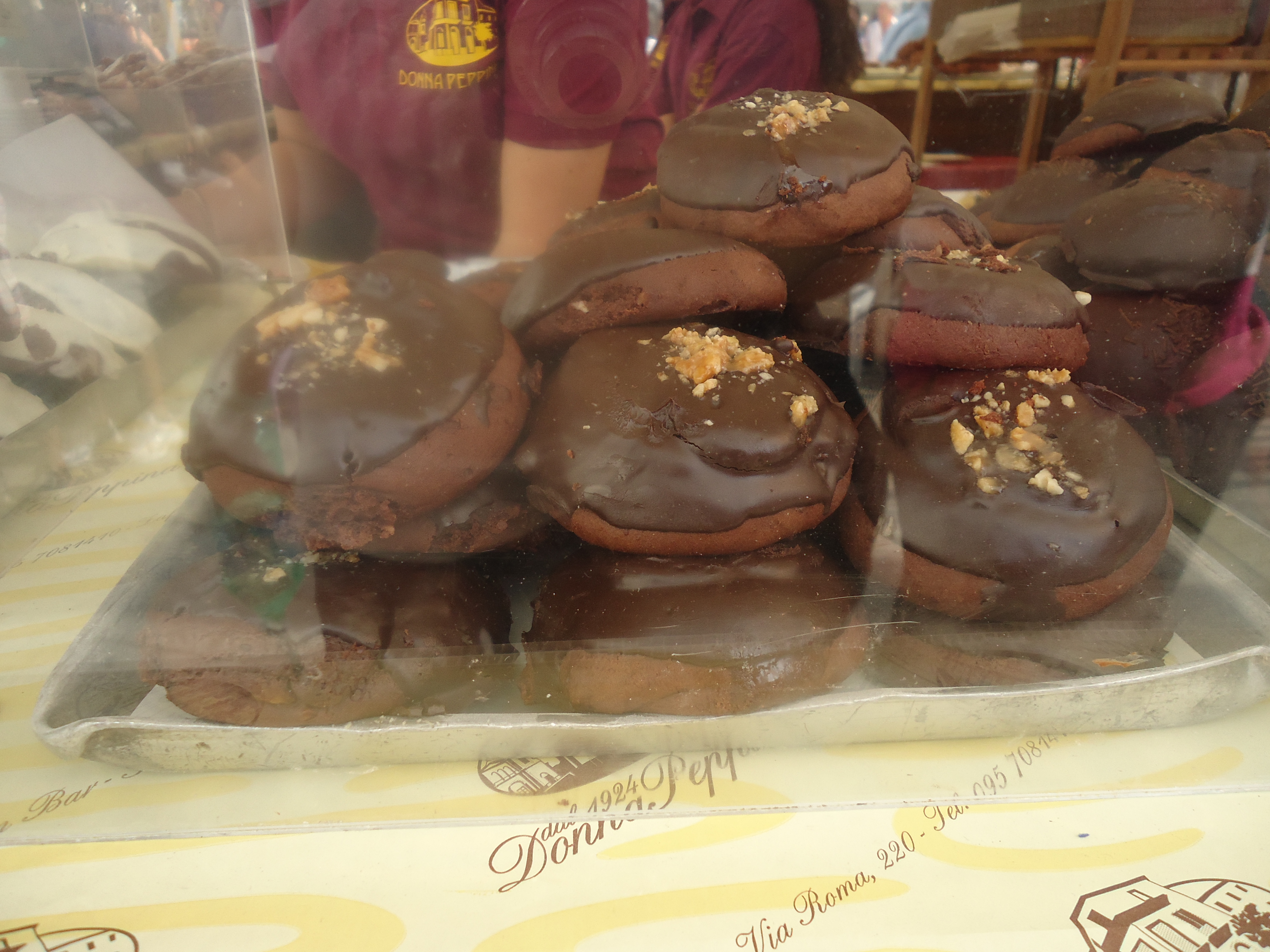
Rame di Napoli – the name suggests they originated in Naples but this dessert is typical of the Fall season in Sicily
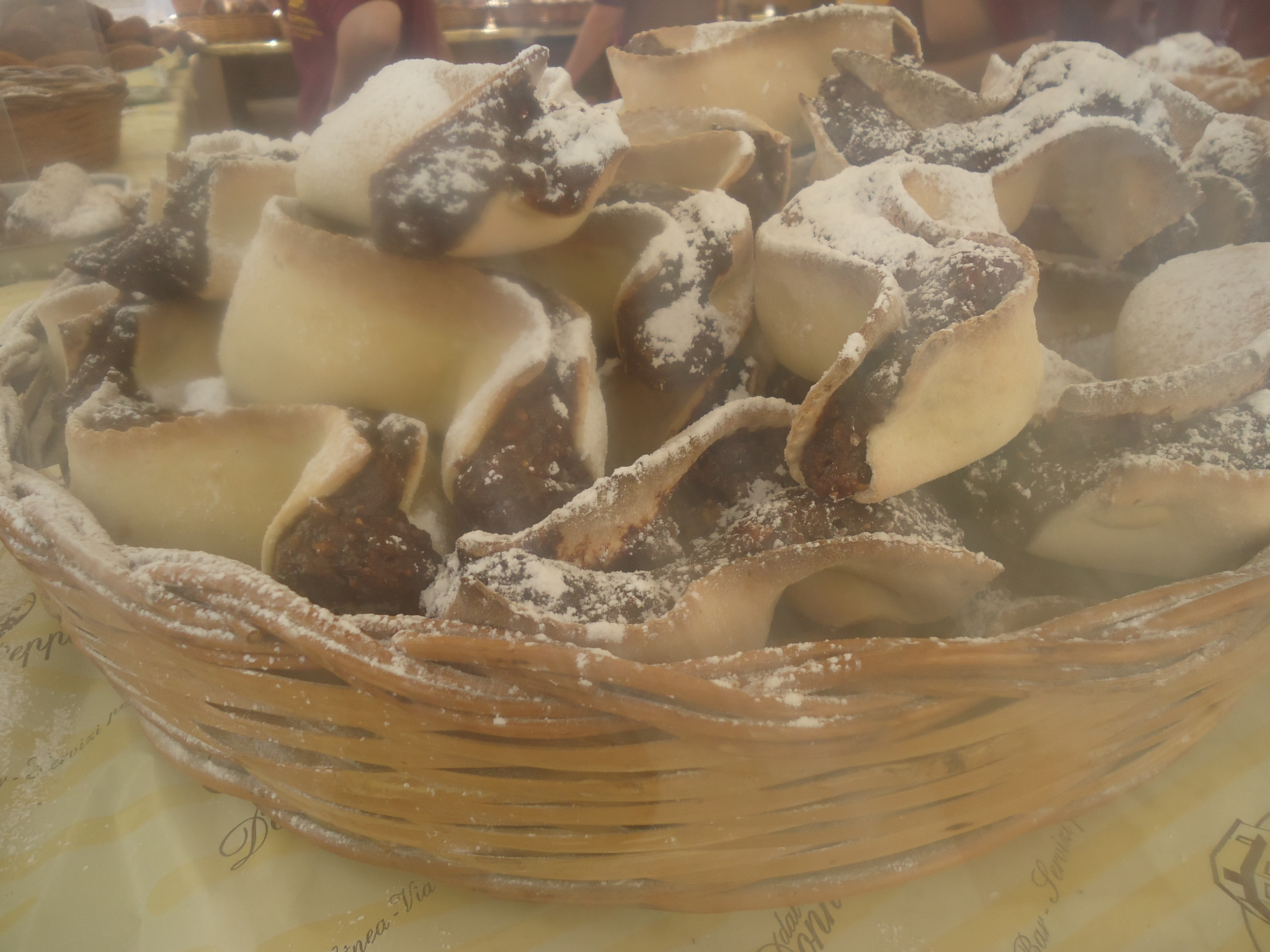
Mostaccioli – pastry stuffed with a mixture made of cooked wine, dried figs and almonds
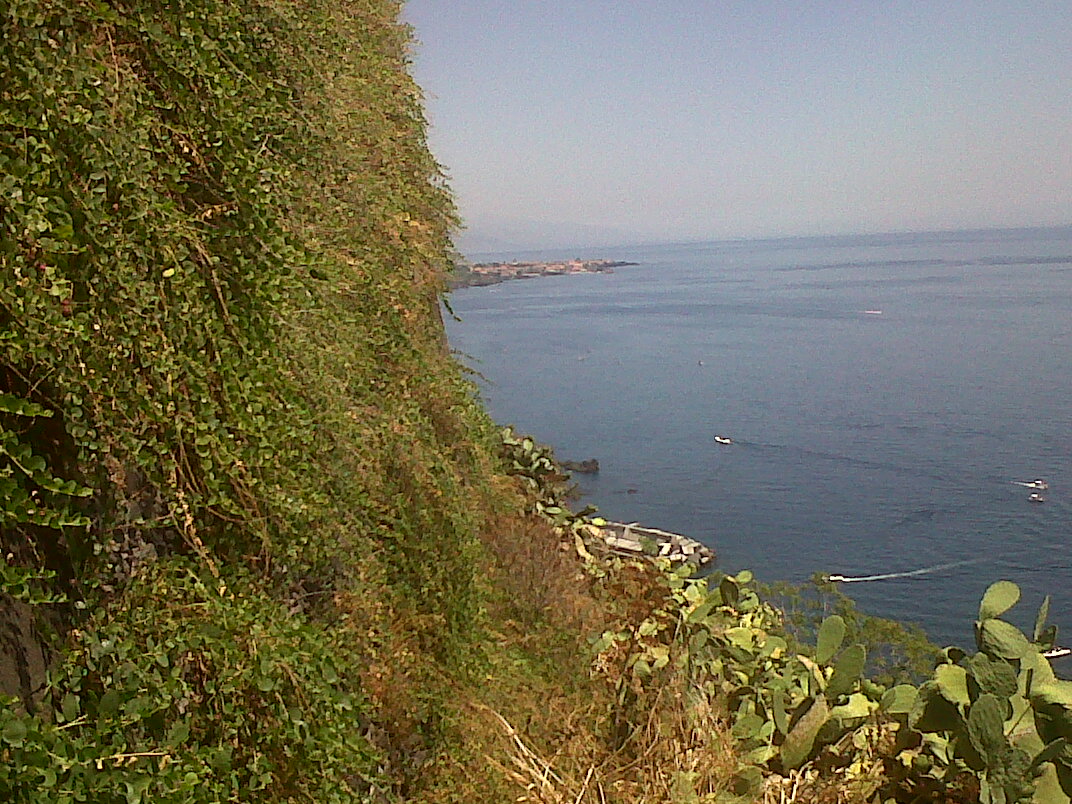
A breathtaking view of the Ionian coast and a wonderful path to walk all the way down to sea level from the highway above is found on highway SS 115.
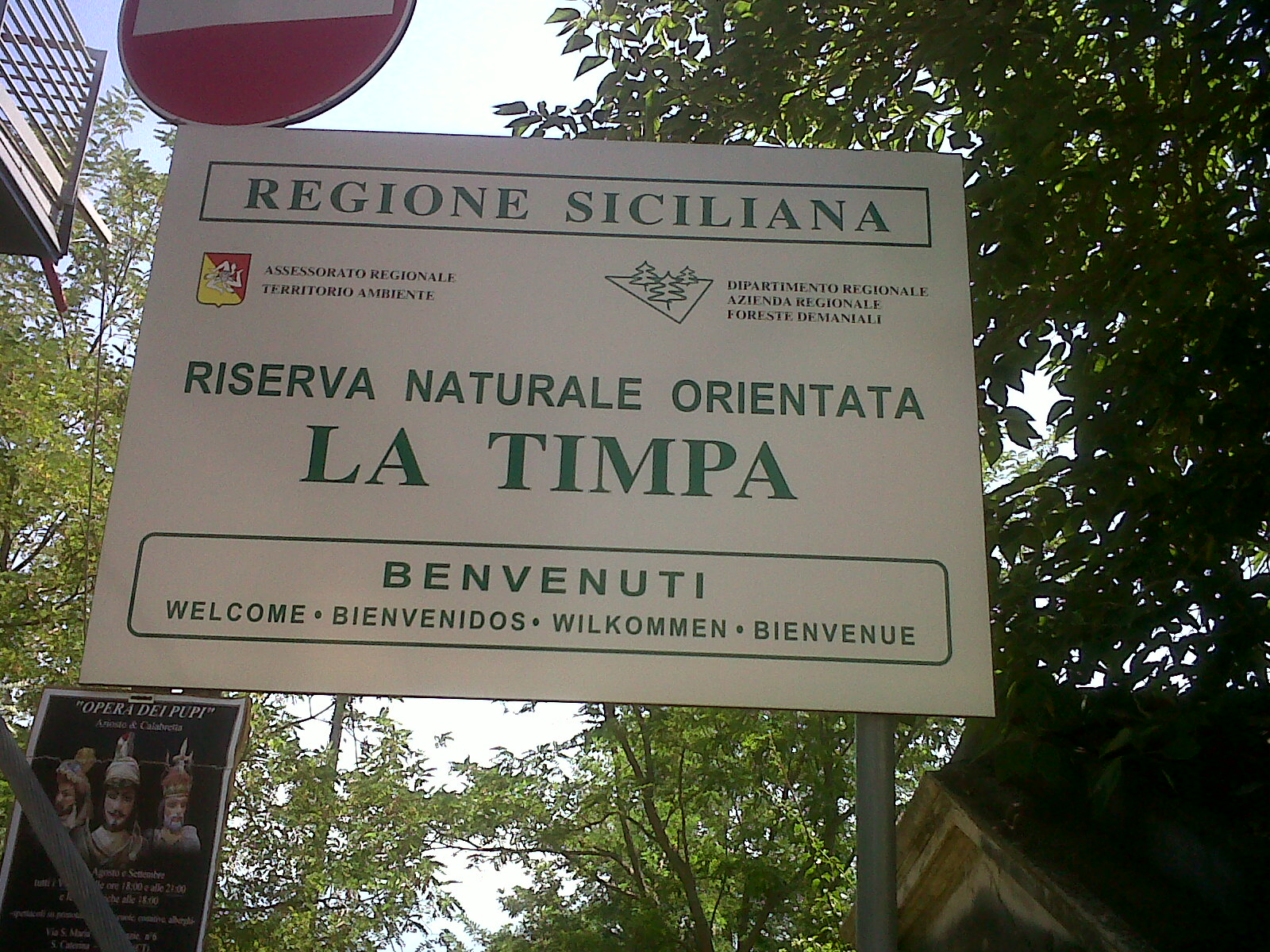
This area is called La Timpa and when driving north on SS 115, from Catania, it is located a few kilometers before the town of Acireale. I walked this path with a local group of hikers, and the following pictures show what a beautiful place it is.


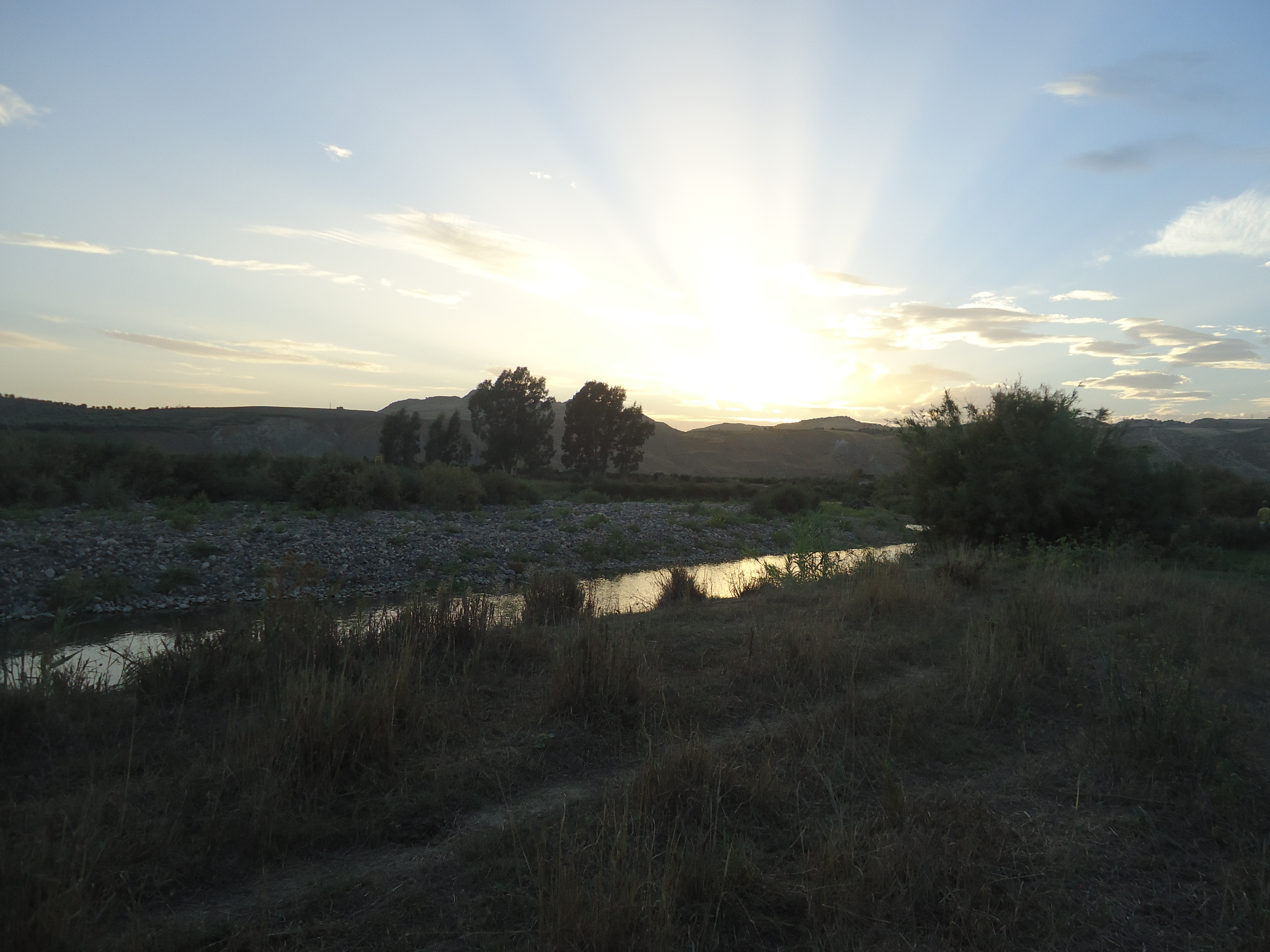
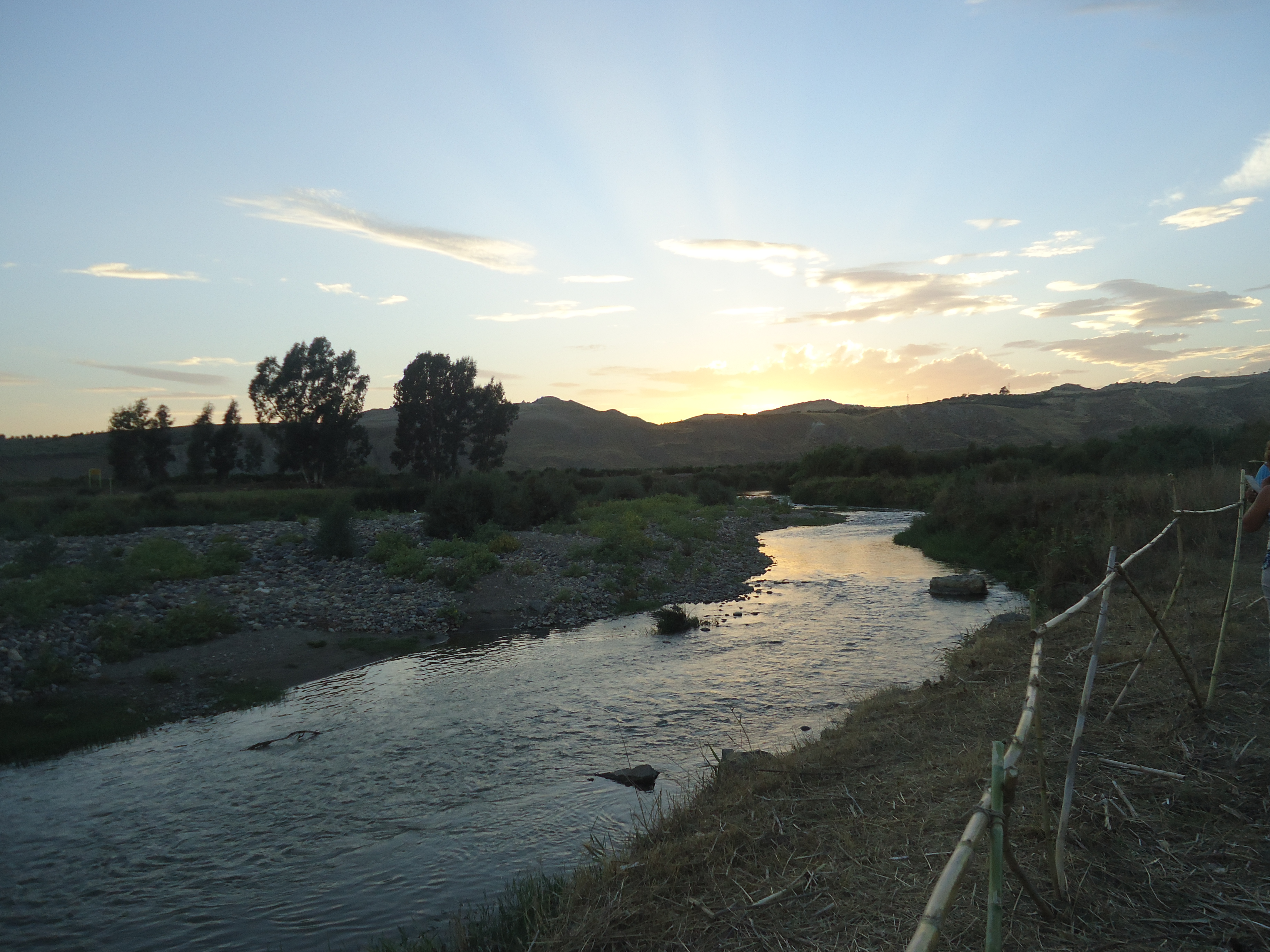
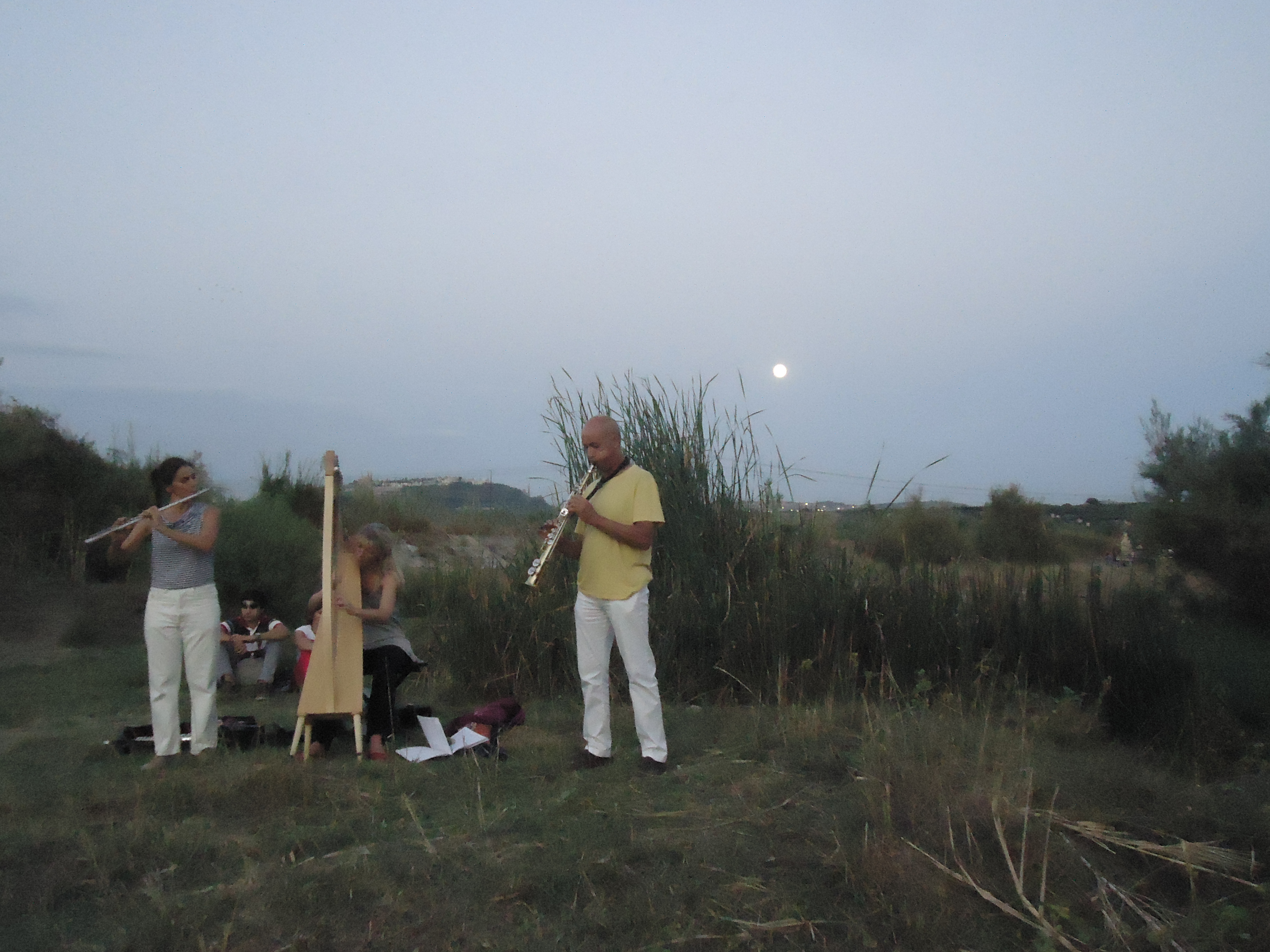
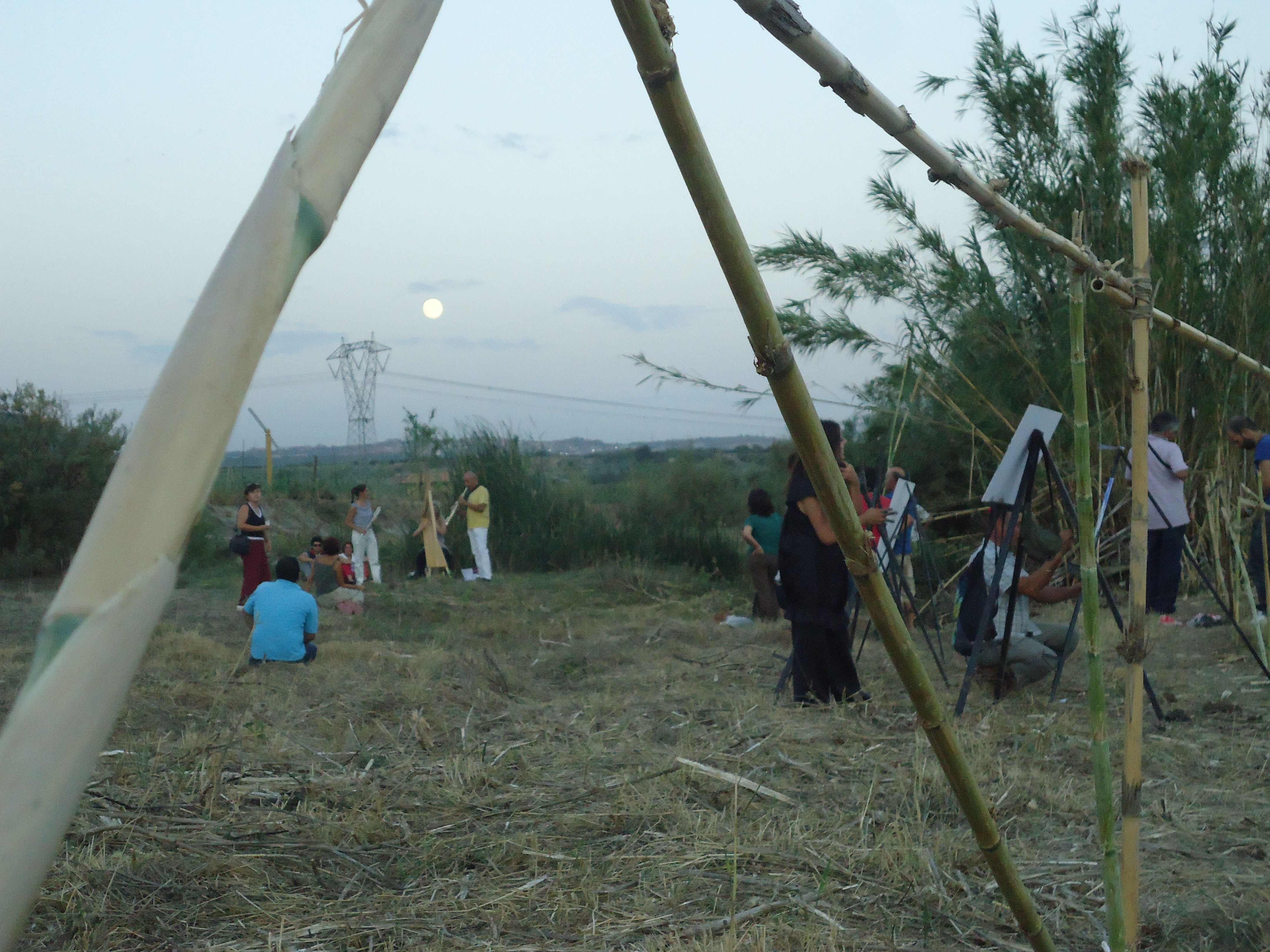
During a weekend of events tied to Vivisimeto, volunteers promoting and working to improve the Simeto River Valley, I attended a concert along the Simeto River, at sunset. I will show and not tell.

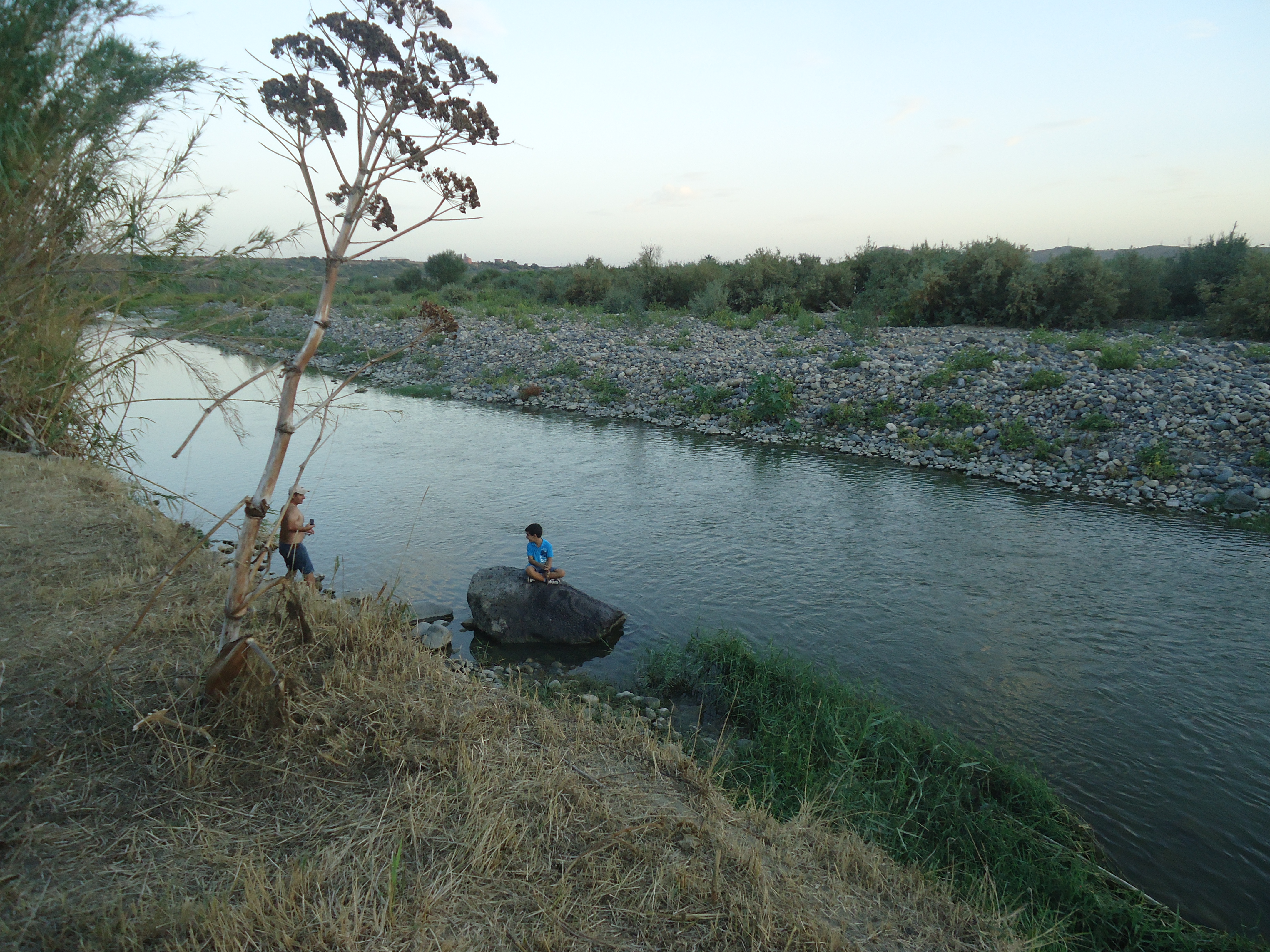

While listening to the music some enjoyed painting

A full moon rising behind the musicians
Peloritani – In the Backdrop the Tyrrenean Sea and Stromboli

When driving from the city of Messina, close to the eastern tip of Sicily to the town of Monforte S. Giorgio, on the Peloritani Mountain Range, one can either drive along the northern coast of Sicily, the Tyrrenean Coast, or through the Peloritani Mountain Range. This mountain range has been called “a balcony” as its location offers, from different spots, a view of the Ionian Sea on the eastern coast, the Tyrrenean on the northern coast, the Aeolian Islands, the Nebrodi Mountain Range to the west and also Mt. Etna and its surrounding areas.

The town of Monforte S. Giorgio is perched up on top of one of the mountains overlooking the valleys below and behind it lies the Tyrrenean coast. I rode through the mountains on a sunny Fall day with Cettina anf Filippo to visit their orchards. They sell their products through the local fair trade network and own Az Agr. Bitto. Upon arrival, we started our walk through the woods and orchards. We were met by some friends of theirs, Patrizia, Matteo and Santino. Patrizia, who works for the University of Messina, has also founded a G.A.S. in Messina, “Quelli dell’orto” and they were visitng that day too.
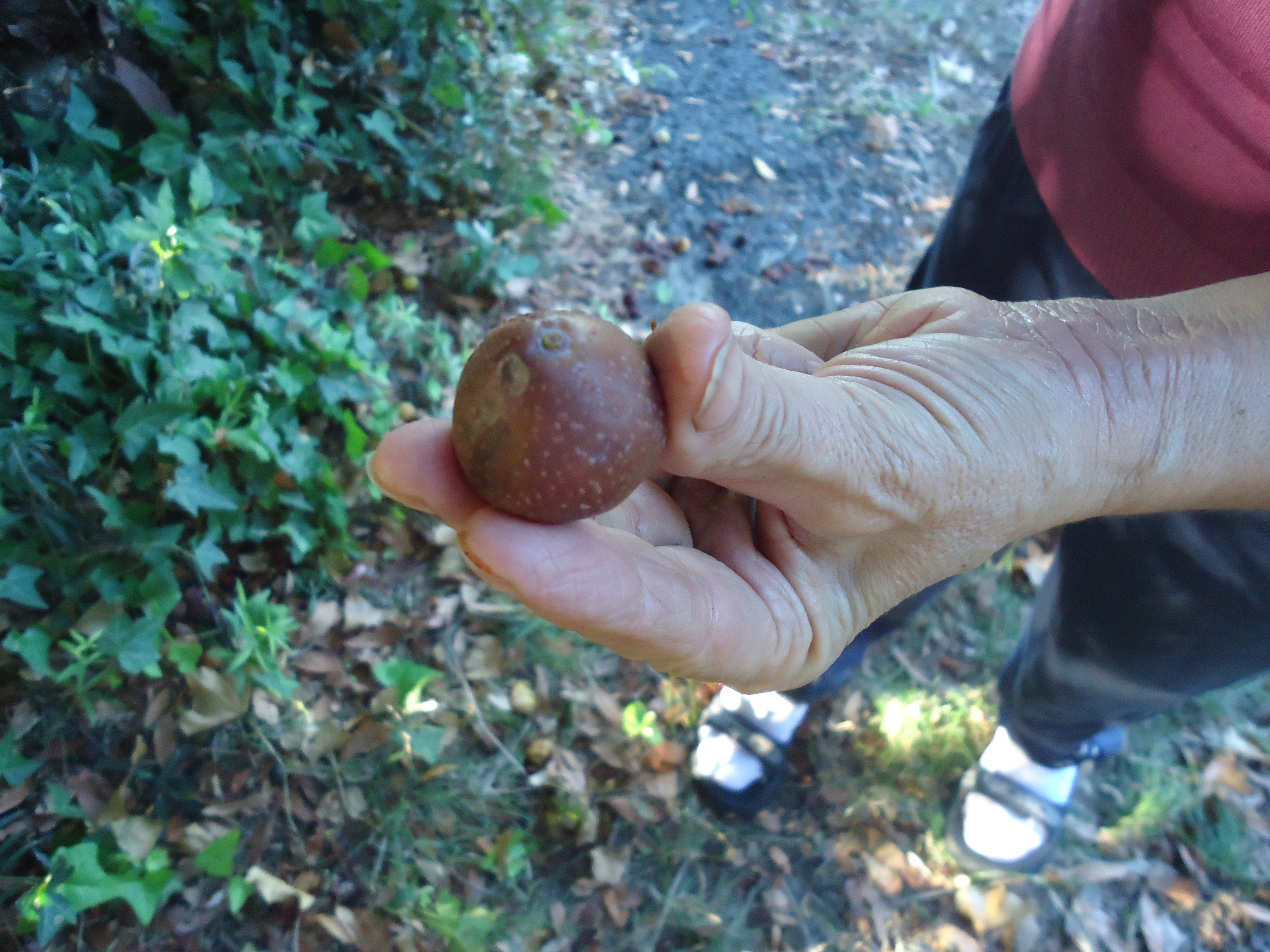
As we walked through the woods and adjacent orchard, we were immersed in a richness of colors, fragrances and plush vegetation. There were citrus trees, persimmon, chestnuts, a bay laurel tree and different kinds of apple trees, one of which was a local type called “lappeddi”. One kind of tree I had not seen in many, many years is the Rowan, called Sorbo in Italian, and I found it there. As a child I remember eating the fruit in Fall and over the years I had never run into this fruit and wondered about its existence. I believe there are not many Rowan trees left in this area, but this one bore fantastic fruit, and I cannot describe in words what it felt like to taste that fruit after so many years!
Sorbo Fruit
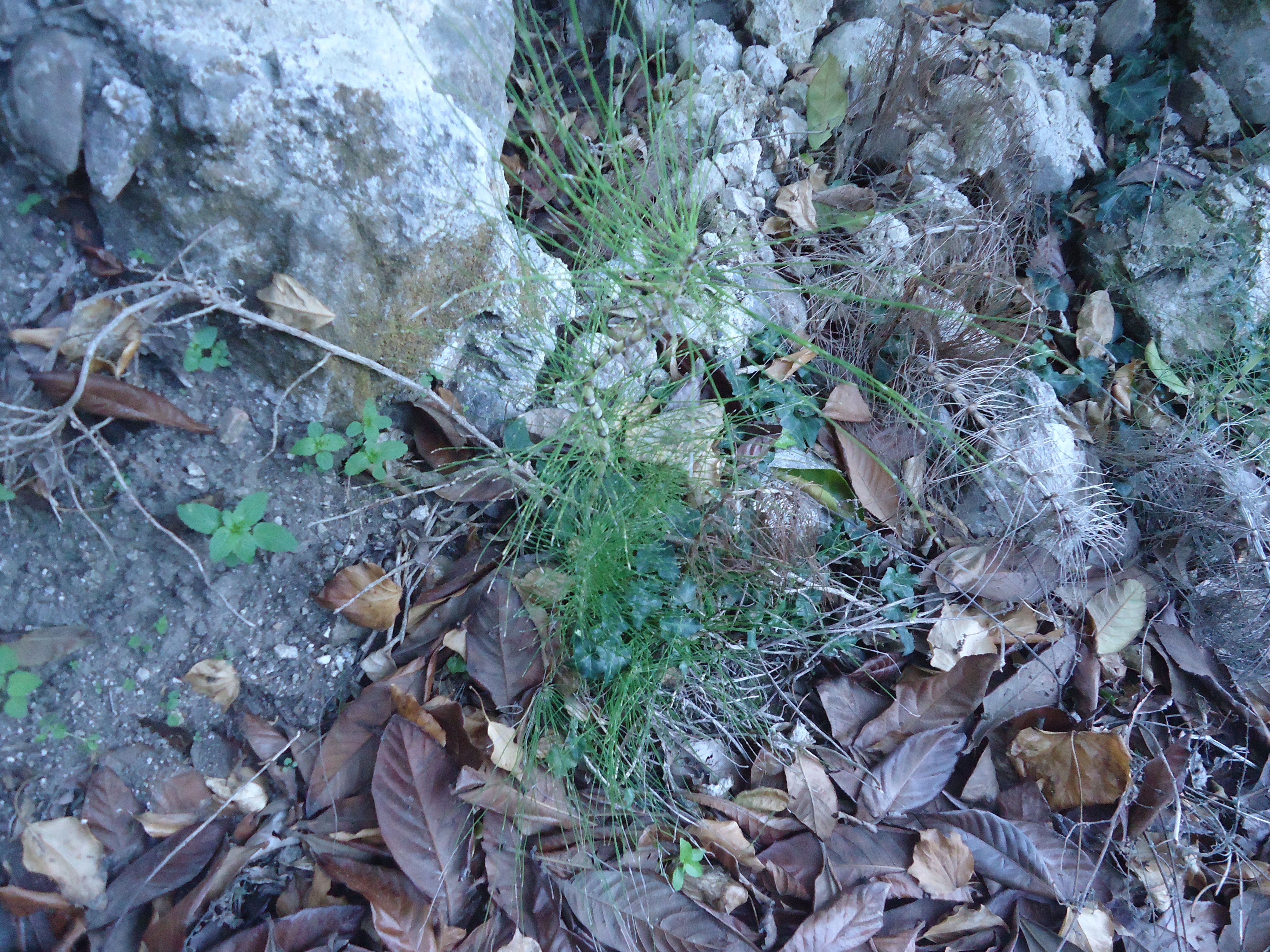
While exploring Sicily I have enjoyed learning about some wild vegetables typical of specific areas and on the Peloritani with this lively group I learned about some that were new to me. There was the “equiseto”, which I was told grows in moist areas, and once its needles are removed, the stem is cooked in the way one would cook asparagus. Then we found “porcellana”, called “pucciddana” in Sicilian, (I hope I have spelled it correctly as we discussed the difference between the Sicilian dialect of Catania and that of Messina) and malva. Pucciddana and malva, I learned, are eaten in salads. Finally we saw a large type of mushroom, boletus crysenteron, and I thank Matteo for his knowledge in providing the name of this mushroom and explaining its characteristics. It is interesting to be reminded of the differences in the local Sicilian dialects and how the words can be totally different or the same with a different pronuntiation. As I have travelled around Sicily, this topic has been one that has brought laughter and articulated discussion and as a lover of languages one I enjoy.
Pucciddana

Equiseto
Unfortunately, this region of the Peloritani has experienced landslides due to poor choices made by some people. As we observed the landscapes around us, and specifically the mountains around us, Santino, pointed out areas where landslides had occurred. You could see furrows on the mountain side. Santino, also explained many interesting facts about ways one can recognize where bodies of water might lie below the earth and he pointed out some of these during our walk.
One of the furrows on mountain side in front of our view
An old mill sitting in this beautful setting

What beautiful people and places!
All the many years I lived away from Sicily, I always missed eating Sicilian prickly pears in the Fall. Then, one day, a few years ago, I approached a prickly pear bush without practicing the necessary precautions. I ran to the bush, picked a prickly pear with my bare hands, proceeded to peel and eat the fruit. The sad result was months of painful spines attached to my tongue, hands and arms. I knew the proper way to handle prickly pears, but in a moment of total irrationality, I didn’t follow the rules.
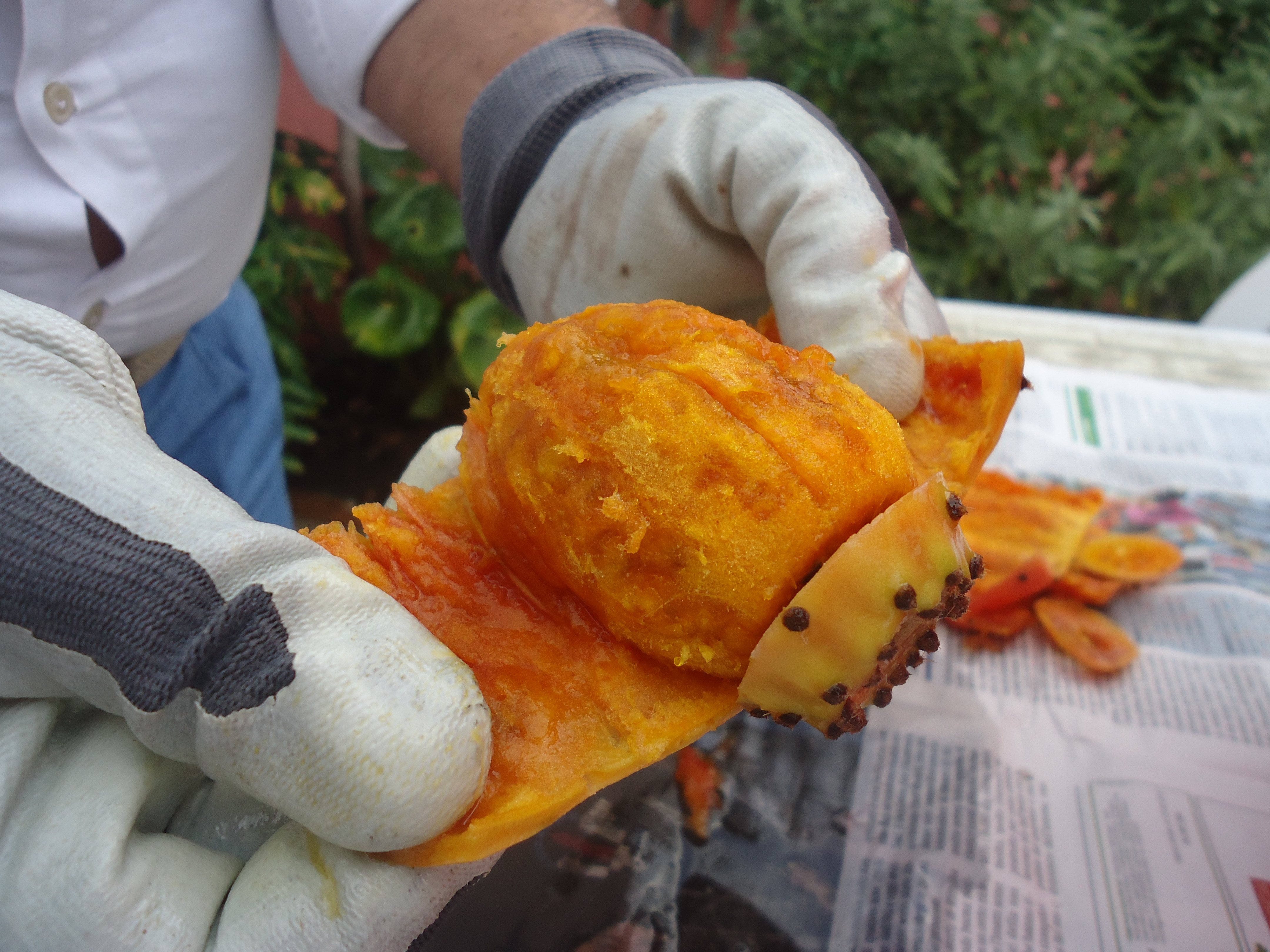
Recently, while visiting my childhood friend, Lina, and her family, at their home in Belpasso, on the foothills of Mt. Etna, I told her husband, Pippo I wanted to pick some prickly pears. He insisted we go together to the prickly pear bush and I follow the rules. So, armed with the proper tool, heavy gloves on my hands, off we went. I picked the fruits and then Pippo took the proper precautions in pealing them.
First, one soaks the fruit as to allow the spines to separate from the peel. Then, wearing heavy duty gloves, one peels the fruit. The proper locations of where to cut the peel are shown in the picture.
First a cut on the end and one along the length of the fruit
I love this fruit! But watch out – the seeds could stick to your teeth!

A dessert made with the prickly pears by Pippo’s sister, Vita. So delicious!

My ideas usually come not at my desk writing but in the midst of living. Anais Nin
Entrance to Azienda Agricola Il Barbagianni


A visit to Vincenzo’s orchards is a testimonial to the intertwining history of this land and his family. Vincenzo’s great- great- grandfather purchased this land and his family has owned and cultivated it for five generations. It was purchased in the mid 1800’s and is located not far from the town of Lentini, on the eastern part of Sicily, in the municipality of Catania. The Azienda Agricola Il Barbajanni is now owned by Vincenzo Vacante. His eleven hectares of orchards are mainly oranges of many varieties, Tarocco, Sanguinello, Ovale, Valencia and Moro. Moro is a typical orange variety of the town of Lentini.
Ovale Orange
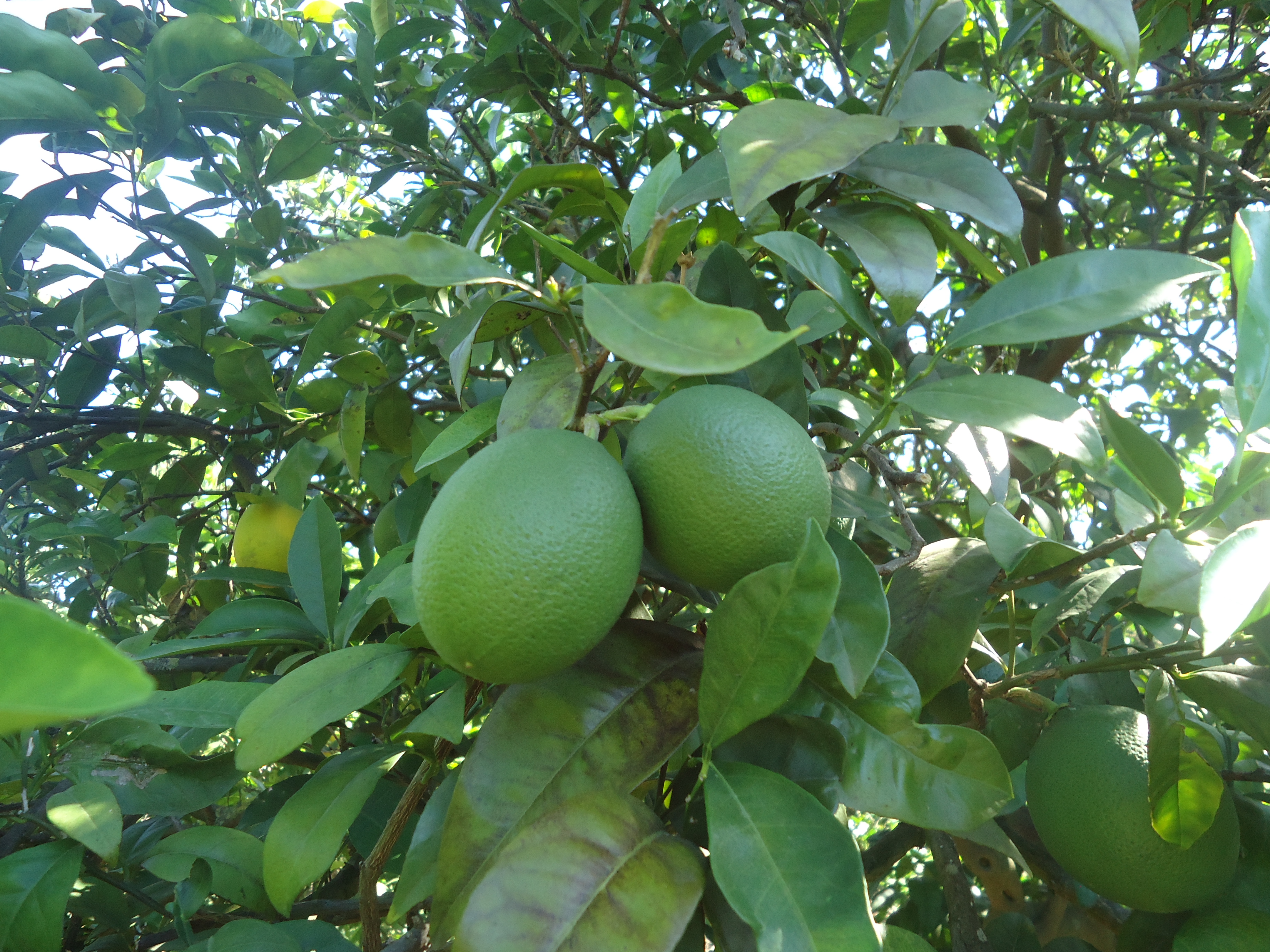
The pictures below show the zagara flower, the name for orange blossom in Italian, and its steps from bud, blossom, to fruit.

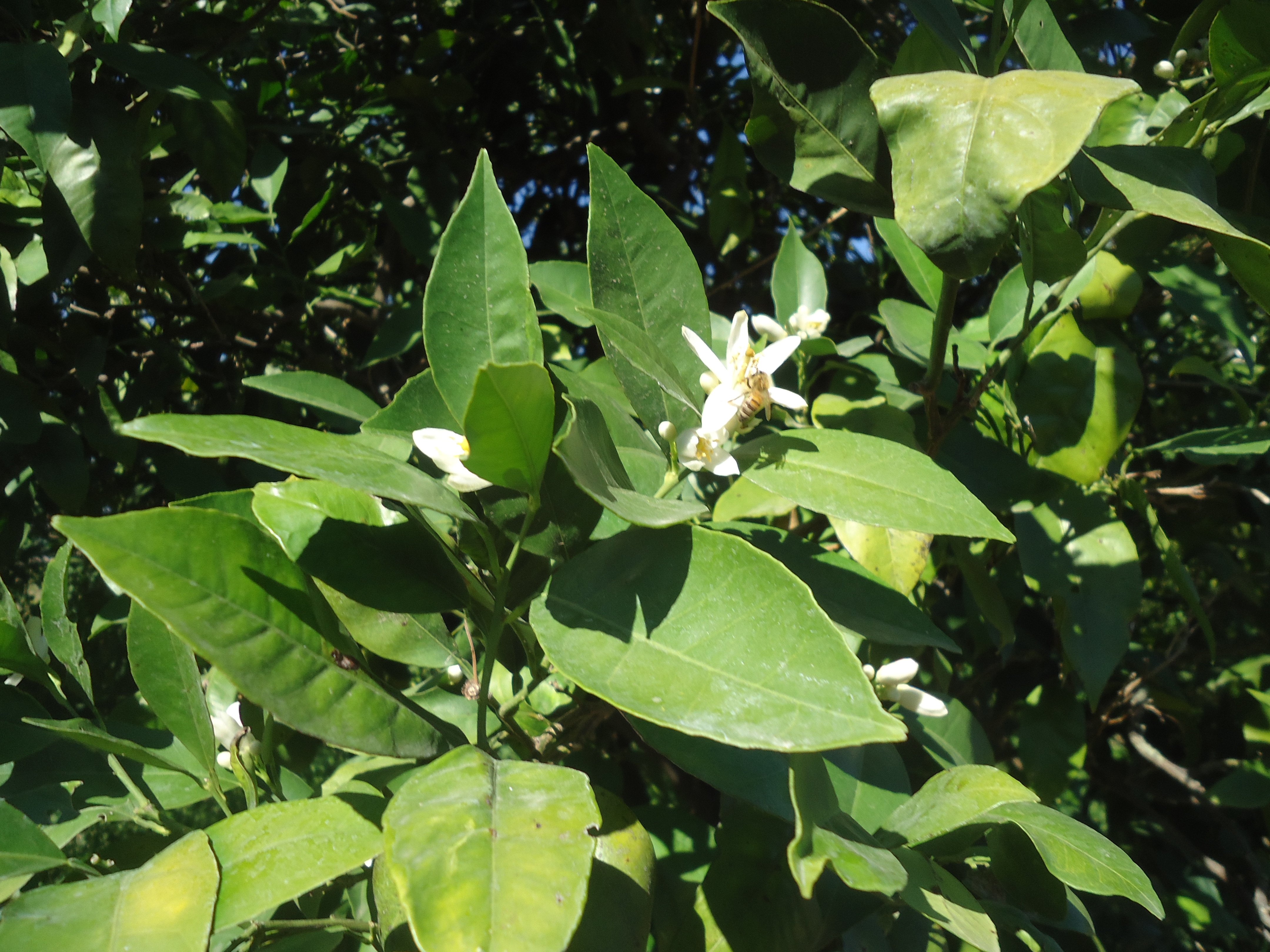
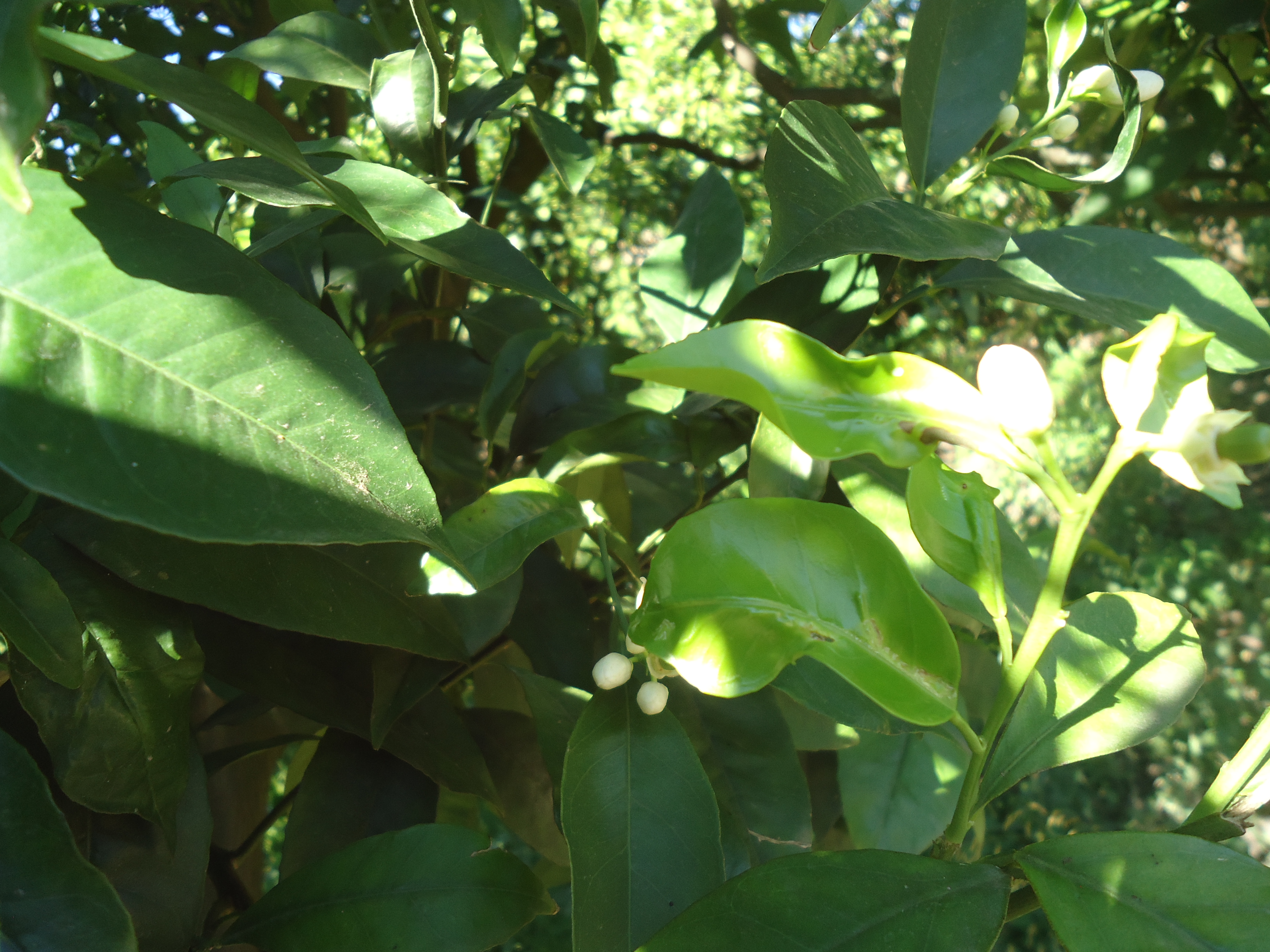

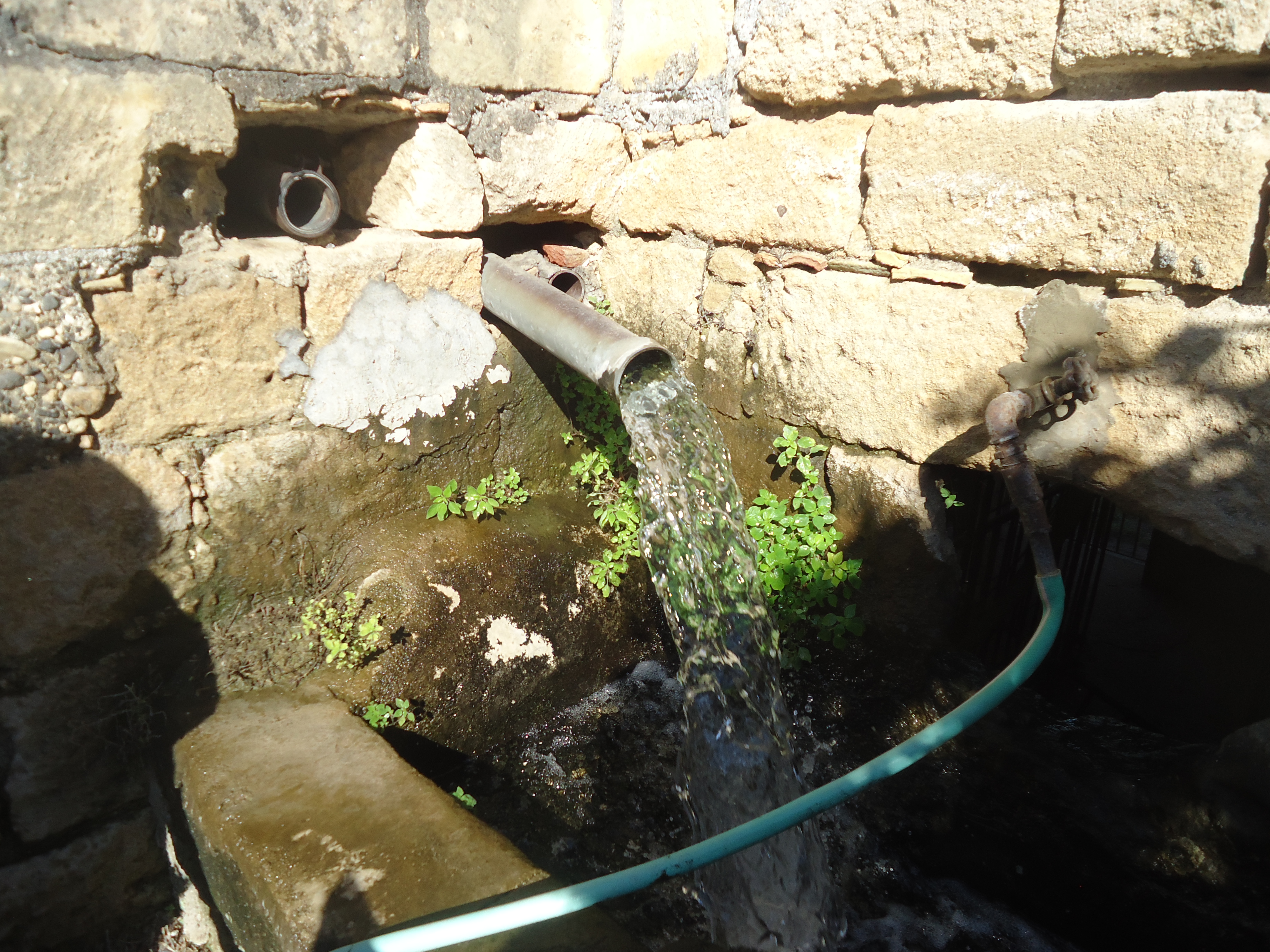
We walked around the property and Vincenzo explained the irrigation system and other activities taking place on his property. Three wells provide water to the “gebbia”, the Sicilian term for water holding tank. From this tank, the water flows to the three irrigation systems running through the property. During this season, Vincenzo is irrigating every day and it takes 12 to 13 days to complete one entire round of all the trees on the property.
Gebbia

Water flowing to the irrigation system
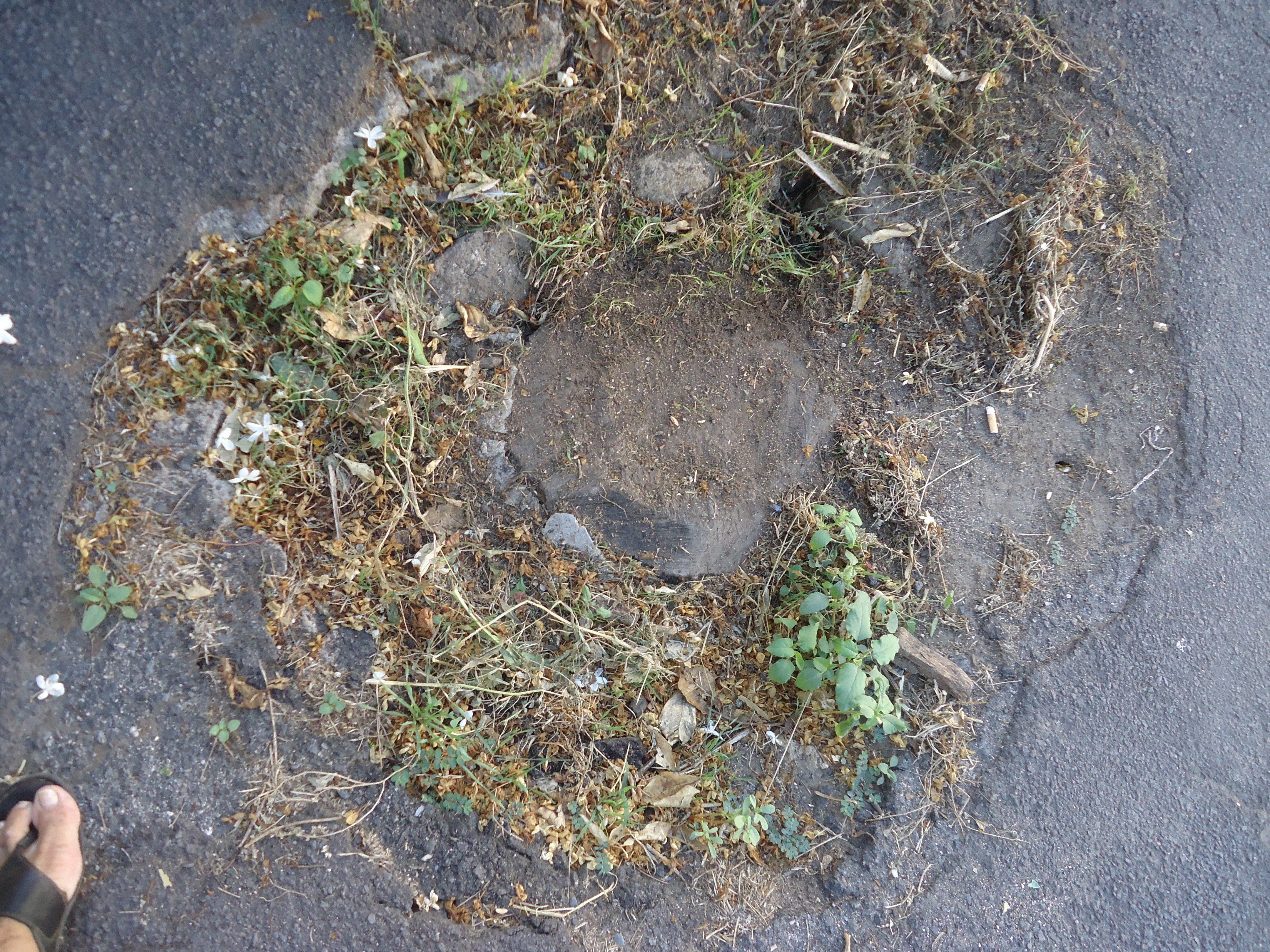
With regards to some family traditions tied to this land, below is the chestnut tree planted by Vincenzo’s father when Vincenzo’s son was born.

It had been planted when Vincenzo’s father was born and it died at the time of Father’s death.
Some honey growers come to this property during the blooming season and they stay about 20 days to produce honey; there is also a permanent beehive station kept here by a German who is carrying out some research.

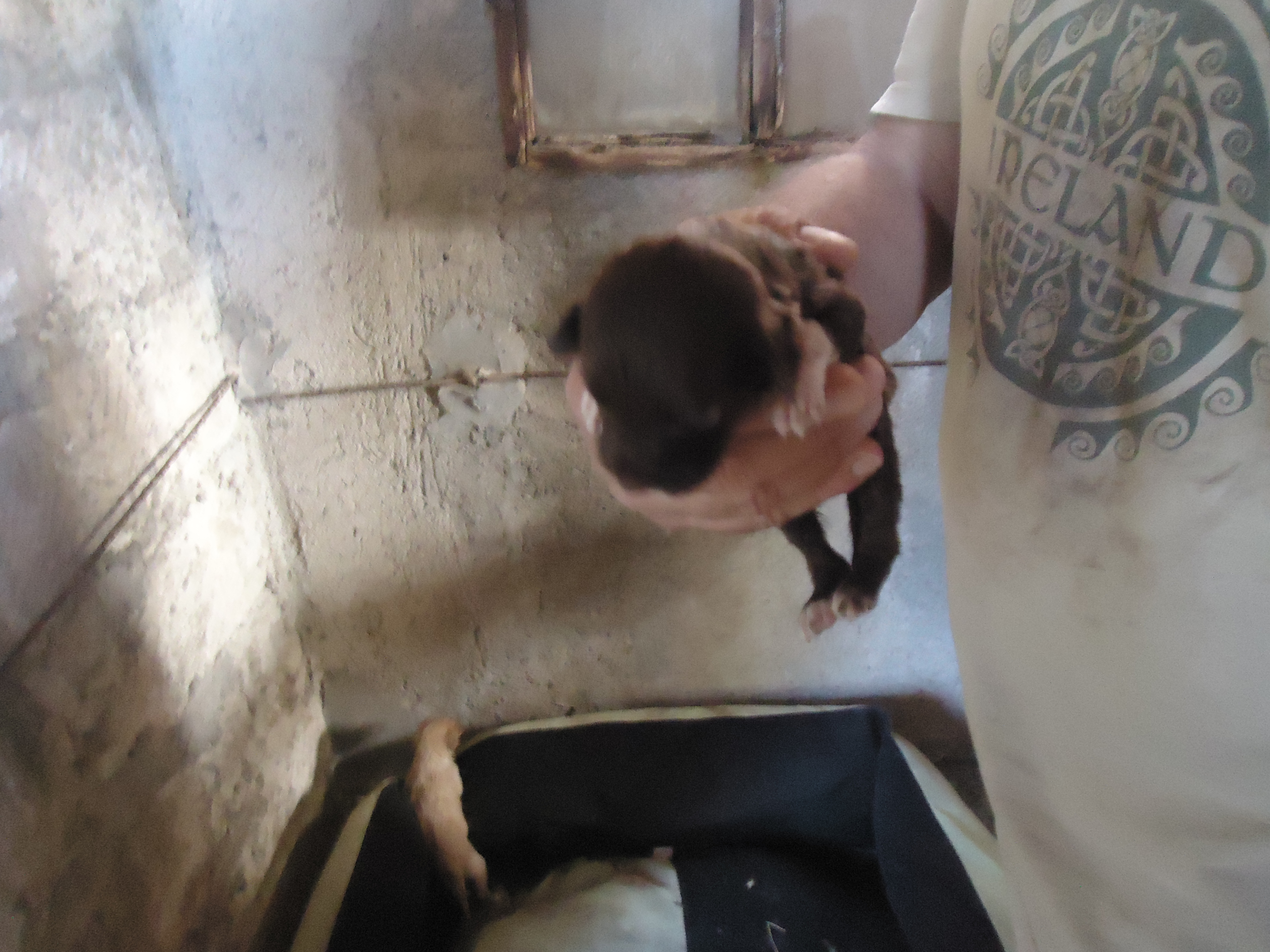
As a child, Vincenzo was quite displeased to see that the dogs on the property were kept tied and only one at a time loose, at night, to act as a guard to the property. Consequently, he stated that as soon as he had some authority on the property, he made sure that all his dogs would run free. He recently rescued some puppies that were abandoned on his property and we visited them before I left.
The rut of the litter
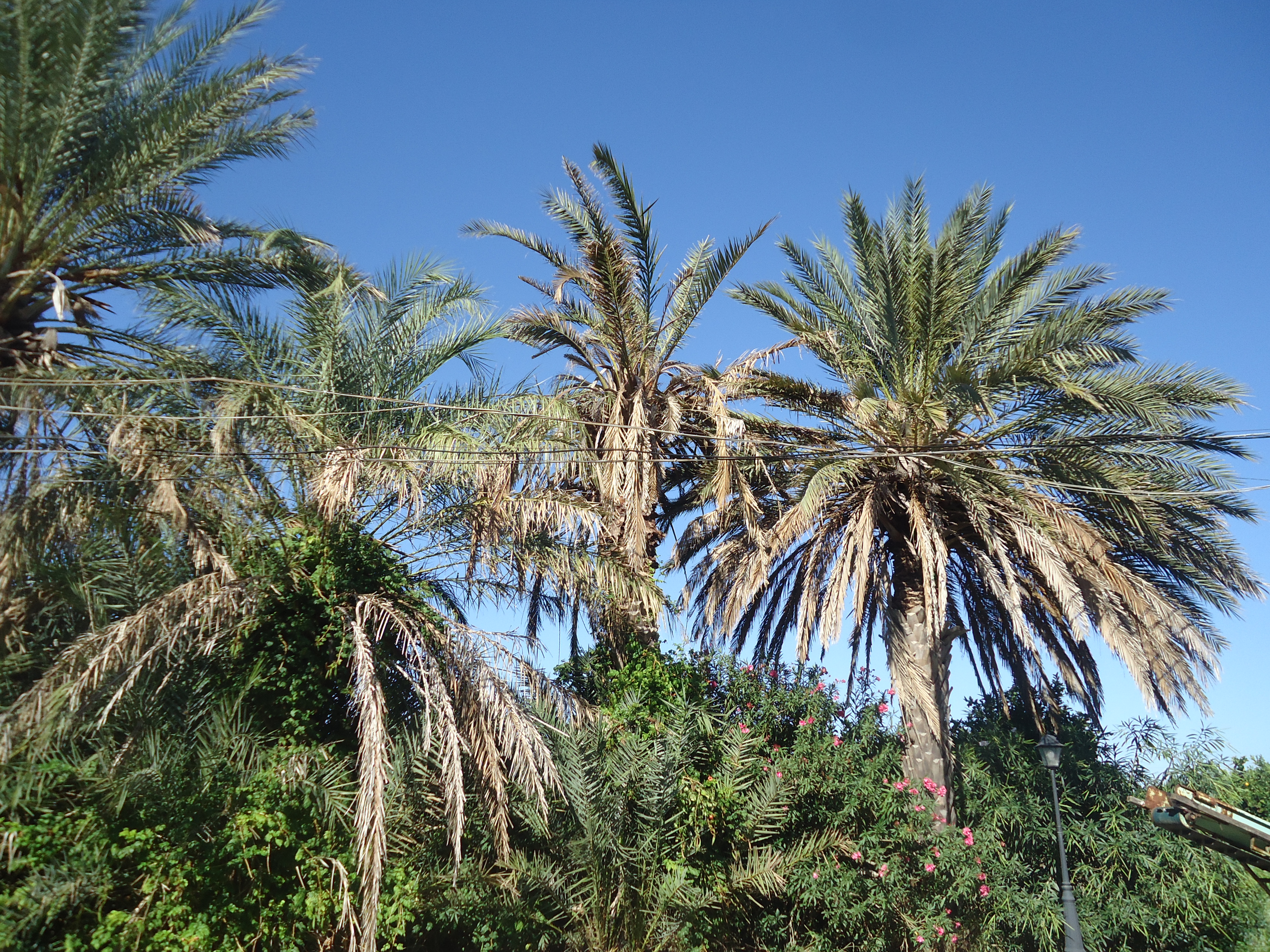
There are many palm trees on the property. Unfortunately, many of them are dying, as they have been attacked by the Red Palm Weevil (Punteruolo Rosso in Italian). It is so sad to see this happening here and in other areas of the island.
Finally, as I was leaving, I was hit by the fragrance of this wonderful jasmine, one of my favourite aromas. This fragrance is tied to my childhood memories!

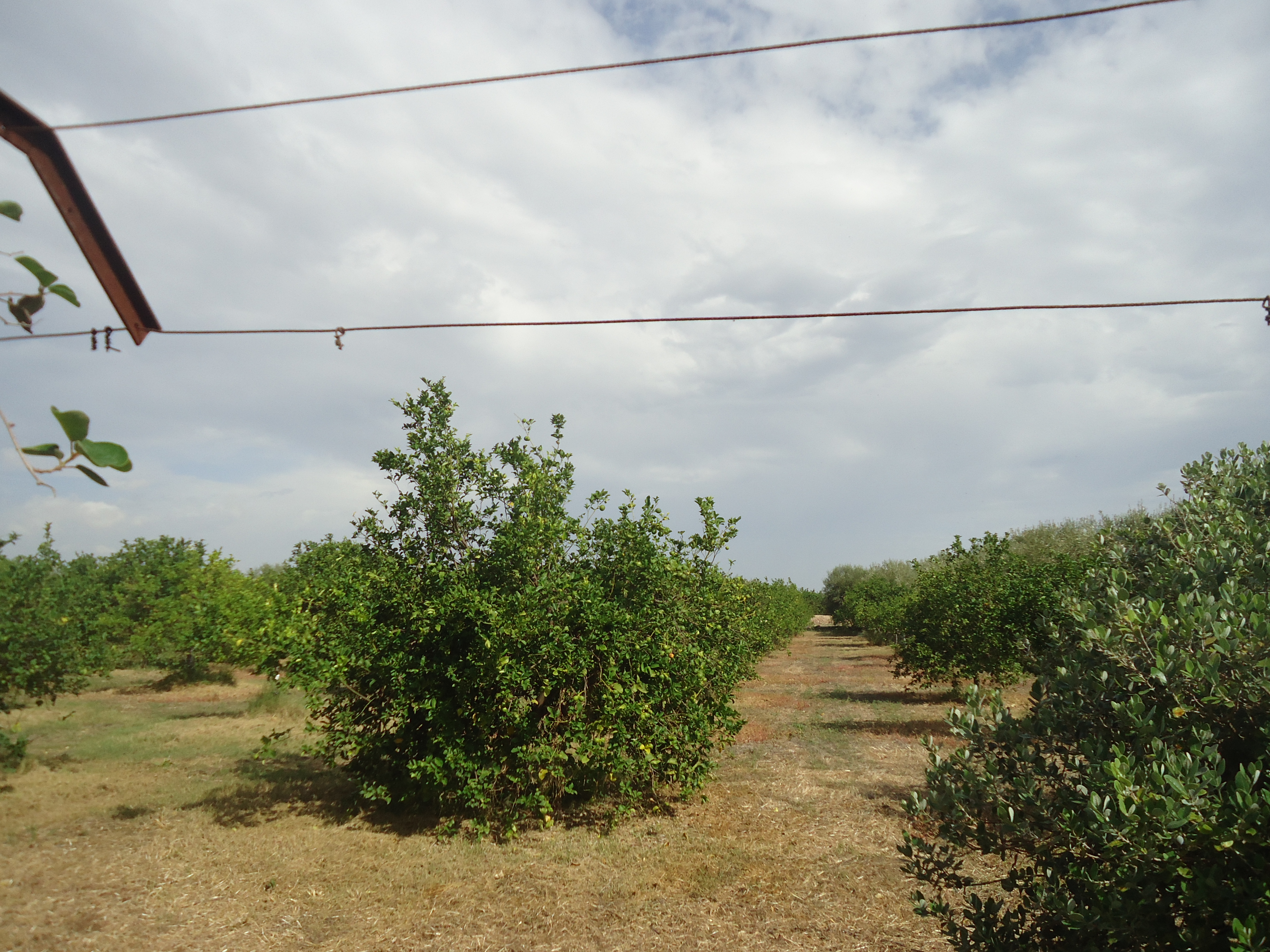
On a sunny October day, driving from Catania to Cassibile and then through country roads, I reached Monica’s property, Azienda Agricola Jannarossa. As we met, she and I decided to take a walk around the property and talk. Monica started by telling me she had two stories to share, one on her property and one on the Siquillyah association.
Monica grew up in Milan and when she was thirteen, her father who had worked in Milan in the import/export business, decided to move the family to Sicily, where he owned land. The land was made up of nine hectares of lemon trees, two hectares of orange trees and one hectare of olive trees. Father started the orchard and olive tree business and mother and Monica helped. Unfortunately, just a short time later, Father passed away and Monica and her mother were left alone. There was no home in Milan to go back to and Mother, in her mid-fifties, could not seek other work, so they had to stay and just take care of the land. It was not an easy task, but as Monica stated, they rolled up their sleeves and got down to work. This was twenty years ago. Recently, Monica has taken over the majority of the work and as she put it, she has made her mother retire.
This year, Monica has had to face her greatest challenges. In March, a large hailstorm damaged the blooms on the lemon trees and many of the oranges, causing great damage and the kind from which it usually takes two years to recover. Then, in May, while she was away on a business trip, a devastating fire on her property caused further damage. In one area, out of 1,300 trees, 700 were partially burnt. She was devastated and sent out a call for help to the members of Siquillyah. The response was heartwarming and made her realize she is not alone. Twenty eight people volunteered their time and ran to help. They helped her take precautions to protect the tree bark that had been damaged by covering it with lime and they repaired the watering system. She could resume watering the trees that way.
Trees Damaged by Fire

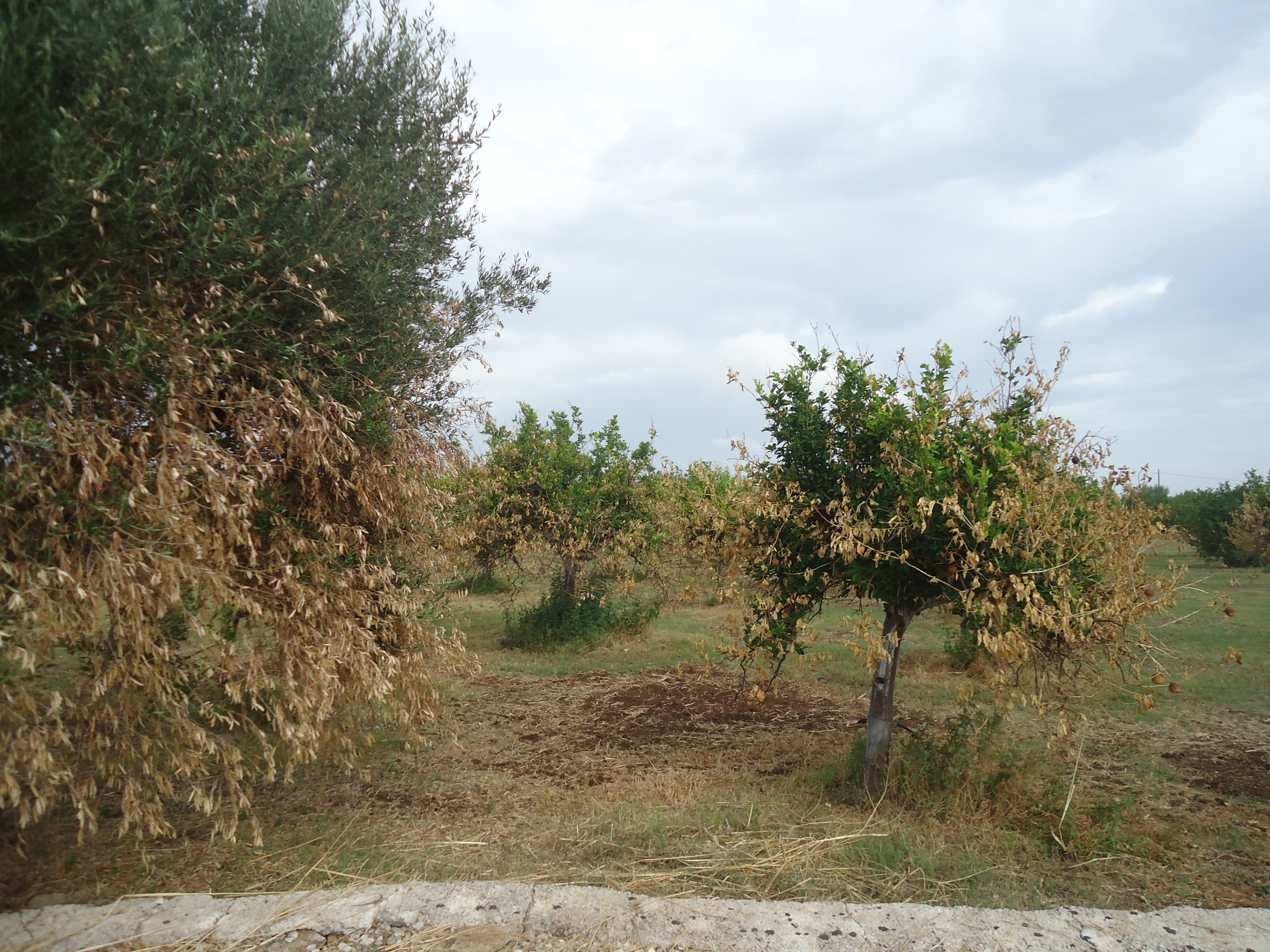
In retelling this sad event, Monica stated how she greatly appreciated the response to her call for help and that she realized she is not alone. There is strength in a network and this brings energy and synergy! At her return from the trip she was devastated, but after the help she received, her energy returned and she realized “She could do it.”
In addition, Monica shared some interesting information about lemons. First of all, she stated that she has established a consortium to protect one type of lemon, the IGP Femminello Siracusano. IGP, Indicazione Geografica Protetta, ensures that the product belongs to a specific geographical area. Furthermore, through IGP certification there is a system of checks and balances to ensure that the production process and quality control follow the proper guidelines.
In discussing the beneficial effects of lemons on our health, Monica shared some results of research conducted recently at the Marionegri Research Institute in Bergamo, Italy. In a study conducted with 400 people who had kidney stones, drinking a glass of freshly squeezed lemon juice on an empty stomach caused the stones to dissolve. The results obtained outweighed those reached by taking medication for the problem. Monica shared the beneficial effects of lemons in cleansing the system especially liver and kidneys and lemons’ effect on reducing allergy symptoms.
Finally, meeting this young lady was a pleasure and her determination to survive all odds comes through in her demeanor. Certainly, her belief in the positive impact lemons can provide for one’s health is food for thought……..
Il Mandorleto
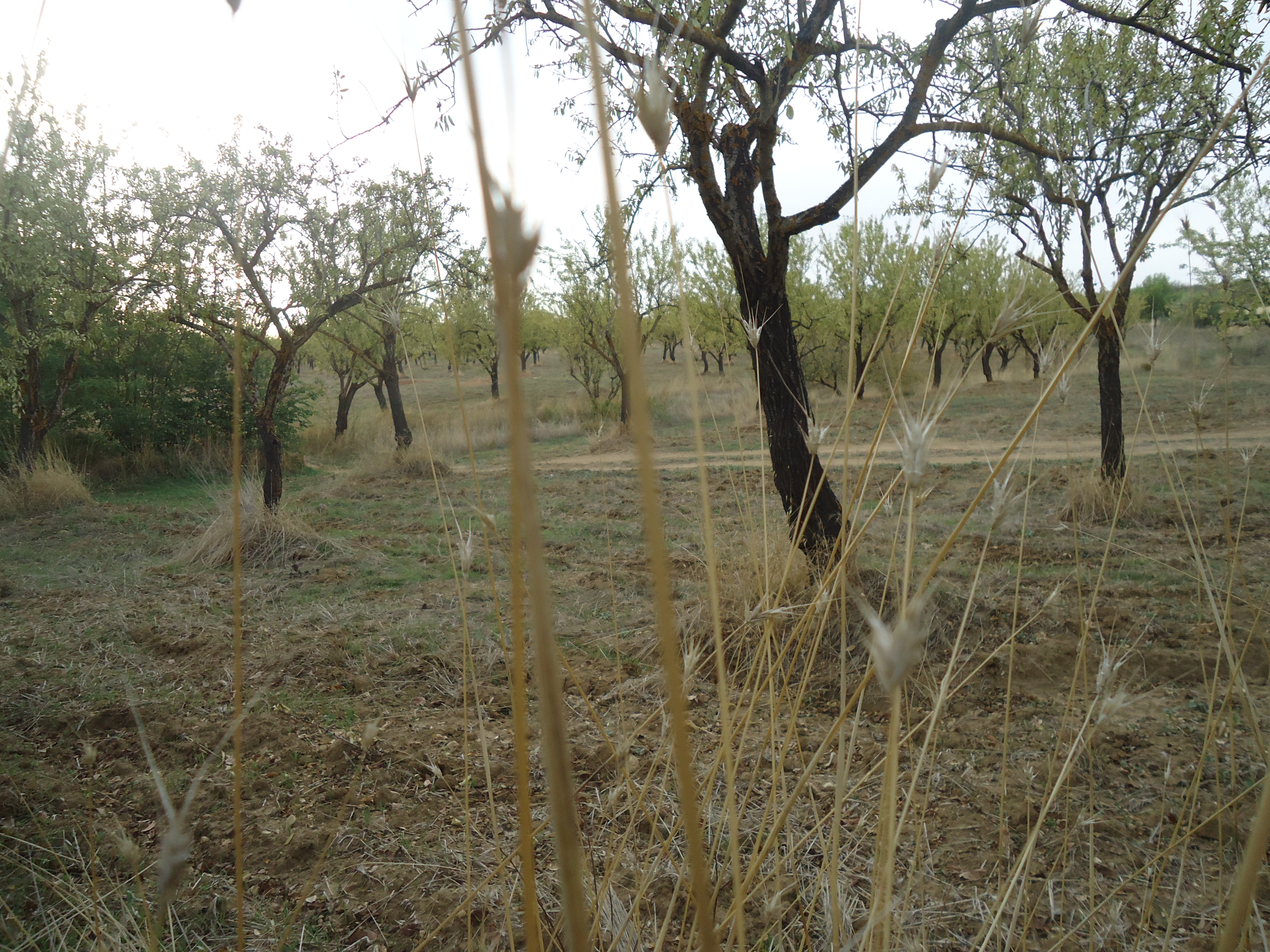
What does an IBM IT programmer, project manager and data base administrator do when he realizes stress has taken over his life? He moves to Sicily, takes over his wife’s family land and starts a new business immersed in nature. That is exactly what Maurizio chose to do eleven years ago. Upon arrival at Il Mandorleto, as I met Maurizio, his sparkling personality and demeanor proved the energy behind this man’s life. His warm welcome and mannerism puts the guest immediately at ease. We sat at one of his picnic tables, under the trees, and started talking about the history behind Il Mandorleto. Maurizio used to spend weekends at this family location flying in from Rome where he worked at IBM until, one day, he realized this was the place where he needed to be. It was a bold decision as he mentioned most of his family members thought he was out of his mind in considering such a choice. He resigned his job in Rome, and arrived in Sicily with his children, a dog and a cat. His wife helped him get started, but she now commutes between Sicily and Rome as she still holds her job in Rome. Today Maurizio grows almonds on forty hectares of land, runs an agri-tourism on the property, and offers equestrian tours taking groups to the surrounding areas.
Maurizio mentioned the main obstacles he had to overcome in starting this business. At first, his parents and in-laws did not believe in his project; however, over time, he has proven to be successful and is encouraged by the positive feedback he earns from his guests. Another obstacle in this business is the amount of time it demands and how one needs to find a balance in allotting time for the family. Maurizio insisted on the importance of avoiding family anxiety; everyone needs to be happy and especially Mother as he put it: “When Mother is happy, everything goes smoothly.” He added that a balance needs to be found in order to avoid the anxiety. This type of activity requires the family’s collaboration and in his case, his sons are actively involved in the daily tasks. The older son, a student at Scuola Alberghiera, helps out in many ways among which in the kitchen and the younger son helps out at the stables.
The main business is growing almonds on the 40 hectares of land, which lie across the street from the agri-tourism and stables. As this is September, he mentioned it is a busy time for this business, as it is harvesting time. His distribution network is through the GAS, the goods purchasing coops, and he sells his almonds all over Italy.
Old Almond Storage Facility on Property

The other business Maurizio runs on the property is the agri-tourism; his guests are both horseback riders seeking a place in nature and the opportunity to take trips on horseback, as well as guests that have no interest in the horses at all. At the agri-tourism he promotes local agricultural produce and food, so his menu offers and promotes a variety of local foods one of which is as the Nero dei Nebrodi, a local ham from the Nebrodi.

Horse Riding Arena where he Holds Riding Lessons


Next, there is his horseback riding business, which is a member of Fitetrec-Ante, respectively a horseback riding federation and association both operating at the national level. More information on the facility at www.ilmandorleto.it
It is obvious how much Maurizio loves the equestrian part of his job and he mentioned how taking a ride around the neighboring areas with their breathtaking views just allows him to totally get lost in the beauty of nature and its peace. Maurizio concluded with the following line, spoken with a Roman accent, and I quote in English: ῝I cannot complain – I chose all this!”
 Sicily & MORE Explored by Rosanna