
Bagolaro Tree
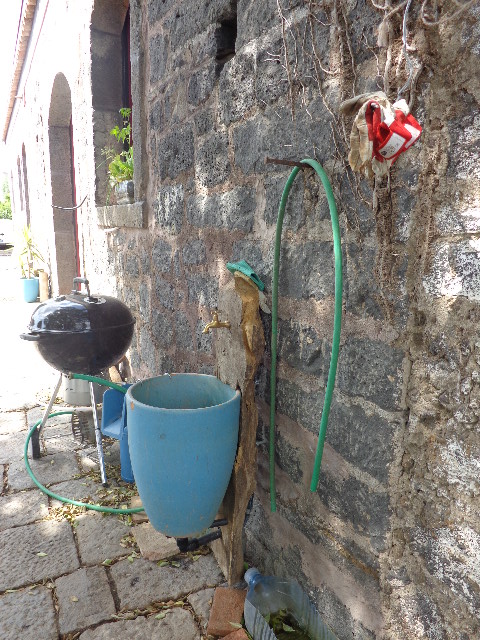
Bagolaro, which is Italian for hackberry tree, is an agritourism on the foothills of Mt. Etna, at about 600 meters above sea level. The agritourism gets its name from the Bagolaro tree which stands at its entrance. This facility has an organic farm, a couple houses undergoing construction, and a Palmento, the traditional wine making facility made of lava rock and stone, which is under renovation with the purpose of housing a variety of events.
I recently attended a Qigong seminar, conducted by a Chinese Master, right here at Bagolaro. The seminar took place in one of the old wine making chambers of the Palmento, the only one which has been renovated so far as the others are still undergoing renovation.
Palmento – 
Water runs under the pavement –

Work is still in progress in other chambers of the old Palmento

Azienda Bagolaro is run by Diego, an IT person who is overseeing the construction of this facility, his girlfriend, Cinzia, an architect, who runs the organic farm, and Alfio whose field is constrution. Although each person running the facility has their own role, they place all their experiences together in trying to reach their goals.
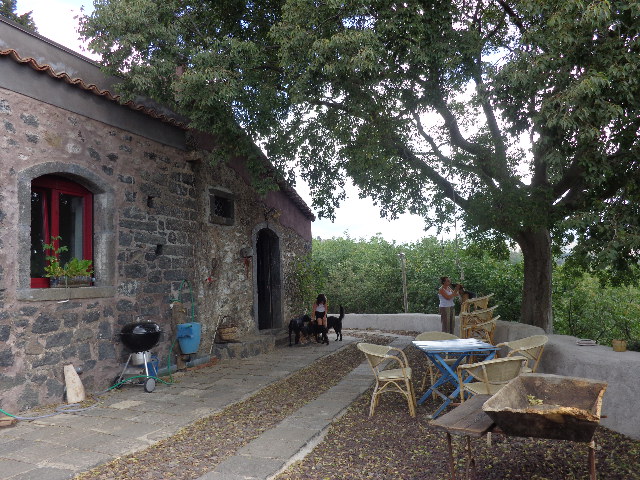
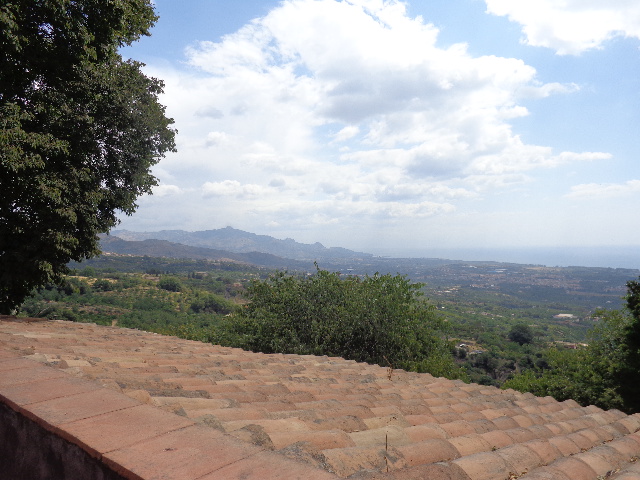
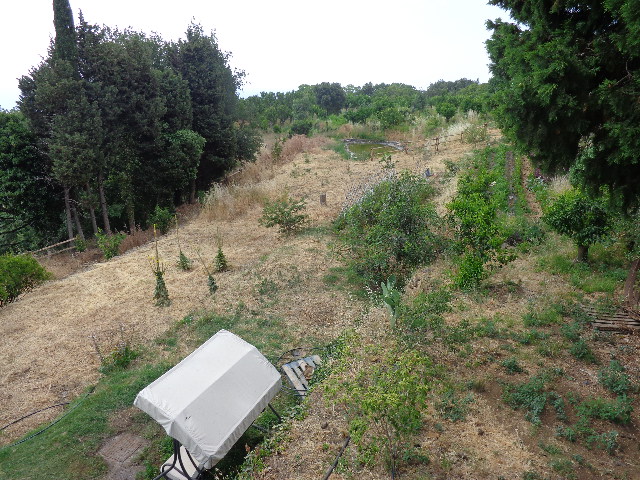

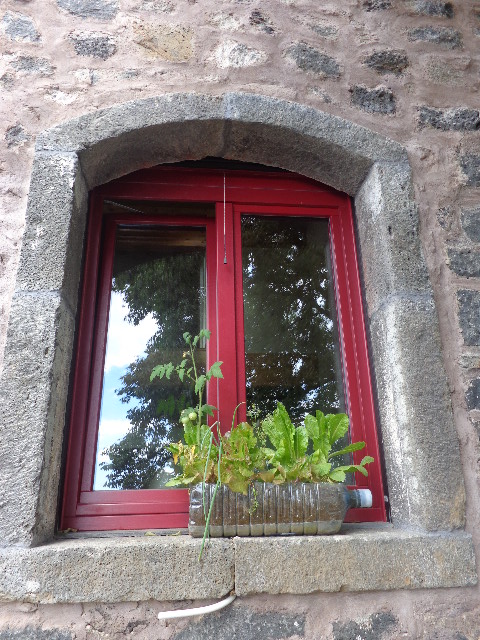
During a conversation with Cinzia, she stated that Bagolaro stands as a prototype of a sustainable lifestyle to offer an alternative to city life. Cinzia stated that this is not living in the countryside as it was interpreted in the past, but here one can leave the chaotic lifestyle of the city without giving up modern amenities.
A lovely place in nature with lots of potential!

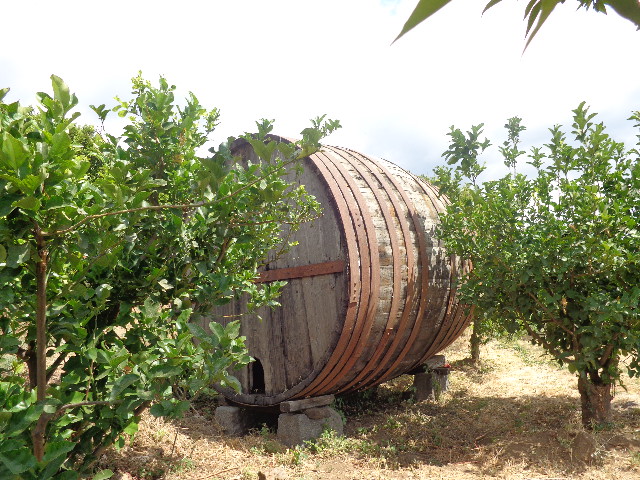
Old wine barrel
I had been wanting to take this trip for two years, but knew I could not do it alone in my tiny city car. When I realized it was going to happen thanks to Patrizia and Gianni, I was quite excited!
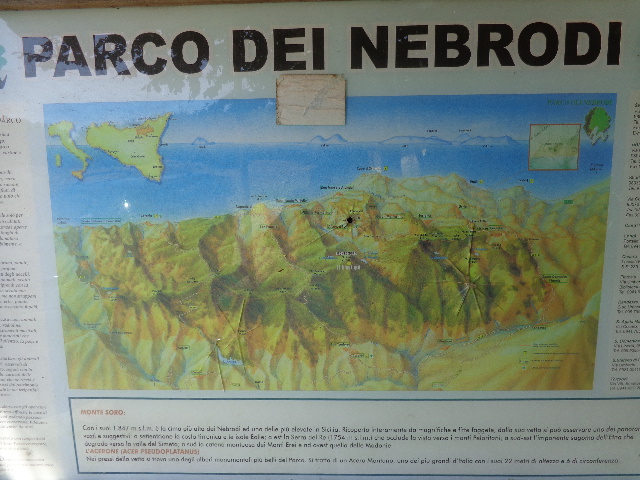
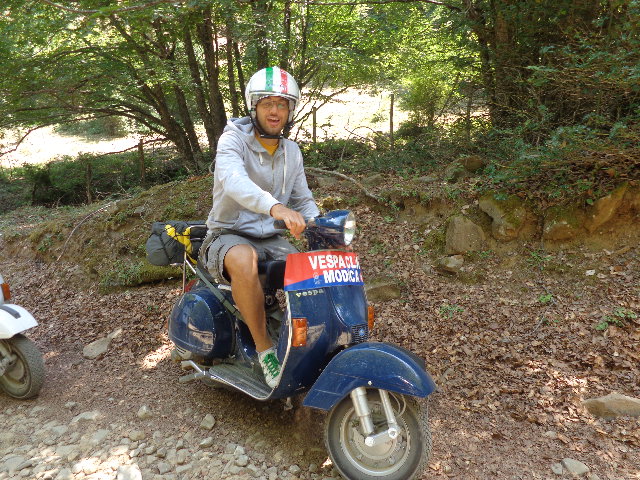
A drive across the Nebrodi mountain range in Sicily is a drive through a unique natural environment displaying a variety of landscapes with breathtaking views, along mountain ridges, up and down mountain sides, hills and valleys. Along the way, one travels along high cow pastures, wooded areas, along the lakes of the Nebrodi mountains, in this case Lago Maulazzo and Lago Biviere. Many of the paths one crosses are unpaved, so the only way to make this trip is with an off road vehicle. Of course, I was at awe, when along one of those unpaved paths, a descent through the woods between Lago Maulazzo and Lago Biviere, driving up towards us were a group of travelers traveling on Vespas. They belonged to the Modica Vespa Club and had traveled hundreds of kilometers on their Vespas to reach this location.
I was accompanied by a childhood friend, Patrizia, and her friend, Gianni Frazzetta, who drove his off road vehicle. Gianni, a geologist and volcanologist, whose knowledge and experience contributed with an enlightening abundance of explanations on the plate tectonics events that led to the creation of the Nebrodi mountains and the geological explanations of the rock formations we met along the way. As we traveled towards the Nebrodi mountain range, Gianni started explaining that the Nebrodi mountains are the result of the folding which occurred as a result of the collision between the African and European plates. This all started 20 million years ago. Gianni proceeded to explain that this colliding of the plates is still active today as demonstrated by the earthquakes that occur, from time to time, in the surrounding regions. With regards to the geological formation of these mountains, Gianni explained that they are flyshoid, which means an alternating of clay and sandstone.
Our drive consisted of a loop approaching the Nebrodi mountain range driving up from Catania along the southwestern side of Mount Etna. We drove by the towns of Adrano, Bronte, and then, heading west, we drove to Cesaro’.
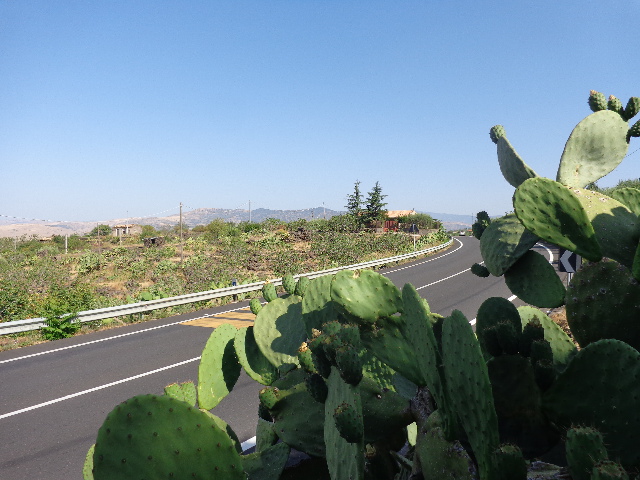
Monte Barca – the cone which stands on the furthest western side of Mt. Etna

Etna in the backdrop as we are approaching the Nebrodi mountain range from the south
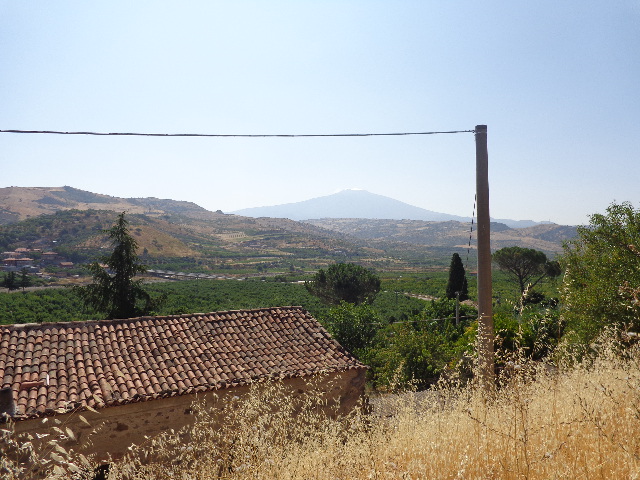
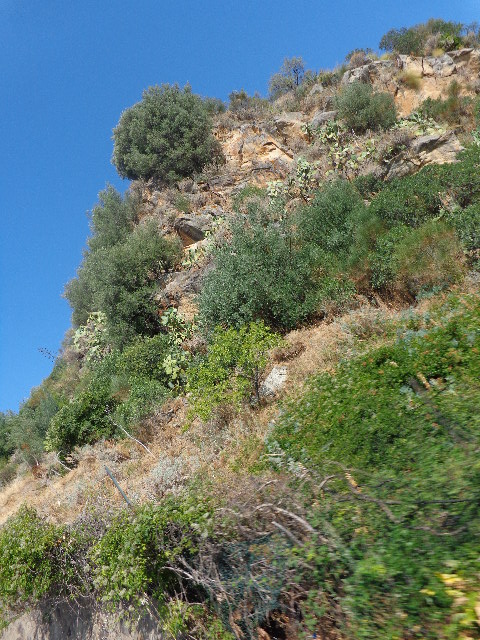
Oh! What fun having a geologist/volcanologist as a guide! This rock formation is actually “flysh numidico” and derives from the African Atlas mountains which arrived in Sicily through plate tectonics!!!!
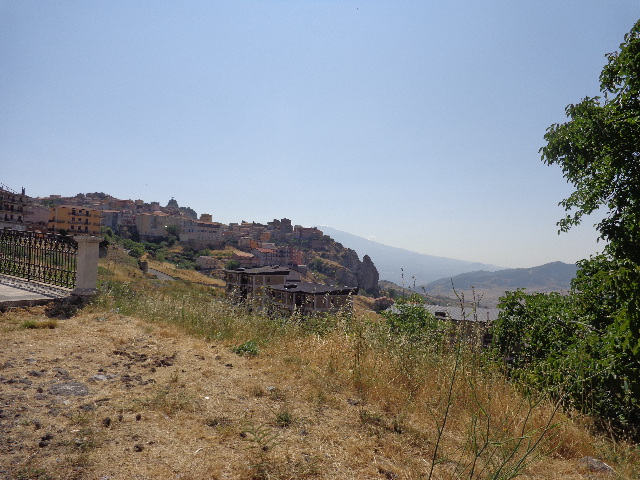
Cesaro’ and a slice of Etna in backdrop
Soon after Cesaro’, the Nebrodi Mountains start. We headed to Portella Femmina Morta Miraglia, which is along the path leading to the highest mountain peak of the Nebrodi, Monte Soro.
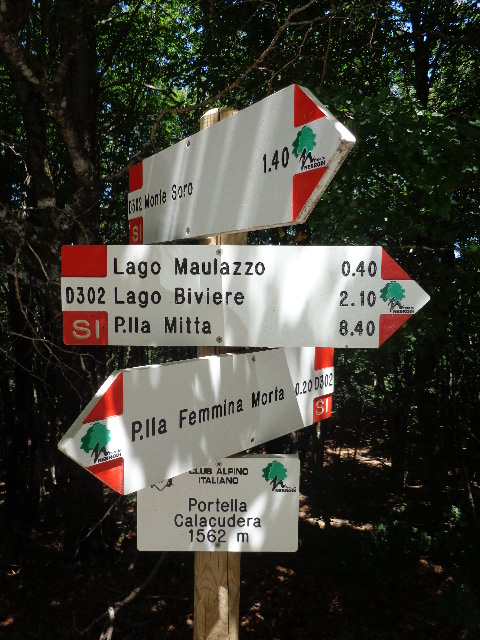
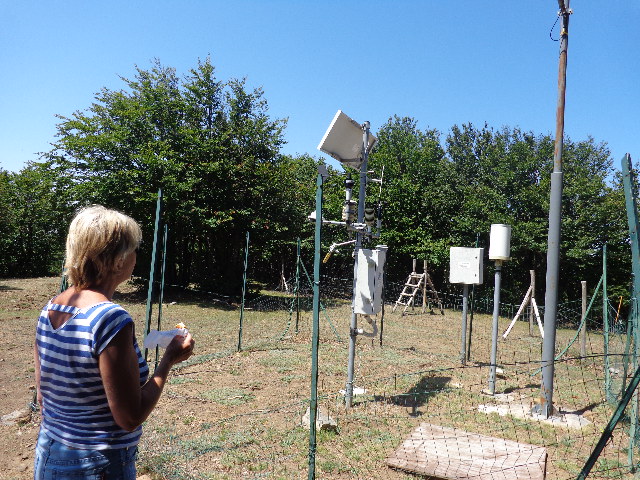
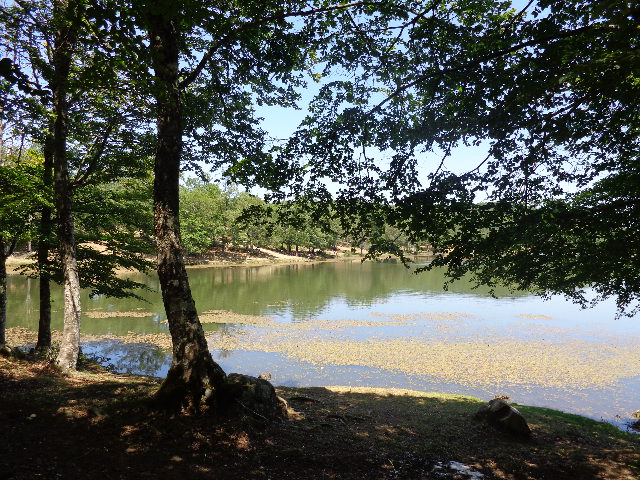
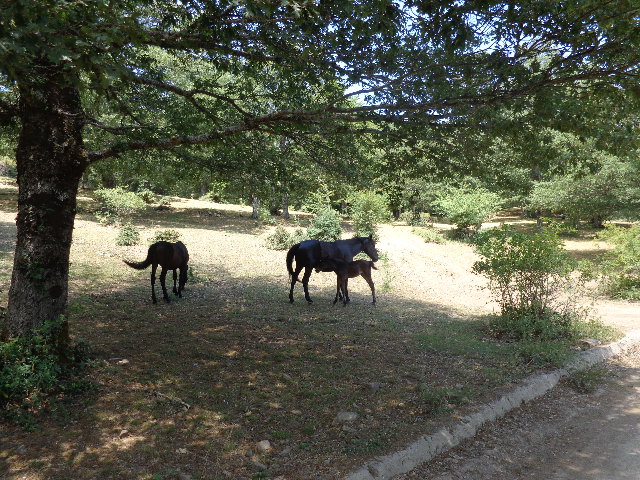
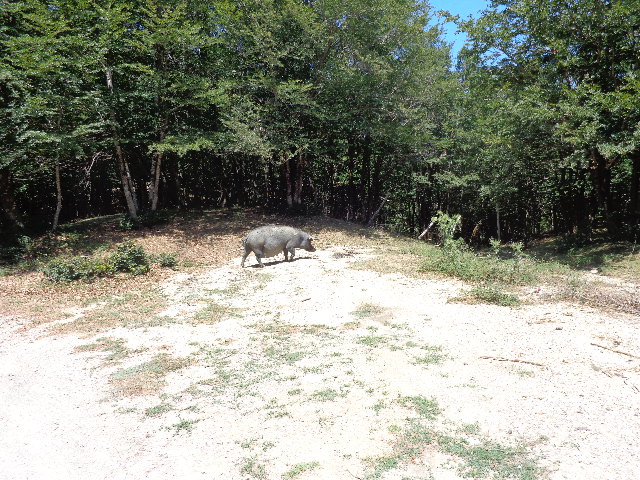
Monte Soro stands at 1,847 meters. At this point, we headed towards two lakes, Lago Maulazzo and Lago Biviere. Lago Maulazzo is surrounded by wooded areas, with horses roaming freely, and there were people enjoying the water on their kayaks. Next, we made a stop for lunch along Lago Biviere. Around Lago Biviere a walk through the wooded area brought an encounter with the black pigs of Nebrodi, roaming in their natural habitat.
Monte Soro peak – meteo site
Horseback rider along the path

Lago Maunazzo
Horses roaming free
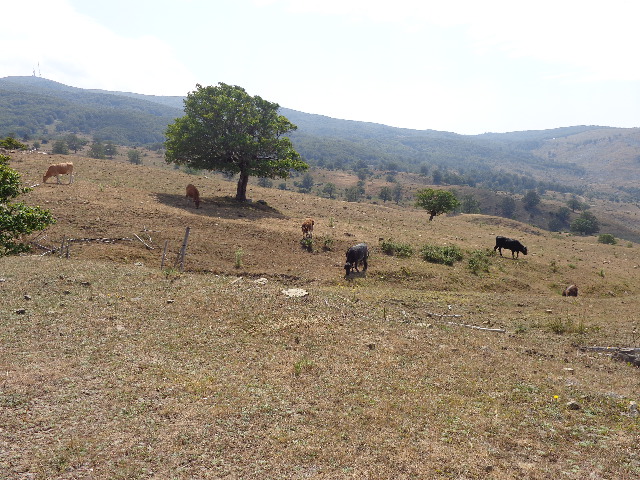
One of the many cow pastures we saw
Mama black pig of Nebrodi after piglets ran away having heard my voice!
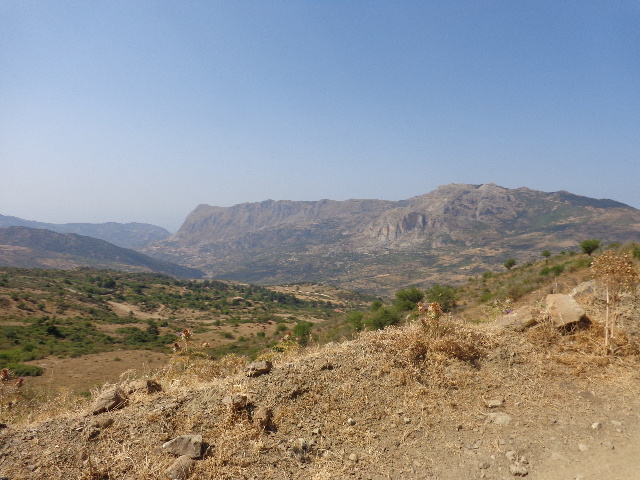
The afternoon drive, through more off road terrain, brought breathtaking views of the mountain range with towns perched high on the mountain tops and down in the valleys. TheRocche Crasto were to the right and visible all along the way.
Rocche Crasto
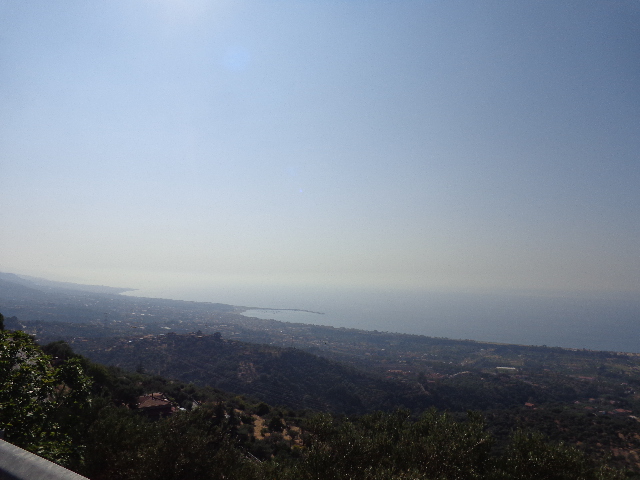
Driving through Alcara li Fusi and Militello Rosmarino, a good stop for coffee, we soon could see the Tyrrenean Sea, northern coast of Sicily, in front of us.
Alicara li Fusi

After a short drive along the northern coast to Capo d’Orlando we stopped at the beach. Swimming in those crystalline waters was quite refreshing and offered a break from a long dusty drive.

Next, it was time to start heading back to Catania and to do so we headed to Naso. From Naso, we took SS 116, the road which leads back to the Mt. Etna area through Ucria and Floresta. In Floresta a festival was taking place and we stopped to enjoy some of the local delicacies at a local trattoria.
Stop for FOOD in Floresta – How could we NOT end the day with FOOD?
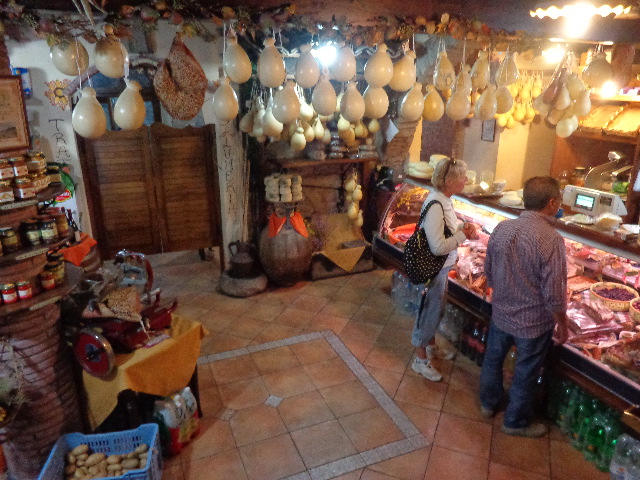
Back onto SS 116 we headed down to Randazzo, which lies along the northern edge of Mt. Etna. From Randazzo, we drove back to the eastern coast of Sicily and driving south, along the coast, we reached Catania.
An unforgettable trip and THANK YOU Patrizia and Gianni!!!!!!!!!!!!!!!!!!!!!
In June, I visited a research wheat field in the heart of Sicily, in San Pietro, close to the town of Caltagirone. This research site is run by the Region of Sicily and Mr. Motta, who has worked at this site for many years, was an exceptional guide as he led me and a group of photographers belonging to a photography club in Caltagirone through the fields, explaining the work at hand.
Mr. Motta explained how, over the years, the crops of wheat that have been grown here, have offered the possibility to experiment with a variety of types of wheat, carrying out cross-fertilization in order to obtain the wheat which grows best in this environment and dry climate.
We saw several rows of wheat crops of different types, each labeled, as Mr. Motta monitors their development and saves the data. He explained that the wheat named Simeto, created here, is the one type that has proven to perform best in the environmental conditions and climate of this specific area of the island. It is the crop which is mostly grown here. Furthermore, Mr. Motta explained that this wheat, Simeto, is now exported to several countries in the Mediterranean area.
Entrance to the facility
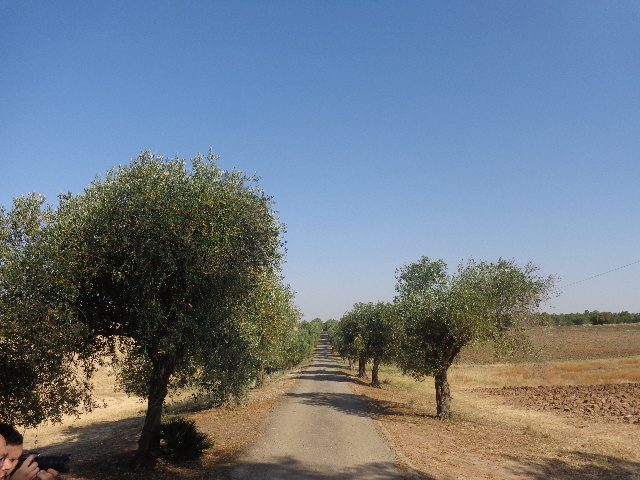
Son maneuvering combine harvester
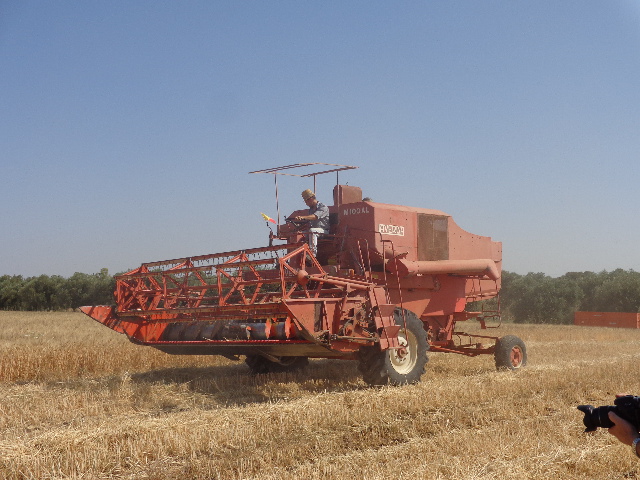
Mr. Motta reaping a small area of wheat with sickle

Wheat field

Bufala Bianca Wheat

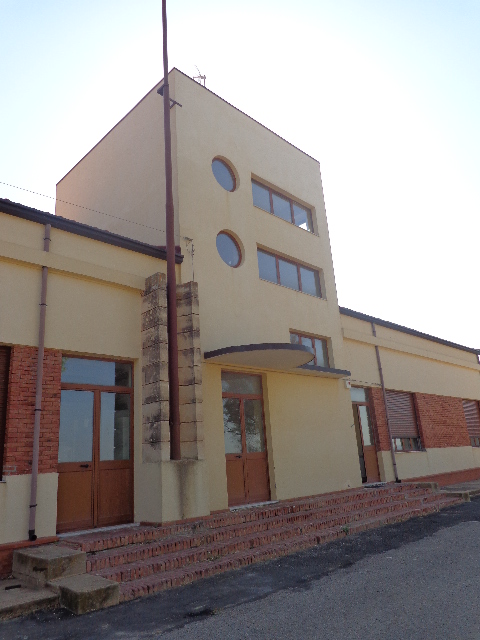
Building on facility dating back to the Mussolini era
Mr. Motta uncovered an old machine that dates back to the early 1900’s
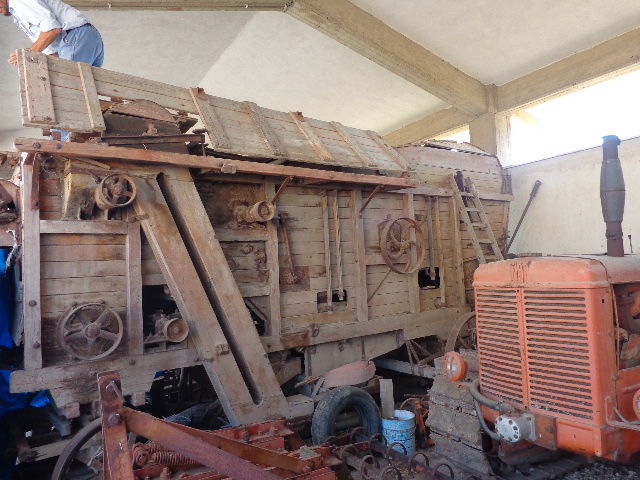
Mr. Paolo Rapisarda, a man in his eighties who lives in Aci Sant’Antonio, Sicily, belongs to the old school of blacksmiths who forged iron utilizing tools that are no longer in use. In visiting his shop, one can see the tools he utilized in the past.
Mr. Rapisarda shared the stories of his past experiences and how he started at a very young age as an apprentice. He started his apprenticeship working with “I mastri”, the blacksmiths who would take younger apprentices under their wings and teach them the trade. At a very young age, he moved to the town of Roccalumera where he worked as an apprentice.
When WWII broke out, he moved back to his hometown of Aci S. Antonio and worked as a blacksmith until 1950. There was a demand in those years for the wrought iron components of the Sicilian carts, which were the main source of transportation.
As the demand for wrought iron for the carts decreased, Mr. Rapisarda turned to a completely different occupation. He studied music under Maestro Leonardi in Acireale and joined a musical band. He earned his living playing in the band as it would be hired by different towns to perform at their town festivals. This provided him with a steady source of income and was his main occupation for years.
However, in the 1960’s, he returned to work wrought iron with another “mastro ferraio” and learned welding and shaping iron adopting more advanced tools. At that time, the majority of the work was to create iron pieces for gates and the railings of balconies.
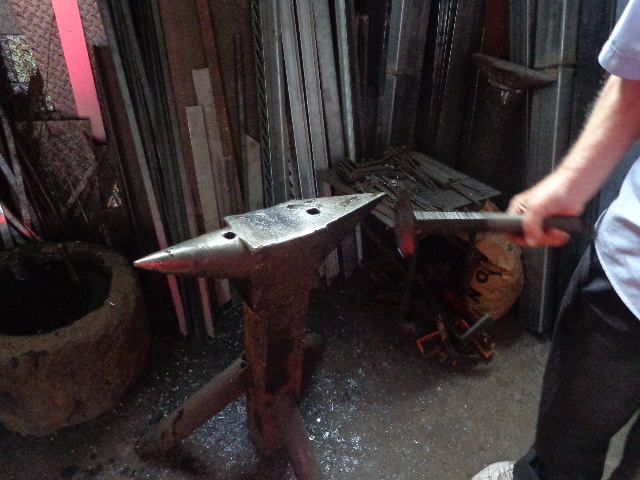
As he proudly showed his old forge, Mr. Rapisarda concluded his comments by stating that the fossil fuel available today, if utilized with this old forge, cannot bring the iron to reach the temperature necessary to create the fine details and workmanship of the past.
Mr. Rapisarda standing close to the forge purchased by Father in 1946

anvil
“u scifu” – a stone container which had another use as a pig feeder was utilized in the shop to contain tools

Stone used to forge iron for the wheels of the “carretti” – Sicilian carts

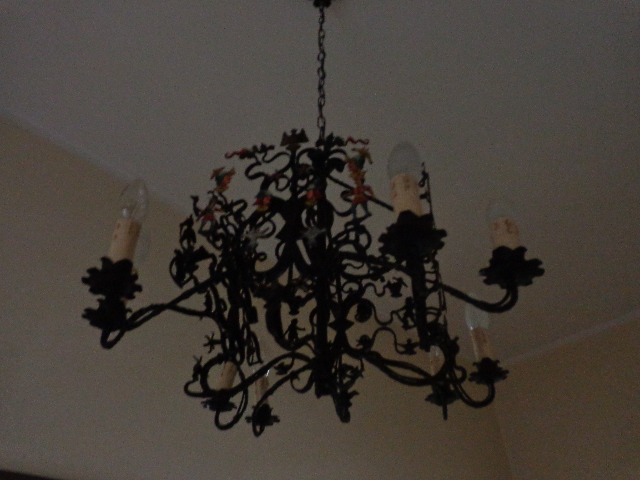
Fine details of a chandelier created Mr. Rapisarda
Wrought iron piece for Sicilian cart

A detail of the ‘Trombone d’armonia” Mr. Rapisarda played in the band

During a recent visit to the town of Aci Sant’Antonio, on the foothills of Mt. Etna, my friends, the Patane’s introduced me to the owners of a pastry shop which is known for the particular pastries it produces. The owners are the Miraglia family and I spoke to the uncle who works at the counter while the nephews, the pastry chefs, were working in the back.
Mr. Miraglia explained that in the old days pastries were in fact made in these large dimensions as there were not many pastry shops that produced them. It was one of the nephews who had the idea to start the business twenty eight years ago and specialize in large pastries.
I was told to return on a weekend as there would be a larger selection of pastries; however, for now I will share some photos taken of the pastries available that day.
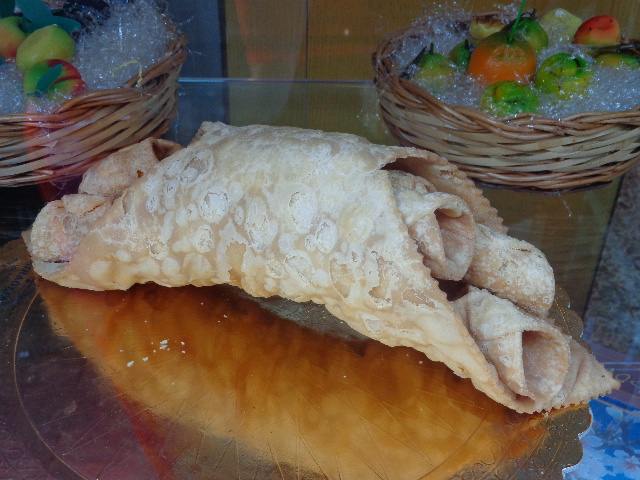
The large cannolo is 1.2 kg (that is aprroximately 2.5 lbs) –
This one was on display in the window and the baskets in the back contain marzipan fruit
The chocolate filled croissants weigh from 1.5 – 2 kg (approximately 3-4 lbs)


Rhum Baba My favorite!
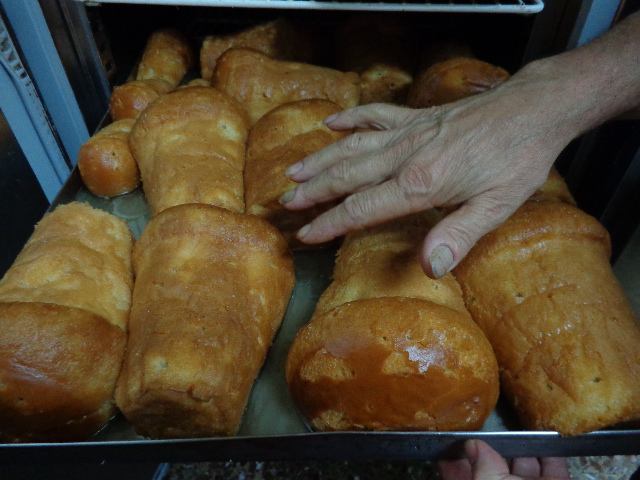
The Miraglia family also makes the traditional Sicilian Tavola Calda in large sizes.
Cartocciate – usually stuffed with cheese, ham and tomato
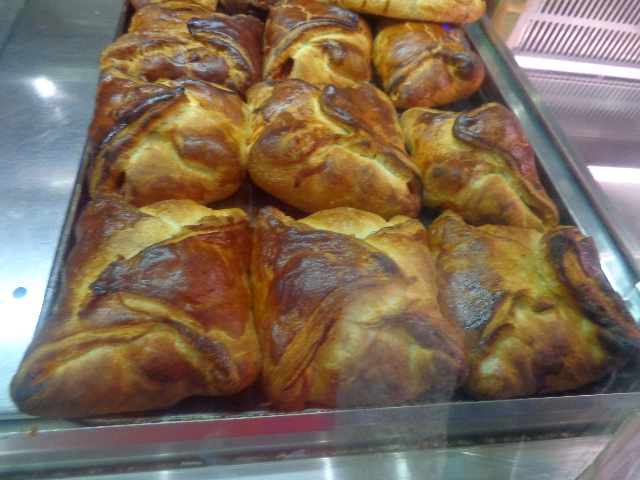
Arancini – Rice balls traditionally stuffed with meat, mozzarella and tomato sauce –

July 10, 2013 is the 70th Anniversary of the Allies’ Landing in Sicily during WWII.
Today, July 10, 2013, is the 70th anniversary of the Allies’ landing in Sicily, a military operation called Operation Husky 1943. The American and British forces landed between the towns of Gela and Licata on the southern coast of Sicily, whereas the Canadians landed in Pachino to the East.
Over the last few weeks, there have been several articles in the papers regarding the 70th anniversary of Operation Husky 1943. During that military operation, over six weeks of fighting, the allied forces drove the Axis forces off the island of Sicily.
Today, an American photographer, Phil Stern, a Stars and Stripes photographer during WWII, will be present at the official opening of a photographic exhibit where his wartime pictures will be on display for the public to view in the town of Acireale, on the eastern cost of Sicily.
Another event, which has caught my attention, is one being carried out by the Canadians and headed by Steve Gregory, the son of a Canadian veteran. Mr. Gregory’s father fought during Operation Husky 1943 with the Canadian forces that landed in Pachino. Now, Steve Gregory has put together Operation Husky 2013, a civilian operation, which will trace the steps of those who fought and of the many who gave their lives seventy years ago.
Through this operation, a group of Canadians will start a twenty day walk from the town of Pachino and crossing various sites of the 1943 battlefields will arrive on July 30th in Agira. Agira is the town where the fallen Canadians from Operation Husky 1943 are buried. Along the way, markers will be placed to honor the fallen Canadians of 1943. A closing ceremony will take place in Agira and there will be a concert by Canadian pipers.
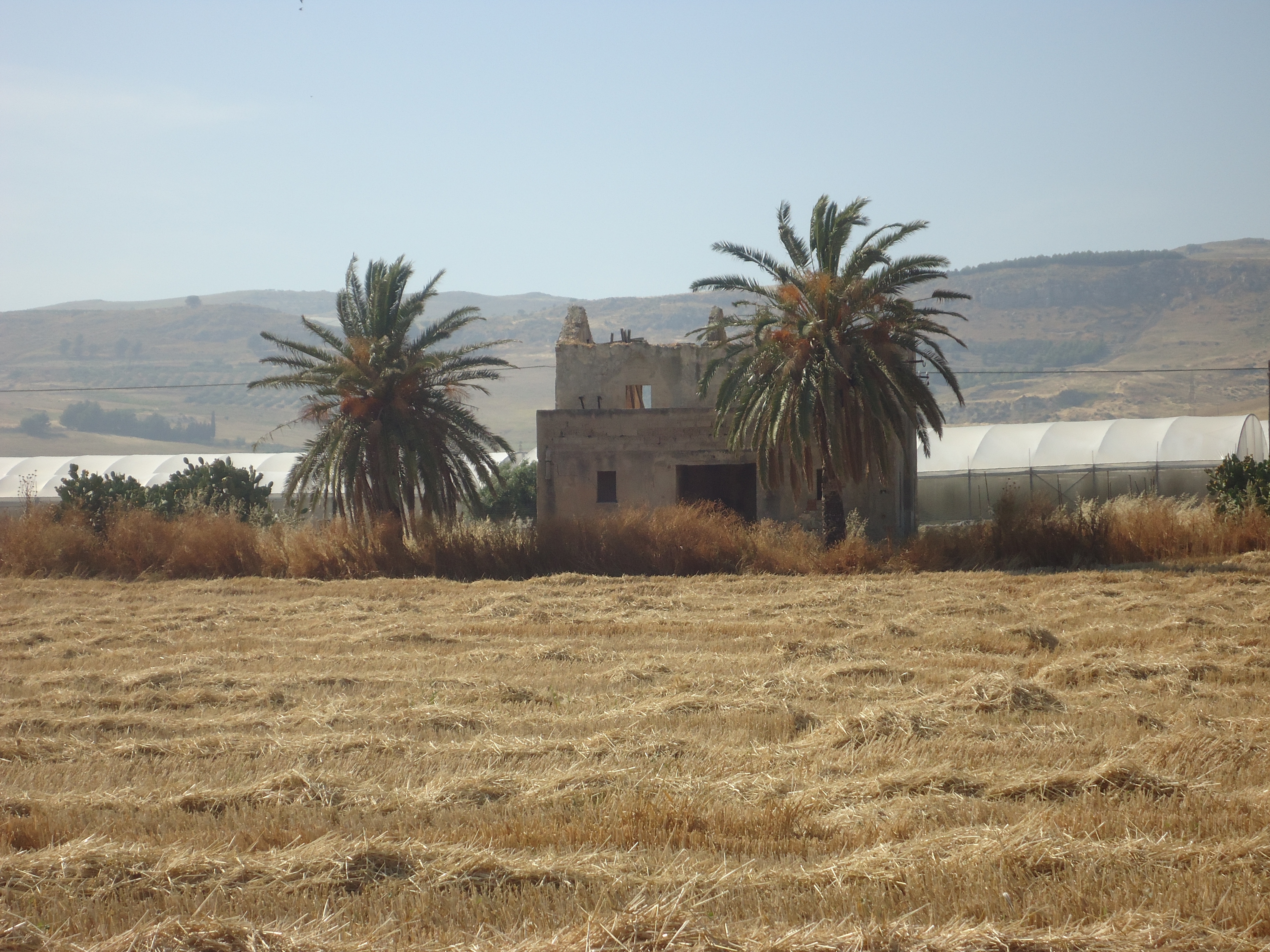
Following are a few pictures I have taken over the last two years of some areas of Sicily which are close to the towns mentioned on the Canadians’ itinerary.
On the road towards Piazza Armerina
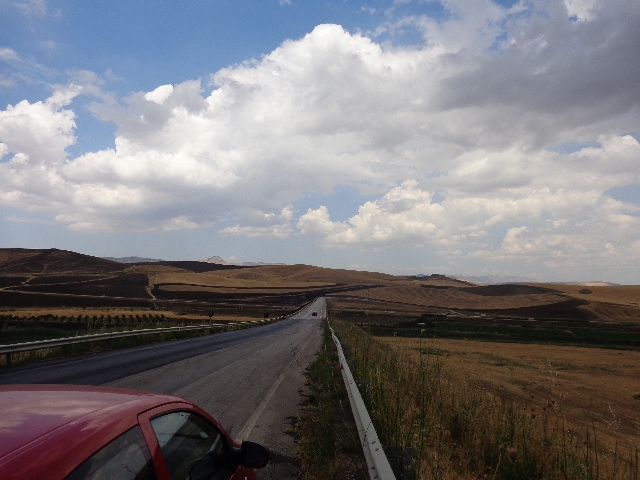
Around ENNA
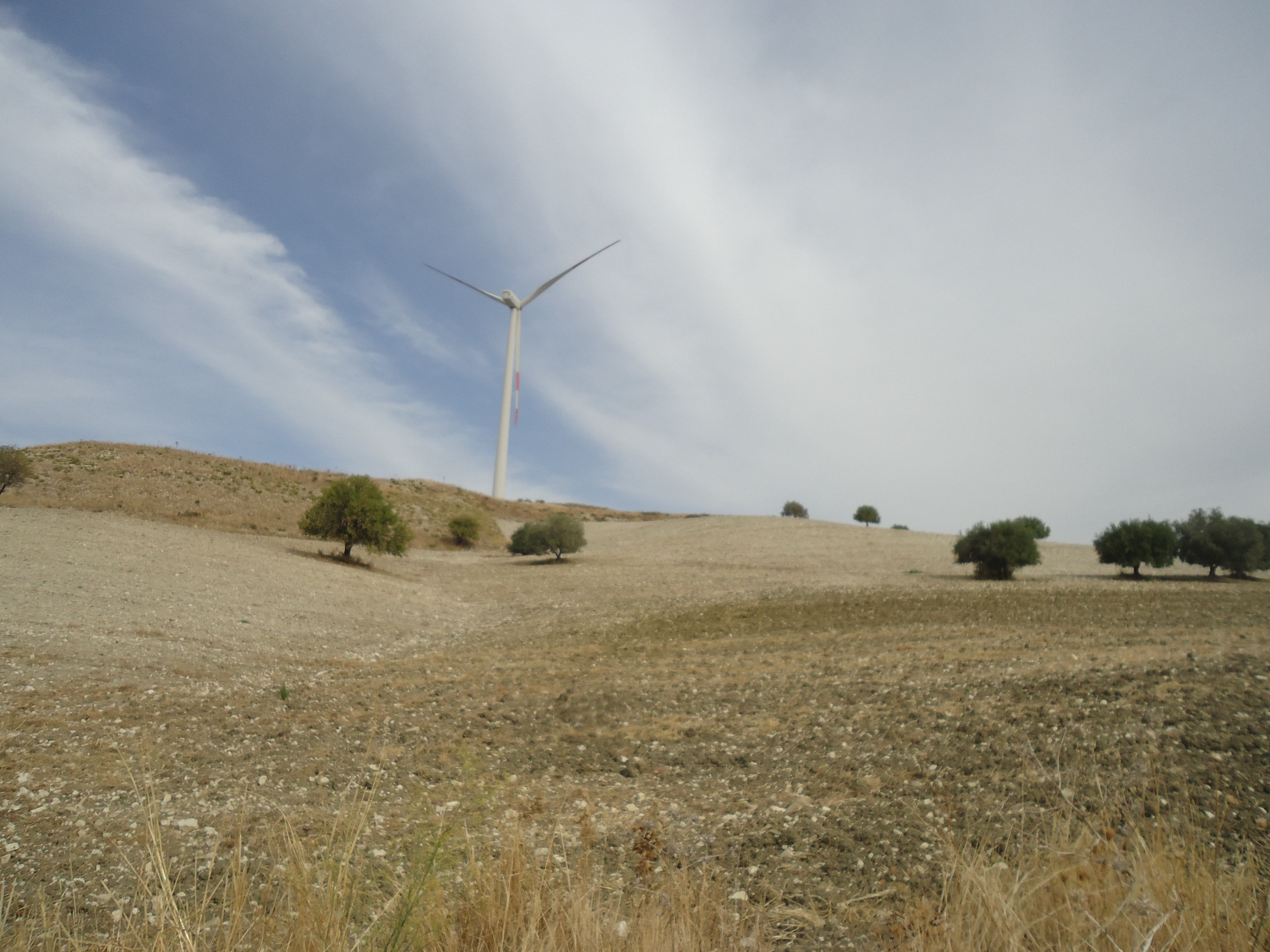

Cow pastures on the road to Modica

Around Ispica
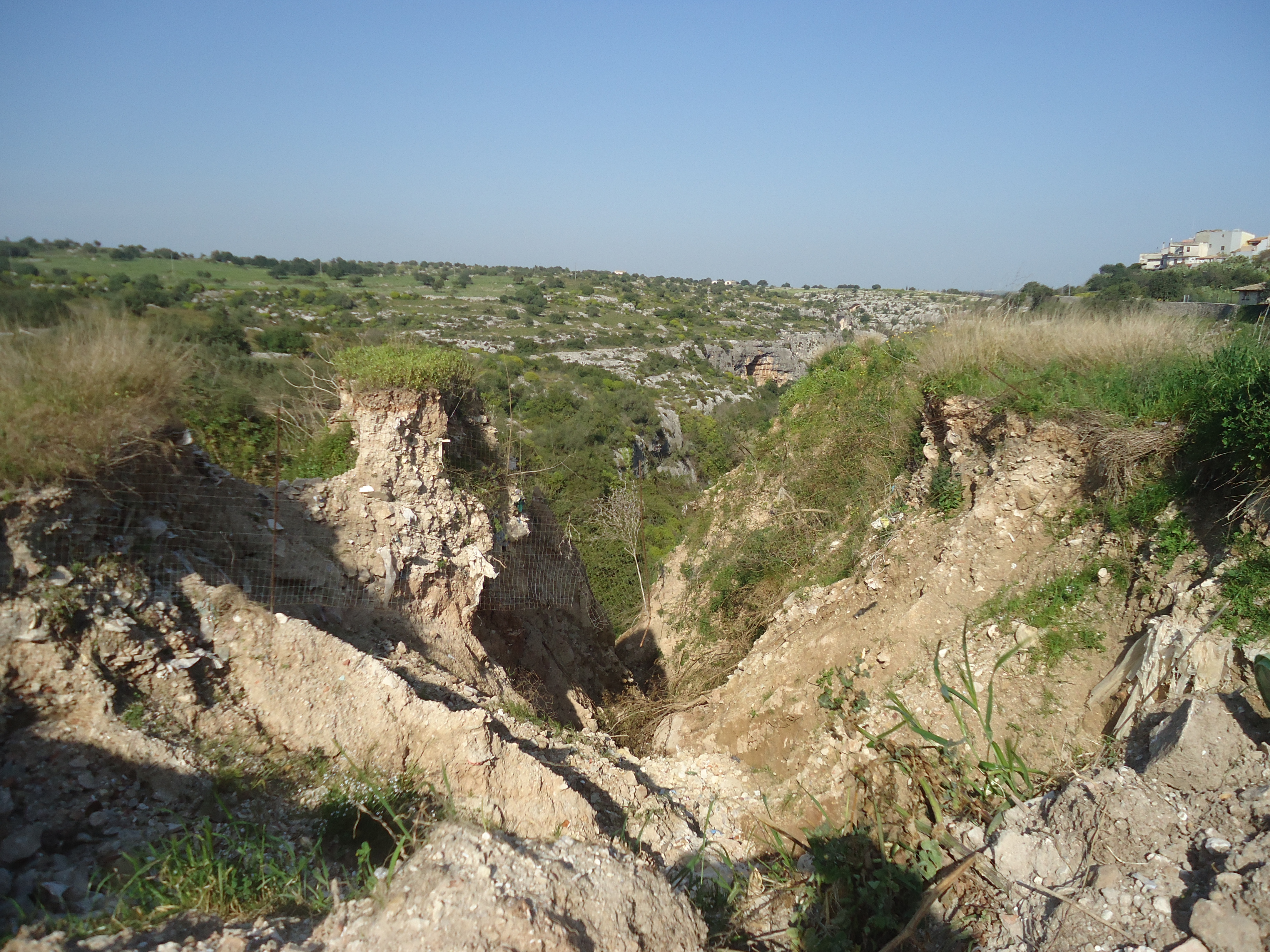
Not far from Agira


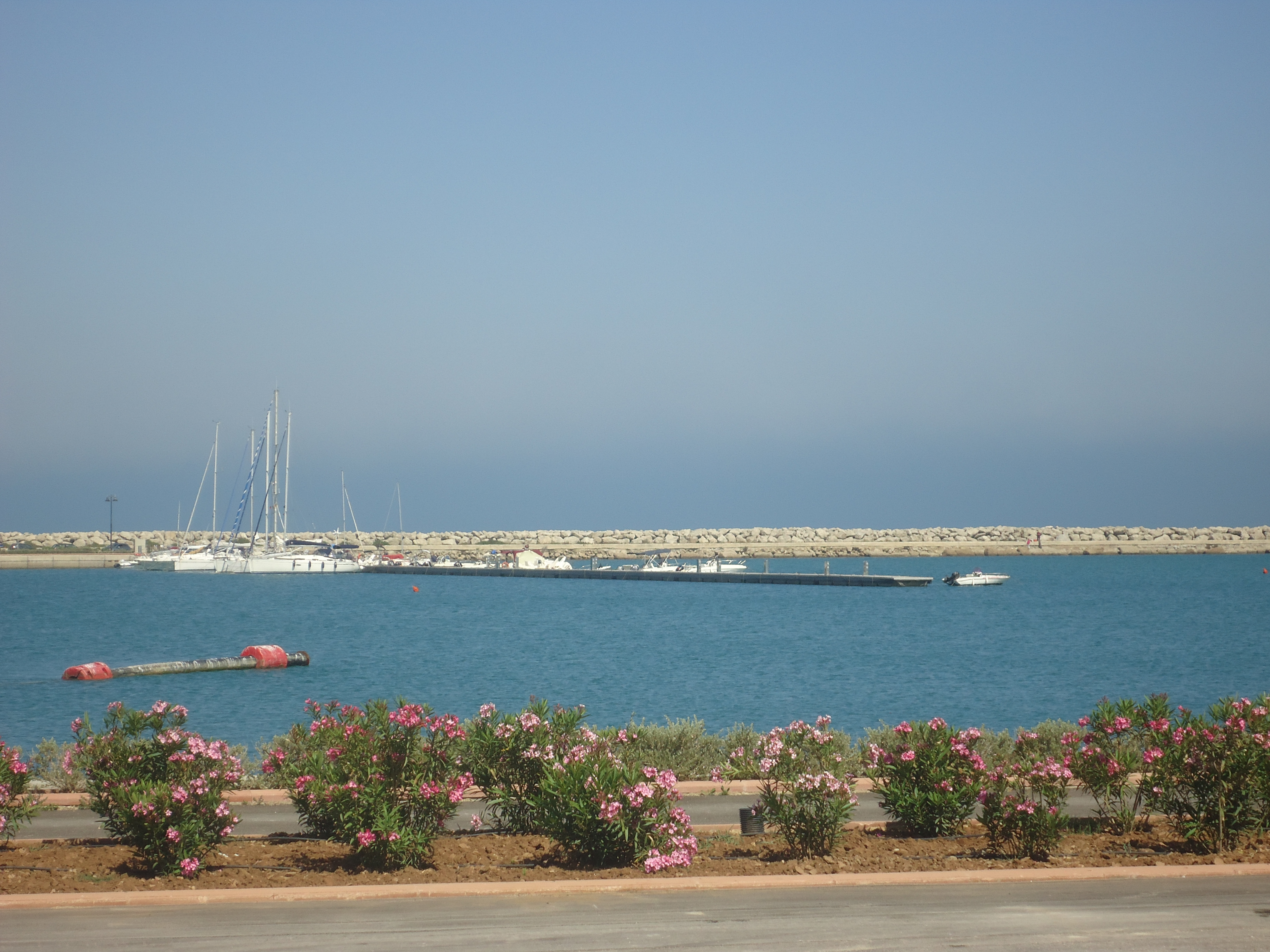
In conclusion, some pictures I have taken over the last two years in Licata and Gela, in the area where the American and British troops landed those 70 years ago.
Gela waterfront


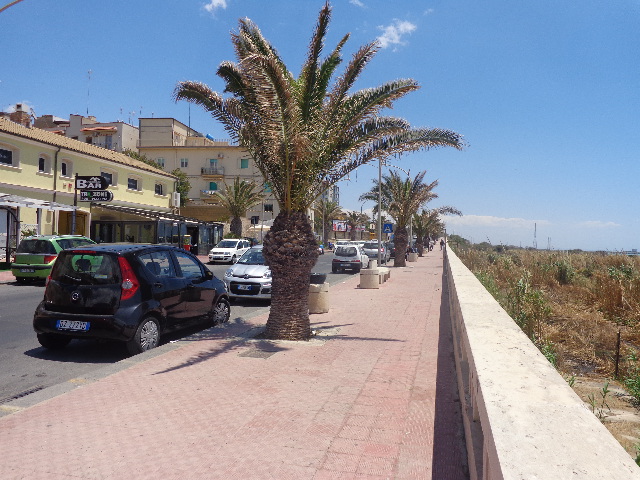
On the road between Gela and Licata
Licata Harbour
Children playing close to the coast of Licata

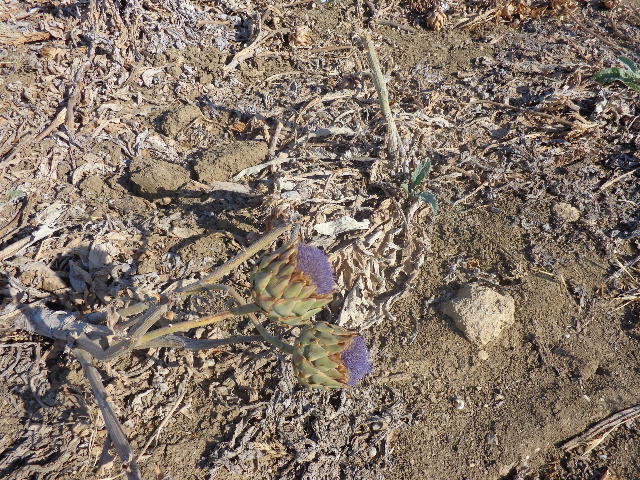
I love artichokes!!!! However, I had never seen an artichoke head with flower in bloom until just a couple of weeks ago. I joined a group of photography lovers from Caltagirone on an afternoon excursion “off the beaten path.” We drove through the countryside between Caltagirone and Gela, southern area of Sicily.
There is a great tradition of artichoke eating in Italy and Sicily and according to the Food Agriculture Organization (FAO), out of the top ten producers of artichokes, Italy is ranked number one.
Of course, the artichokes in this post were left on the ground and would not be eaten. This was a bad crop and the artichokes were tough.
However, for artichokes that do not have the flower in bloom, one way of preparing them is to stuff them. I have stuffed artichokes for years following my grandmother and mother’s tradition. I do not follow a specific recipe, but just throw the ingredients together. As I suspect someone reading this post may ask for the recipe, I will write down the ingredients I use for stuffing artichokes and the process.
Rosanna’s stuffed Artichokes
To stuff 4 large artichokes mix together the following ingredients:
2 cups breadcrumbs; 1/2 cup olive oil; 1/2 tspn salt; 2 crushed garlic cloves; 1/2 cup of grated parmesan; a pinch of pepper; 1 Tbspn parsley.
Process:
Open the artichokes well to wash inside them; then just start from the outside and in a spiral pattern stuff the artichokes from the outside towards the inside. Place the stuffed artichokes in a pot tightly as to not allow them to move and fill the pot with water half way up the height of the artichokes. Place pot on stove and simmer for about 30 minutes or until tender.
Before serving, you may drizzle a little olive oil on the top.
I have never grilled artichokes personally, but they are fabulous grilled! When artichokes are in season in Sicily, one can smell them on the grill along the side of the streets!!!!!!!!!!!!
jrtichoke Field just outside GELA


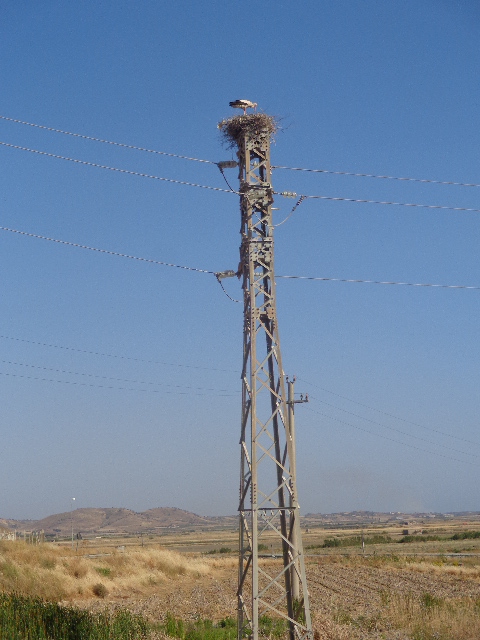
Not far from these fields, high above and checking out the surrounding area was a stork guarding its nest!

Halfway across the southern coast of Sicily, the Mediterranean coast, lies the city of Agrigento. Many visit Agrigento’s Valley of the Temples, its Greek ruins, but never venture just twenty miles westward to the Scala dei Turchi. As I recently drove to this area to revisit the Valley of the Temples, I decided it was time to see the Scala dei Turchi. Scala means steps and the rock is curved but shaped in a way that seems like steps. Furthermore, Scala dei Turchi means The Steps of the Turkish People and the rock got its name from a legend that says that when Turkish pirates would seek shelter from strong winds they would stop on this rock.
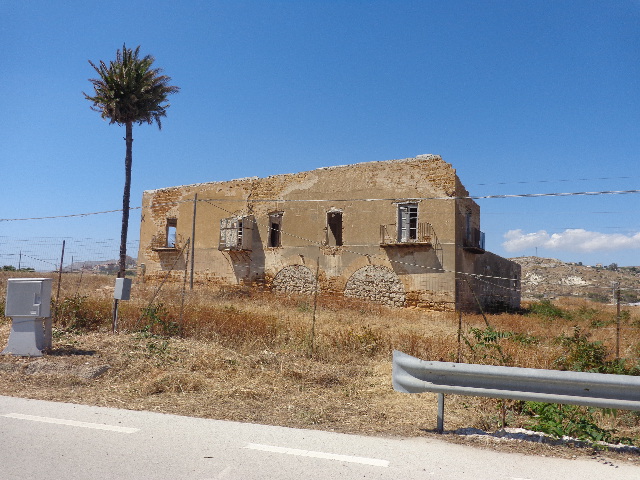
Scala dei Turchi is located 20 km west of Agrigento, and as I was staying at Capo Rossello close to the town of Realmonte, west of the Scala, from Realmonte, I followed the signs to Scala dei Turchi drivng along a road, high above and overlooking the coast. From the road, just before catching a glimpse of a part of the rock, I noticed this old abandoned home on the opposite side of the road, just standing there empty taking in all that beauty!
At this point, looking down at the sea on the right hand side, this is the first glimpse one has of the rock at a distance.

From this point, the best way to gain access to the beach below is to drive forward and park close to a restaurant, which offers access to the steps that lead to the beach below.

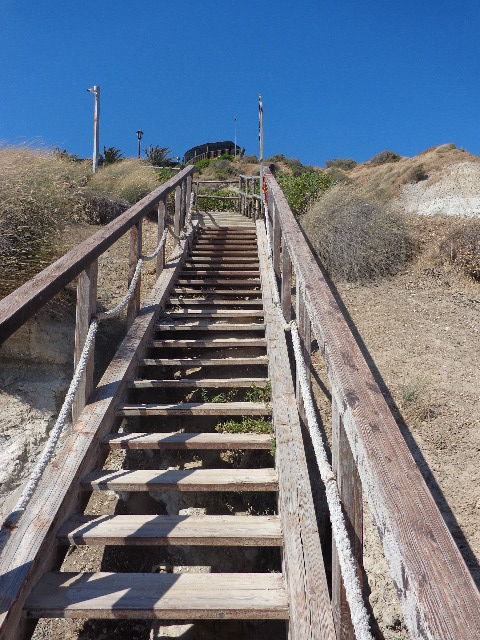
So I, as many others, walked down the 137 steps (I did count them on my way back up in the scorching sun). As I reached the sandy beach, I turned right and started walking towards the Scala. After just a few steps, I saw the white rock at a distance. This is a chalky white rock, made of limestone and clay, and as one gets closer and closer it looks whiter and whiter. On the day I visited, the wind was very strong, but that did not matter. I walked along the sandy beach and then climbed the white rock to the top. There I could sit and look out to enjoy the beautiful contrast of the white cliff with the blue sea and sky. I just sat and took in the breathtaking view.
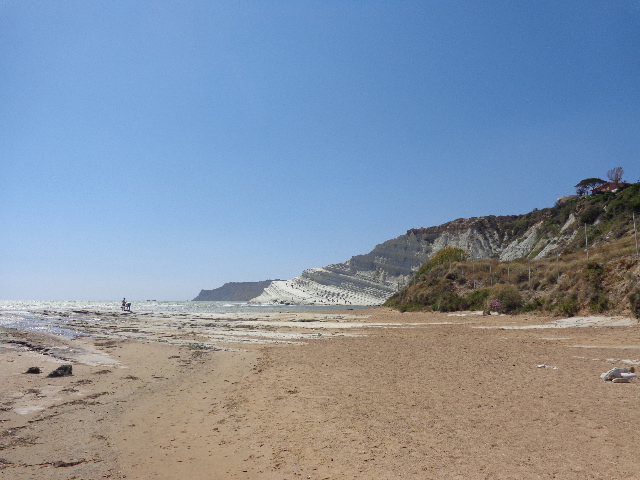


As I walked back to the restaurant to climb the steps back up to the road, I looked to the right and saw something I had read about in the papers: there was still some machinary left from some work that had been done days earlier to restore the beach to its original state. A concrete building that had been built on the beach many years before had been demolished to the delight of the population!


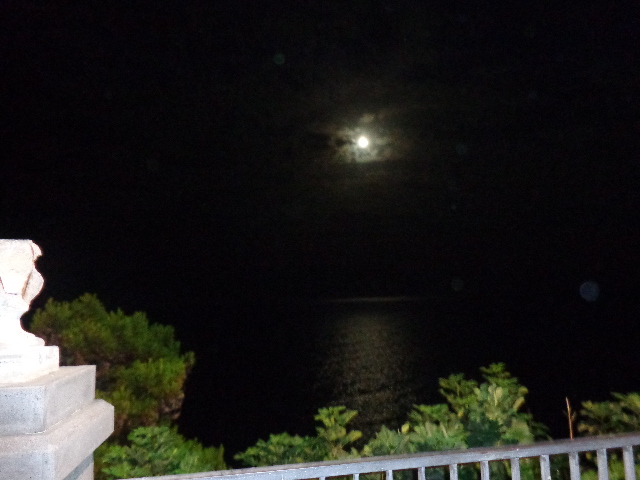
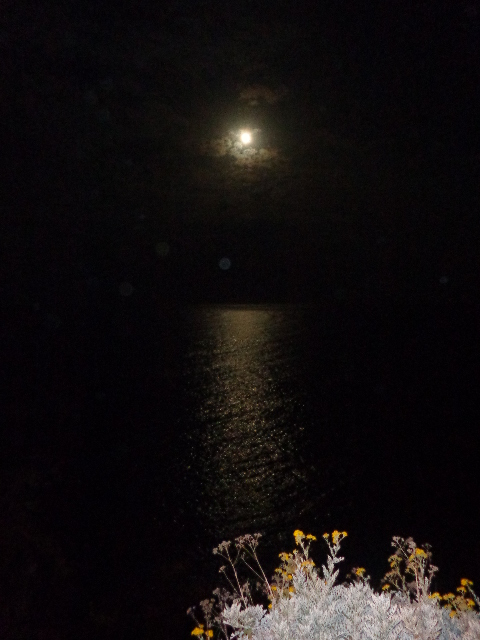
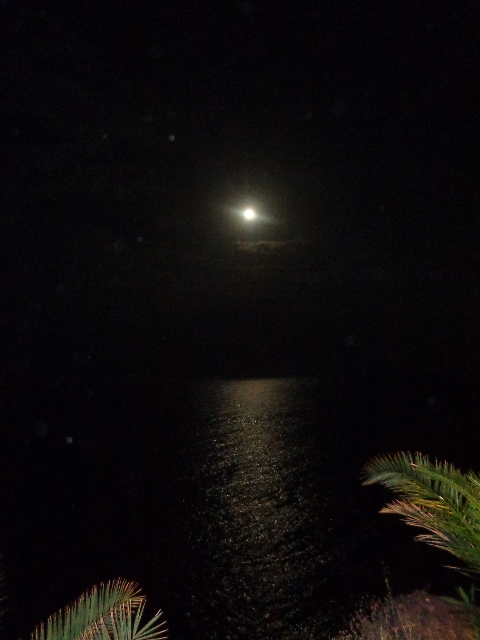
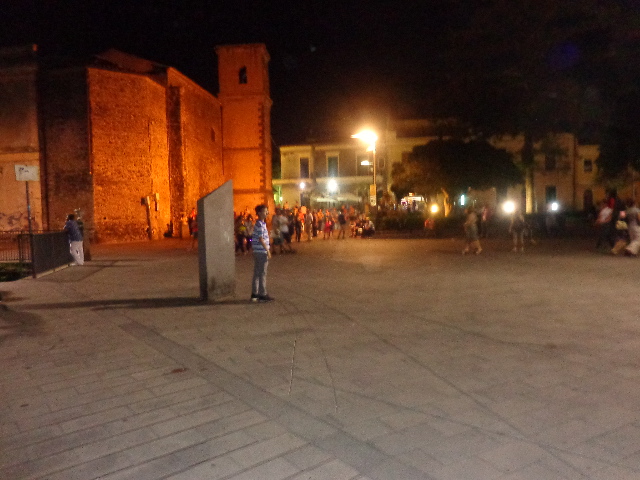
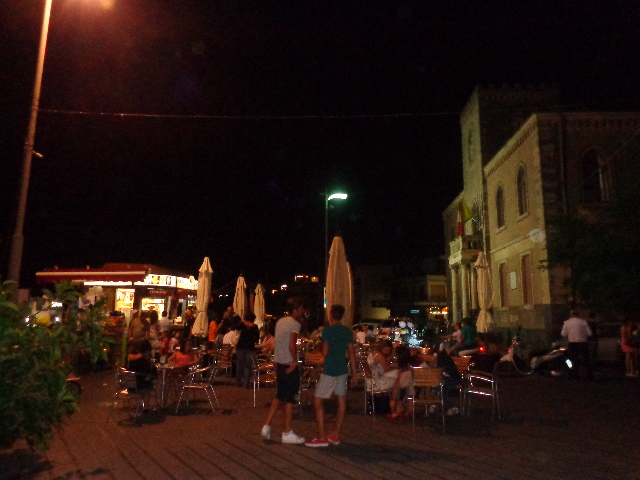
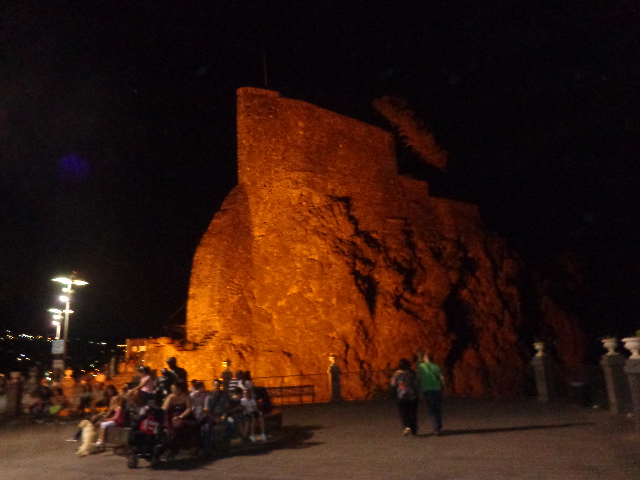
Yesterday, June 23rd, 2013, the full moon was the largest and closest of the year. In the evening, I went to the waterfront next to the Castle, in Acicastello, close to my home and enjoyed the view. Unfortunately, it was very cloudy and the moon peeked through the clouds intermittently; however, I enjoyed the view and the relief provided by the gentle breeze after a sweltering humid long day.
As I took pictures of the moon, I couldn’t resist taking pictures of the activities going on around me as people just enjoyed their usual nightly stroll in town. The town, Acicastello, is where I take my walks on a regular basis.
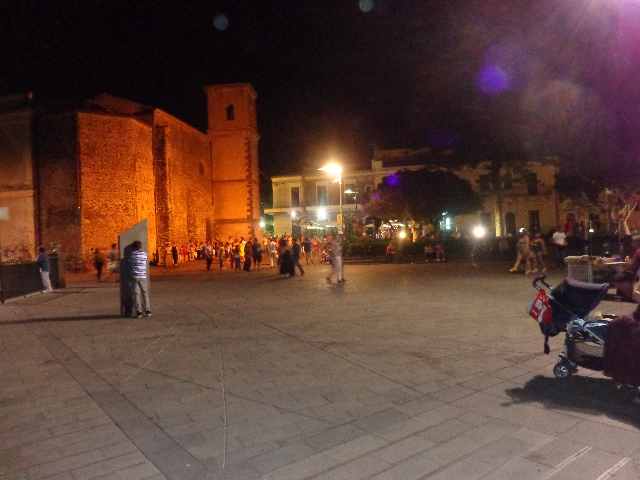
Children playing hide and seek
Just hanging out in front of City Hall
Just hanging out close to the medieval castle
When visiting Caltagirone, one can delight in visiting the many ceramic artists that are scattered all over the town. However, on one sunny June morning, my search was to visit not just any ceramic maker but an old time ceramic maker, Mr. Mario Iudici. I had asked friends I was visiting, Maria and Toto’, to help me locate an old time artisan and after some research we were told that the man to look for was Mr. Iudici.
We had a general idea of the area in which Mr. Iudici lived, close to the cemetery, and so on a Saturday morning, Toto’ and I hit the road. After a short trip through town, we reached the area of the cemetery and saw a building that just felt it may be the right place, and indeed, it was.
There was a building along the street and then a house behind a gate. Hanging on the outside wall of the building along the street was an old ceramic sign, half legible. Toto’ managed to decipher part of the name, Mario Iudici. We drove onto the property and reached the garage in back of the building, when suddenly a car drove up. Toto’ stated that the driver had to be the man we were looking for. Indeed, when the gentleman got out of the car, it was confirmed. As we had no appointment and just showed up, I got out of the car and quickly introduced myself, stating the purpose of my visit. After so many years abroad, I have come back to Sicily to explore the land, its traditions and the stories of its people. Today I was looking for a ceramic artist belonging to the old school, Mr. Iudici.
Mr. Iudici immediately welcomed both me and Toto’ and with no hesitation proceeded to invite us to follow him. He led us to the adjacent studio and when he opened the door, we found ourselves in front of a true treasure. Two very large connecting rooms were plastered with works of art each with its unique story to tell.


As I visited the studio, Mr. Iudici told me that he had retired fifteen years earlier; today he is 85 years old. I was in awe just entering his studio. There in front of me lay scores of years of hard passionate labour; I could perceive the great sense of pride for all that beauty in front of us.
Mr. Iudici stated that his artwork was a reflection of the many traditions of Sicily. There were so many pieces of ceramic created over the years and he was the fourth generation in his family to carry out this trade with great passion and love, following the traditional method. He did not go into an in depth technical explanation, but did state he created the enamel for the ceramic all from scratch.
As we walked through his studio, he pointed out specific pieces. I did not want to take too much of his time, so we focused on just a few items.
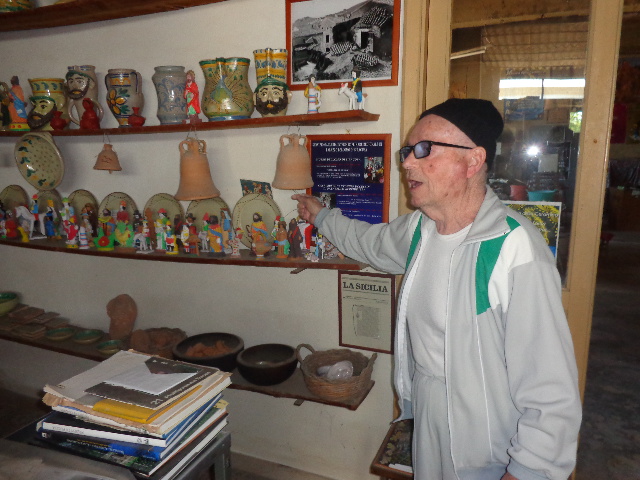
Mr. Iudici pointing out a bell he made and recalling how in the past the bells at Easter would toll at noon.
On more than one shelf, I stopped to admire the many fischietti (whistles) – he talked about the great tradition of fischietti and how their origins date back to ancient times. He handed me a research paper carried out at the University of Pisa on the history of fischietti and where a reference is made to the annual Fair held in Ostuni, Italy.
Then, of course, there were the nativity scene figurines made as fischietti. Below is the poster for his nativity scene fischietti which were on exhibit at the Museum of Ceramics in Caltagirone in 2012.

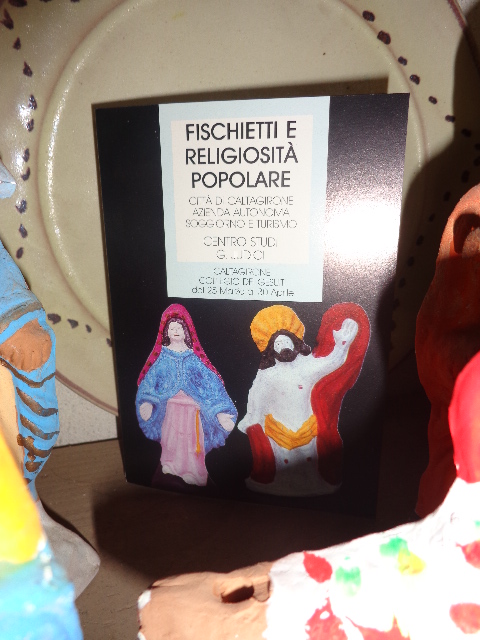
Presepe Fischietti in Iudici’s studio

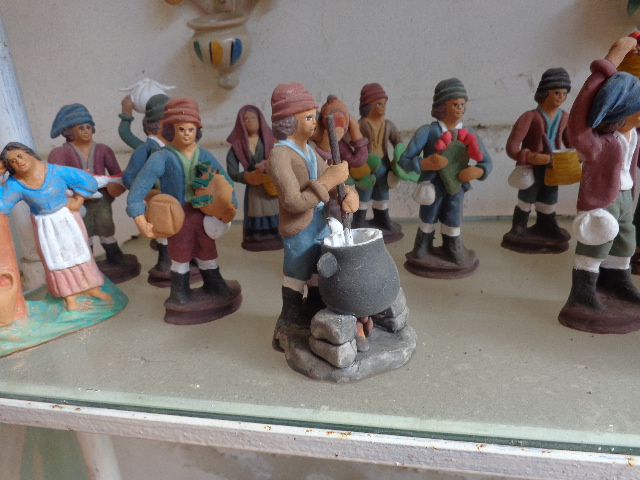


Another item Mr. Iudici pointed out was the fangotti, the traditional large ceramic round dishes which were used to dry the tomato extract in the sun.
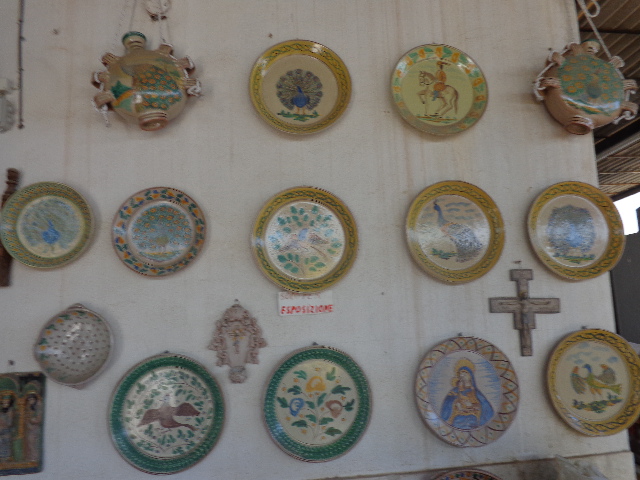
 Ceramic oil lamp
Mr. Iudici has had a passion to preserve Sicilian traditions and not only those relating to the work of ceramics and figurines. On his walls you can see many posters relating to the art of Pupi Siciliani; when a very famous artist of Pupi Siciliani, NINO INSANGUINE, passed away, Mr. Iudici purchased what he could find of the work of the artist to and not let them get sold by the “rigattieri”(used goods sellers). Such a rich heritage in the tradition of Pupi Siciliani and the stories they told. Here are some examples of the pieces seen in Mr. Iudici’s studio.
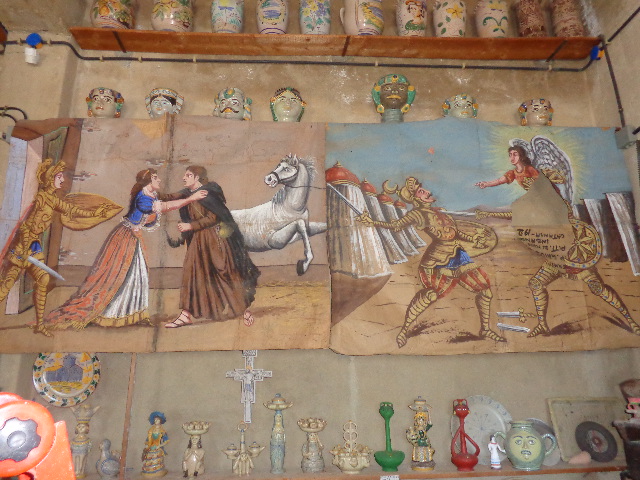
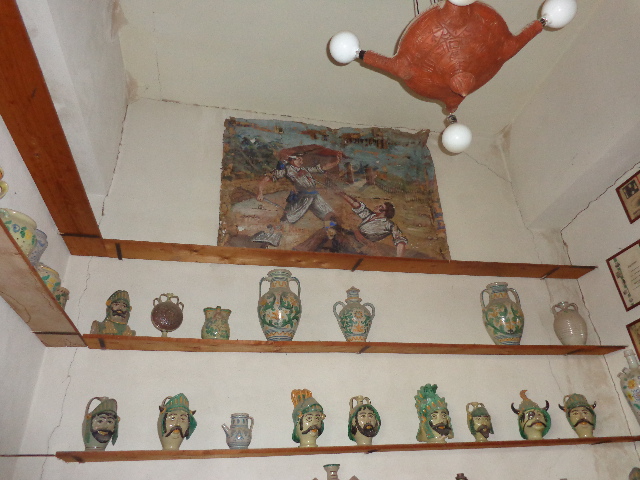
After our visit to the studio, Mr. Iudici invited me into his home where he showed me more artifacts and shared some literature on topics he wanted to share: the research project carried out at the University of Pisa on the history of fischietti (whistles), various articles written on his work. Also the article that states the many museums in Italy and other countries in Europe where his artwork can be found and an ad for an art exhibit in Como where Iudici’s artwork was displayed. It was at this point that Iudici proudly pointed out that one of the artists presenting work at that exhibit was P.Picasso.
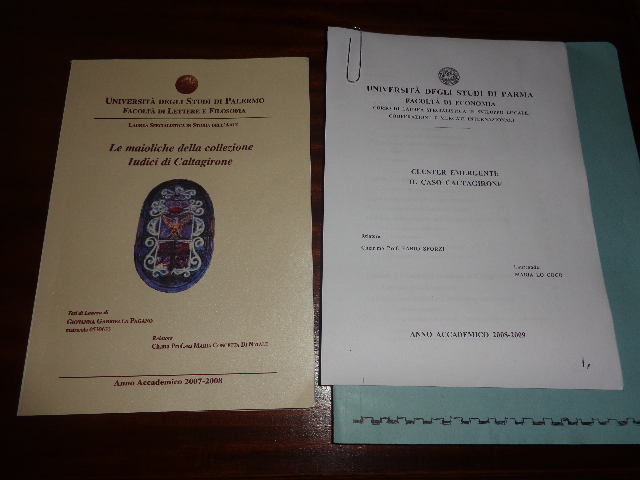
His message to me was clear and loud and has been voiced by Mr. Iudici for quite some time. He is disappointed at the lack of interest shown by the institutions that govern the preservation of heritage and works of art. He would like to see his studio and all the treasures it contains be brought to good use. It should become a showcase for the art and traditions it represents and not go lost. His wish is that all that he has created and collected over the years would be available to the public to see and to learn. His wish is that young people would have the opportunity to visit and learn from his work and that this should all be done not as a business to make money, but that the minimal cost charged to the visitor would be only to defray the costs of those who would run the project.


Kiln and wooden oven which need to be refurbished
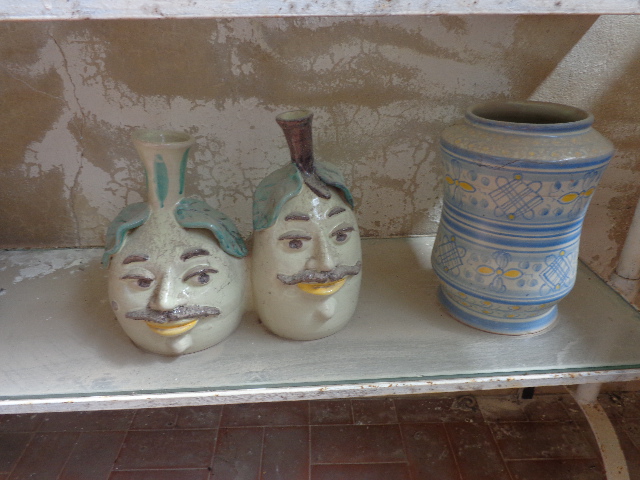
Finally, I will let some pictures taken at Mr. Iudici’s do the talking.

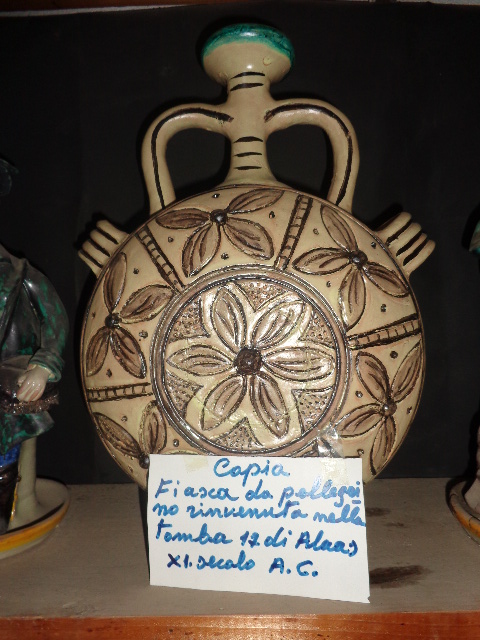


In conclusion, Toto’ asked Mr. Iudici the following question: “If I would like to purchase one of your presepi (nativity scenes) how much would it cost?” Mr. Iudici’s reply: “They are not for sale; they are for everybody.”
VESPA – It is an icon of the Italian culture all over the world. Its images adorn coffee shops, barber shops, restaurants and more and those images are woven into the romantic history of Italy. If you haven’t seen the scenes from the movie Roman Holiday in which Gregory Peck and Audrey Hepburn ride a Vespa through the cobbled streets of Rome you are missing a piece of Vespa’s history.
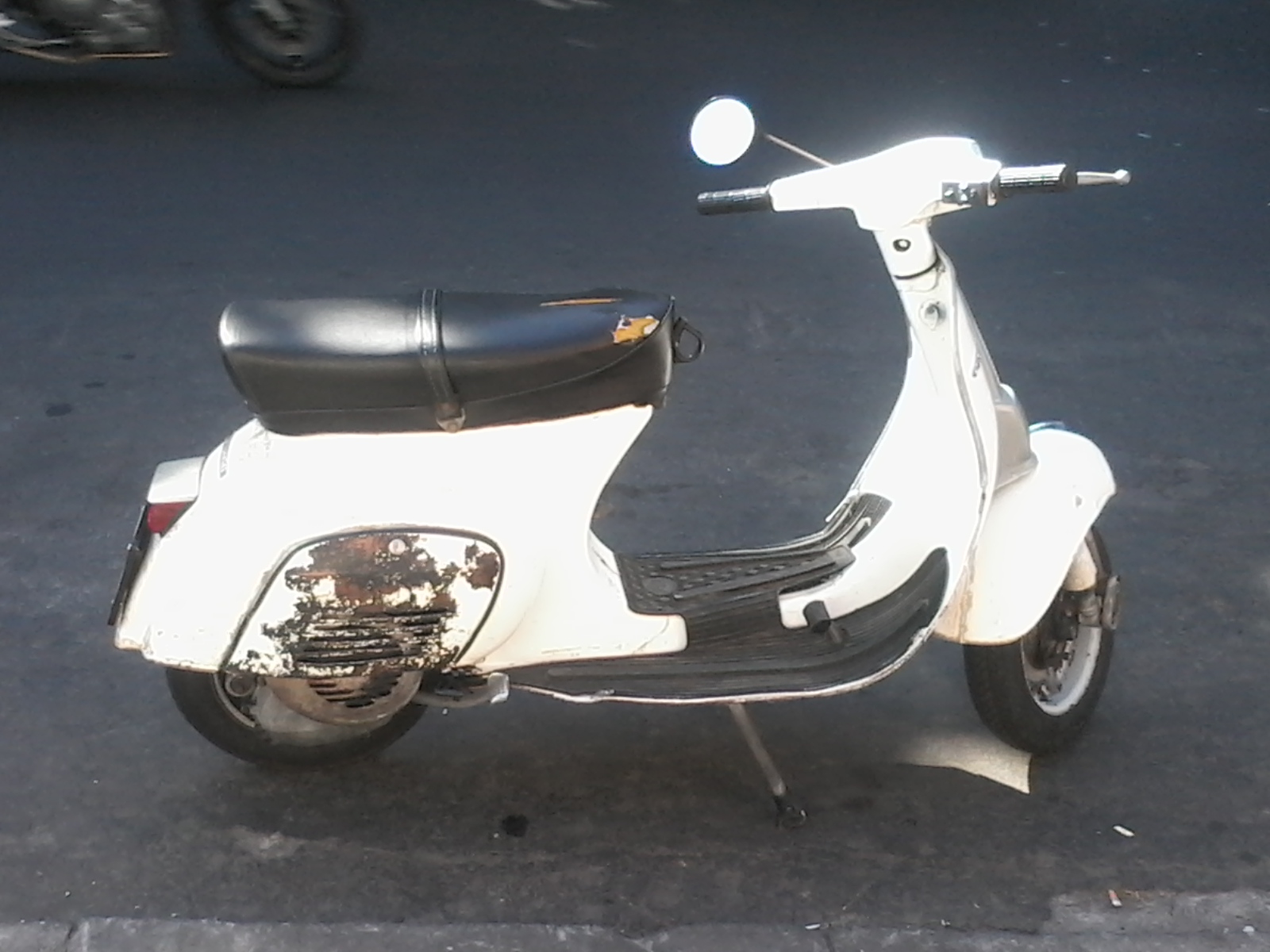
This morning, while having the air pressure checked on the tires of my car, I witnessed a conversation over a 1971 Vespa that a gentleman had just purchased in its rusty natural state. There was excitement in the air and several men gathered around and I could not help watching, listening and taking a couple of pictures (actually I got help from the owner, Orazio, as I had not taken pictures with my new cell yet!!!!!!!!!!!!!!!!).
As I love Vespas, I was intrigued by the knowledge and excitement the subject brought about as those men discussed the Vespa and its characteristics in detail.
The conversation over this Vespa was full of technical details and some were trying to figure out the reasons why some of the Vespa parts did not fit the specifications of that 1971 model, Vespa 50 Special.
Below is the specific Vespa, and it shows a lot of rust, but I actually find that appealing as it shows its natural “weathering.”


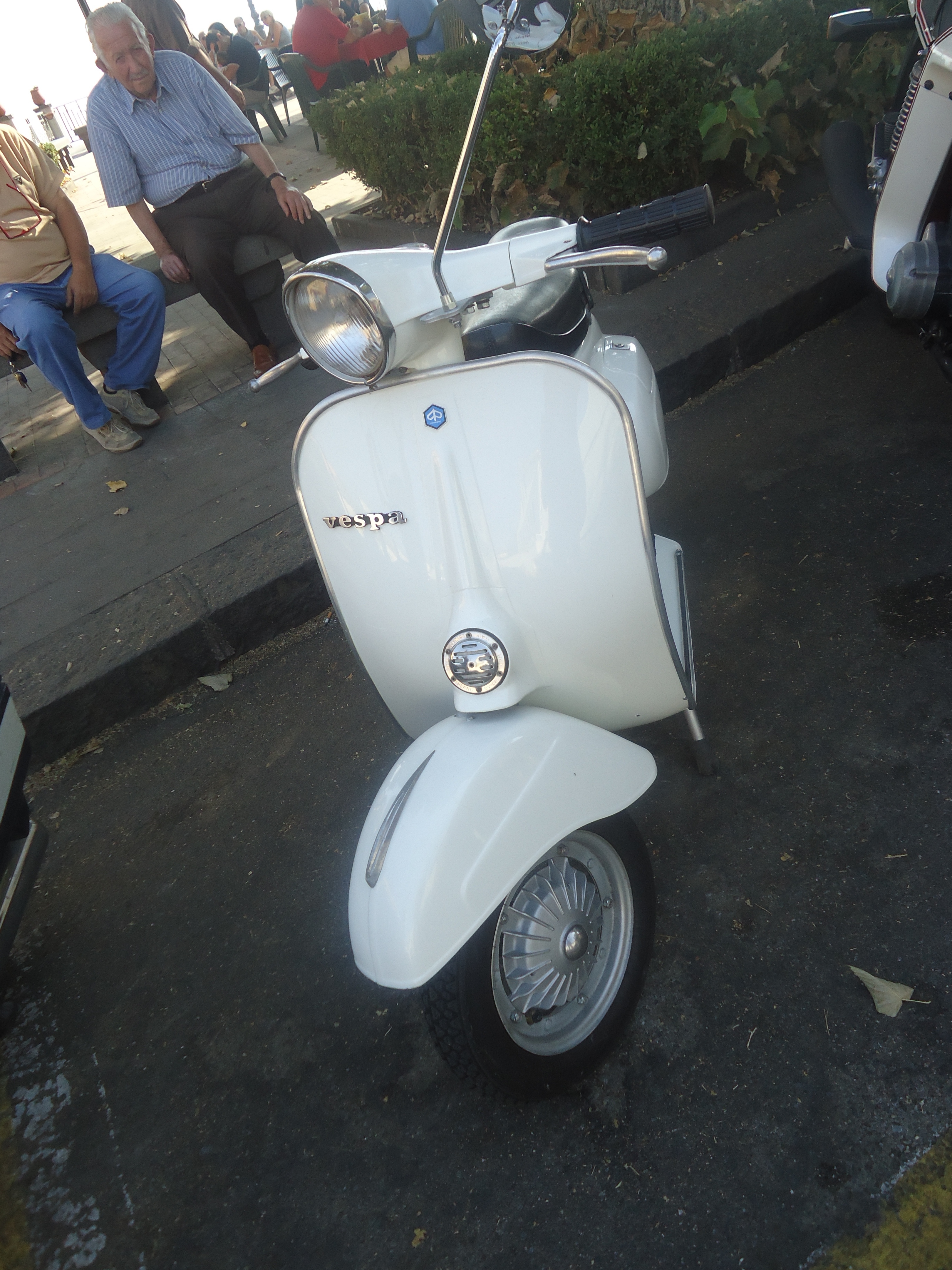
Below is a picture I took of a refurbished Vespa in 2011 at the Milo Motorcycle Rally
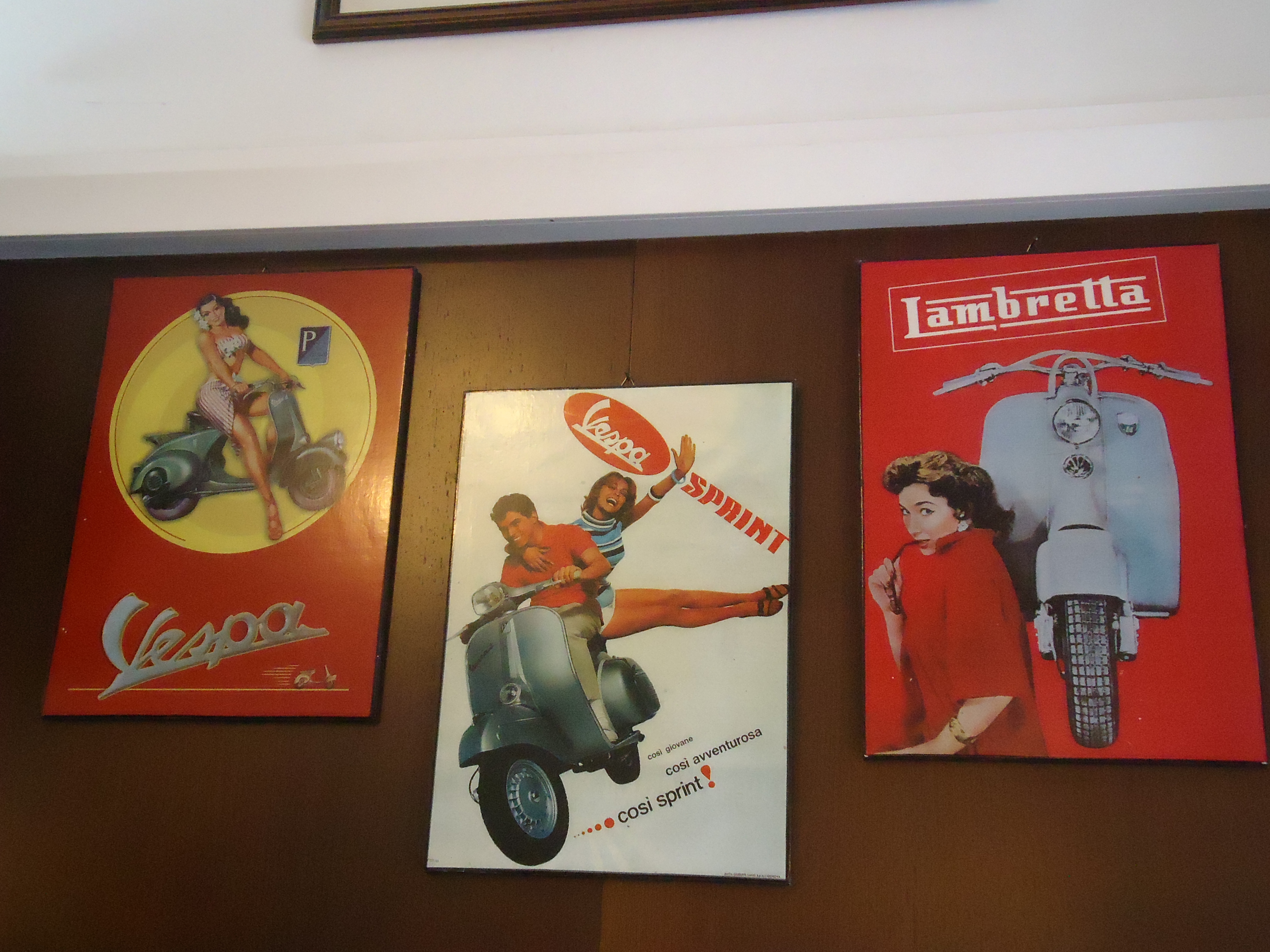
Vespa and Lambretta Posters I photographed at a cafe’ in Modica last year
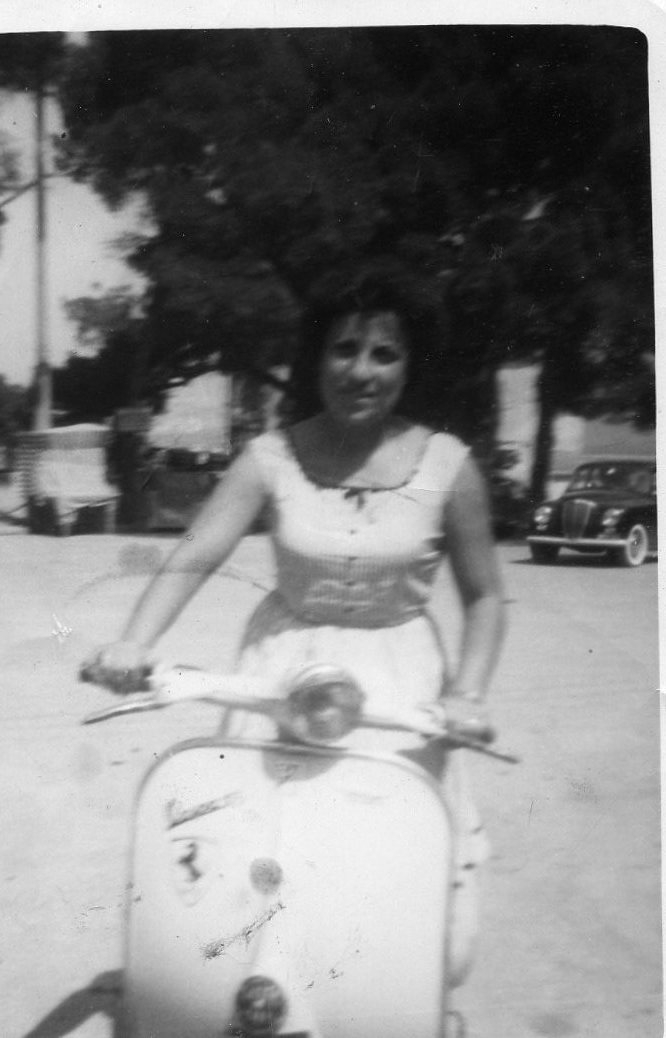
Finally, my favorite picture of a Vespa, with my mother, Giovanna, sitting on it back in the early 1950’s!
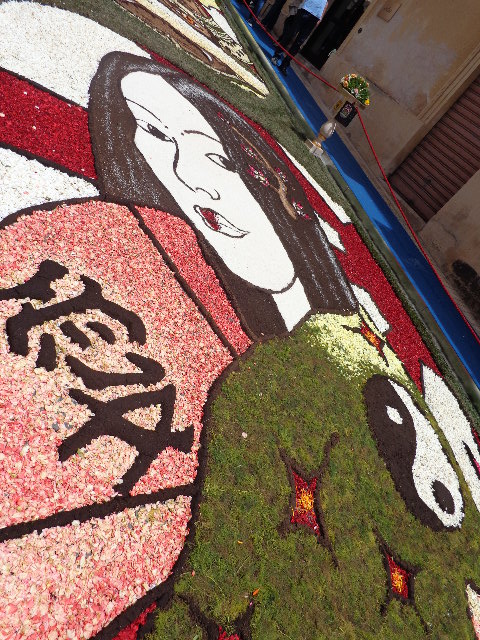
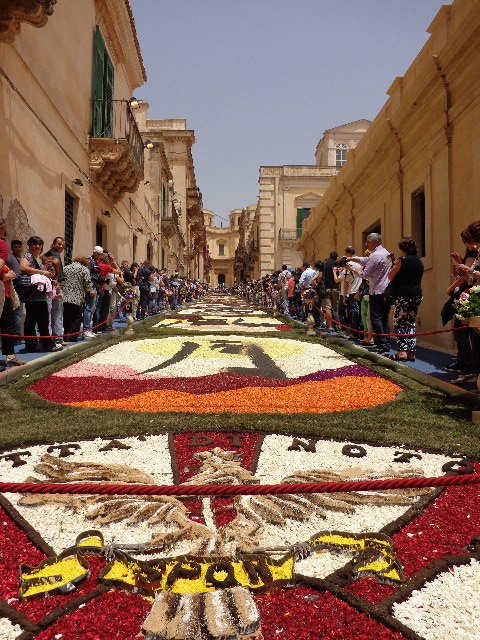
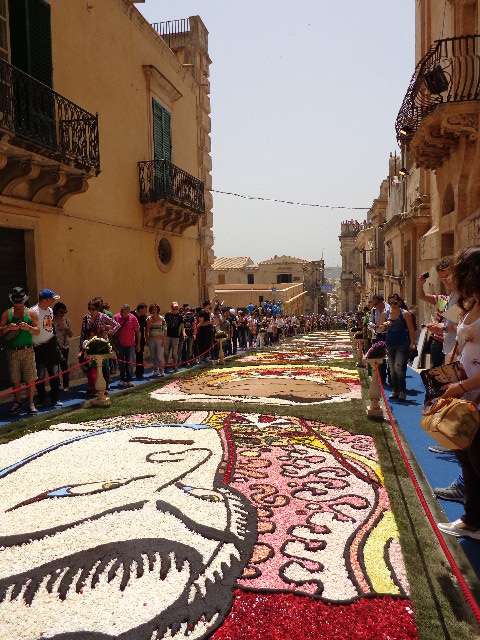
The town of Noto, Sicily, in the southeastern part of the island, was rebuilt in an ornate baroque style after the earthquake of 1693. Each year, Noto comes alive with a colorful flower festival on the third weekend in May, when the town holds the Infiorata. This year,the XXXIV edition of the Infiorata took place on May 17, 18 and 19. I returned to Sicily on that weekend so I could immediately drive to Noto to enjoy the Infiorata. The theme for 2013 was a Tribute to Japan. This year, the mosaic created with petals which is always arranged in Via Nicolaci was the result of a collaboration between Italian and Japanes flower artists. The colorful mosaic is created using thousands of petals and extends for a length of 122 meters and a width of four meters. The mosaic this year included the flower representation of the Four Natural Splendors, Moon, Wind, Bird and Flower. Then there were a Dame, Kabuki, Sumo wrestler, Samurai, a Japanese lady with parasol entitled, From the rising sun.. .to the burning sun., Madame Butterfly, Japanese Acrobat, Tribute to Utamaro and Hokusai, Empathy- Kyokan , Silk, Perfume of the East, and Bushido’ – The Soul of Japan.
During the Infiorata, many artistic events take place, including art exhibits, different types of shows and musical programs, which are all carried out both during the day as well as in the evening.
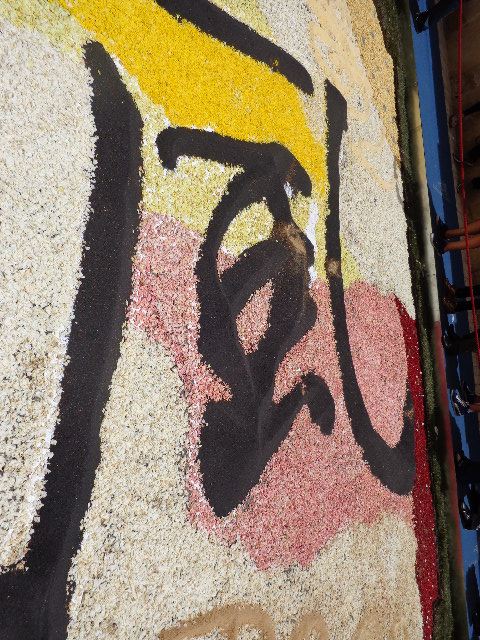
Following are some pictures taken on Sunday, around noon, of the mosaic in Via Nicolaci..The black sections are made of colored salt………..
Profumo d’oriente – Perfume of the East My favorite – perhaps because it reminds me of AMY
Vento – Wind
Shot of Via Nicolaci from the bottom
Luna – Moon
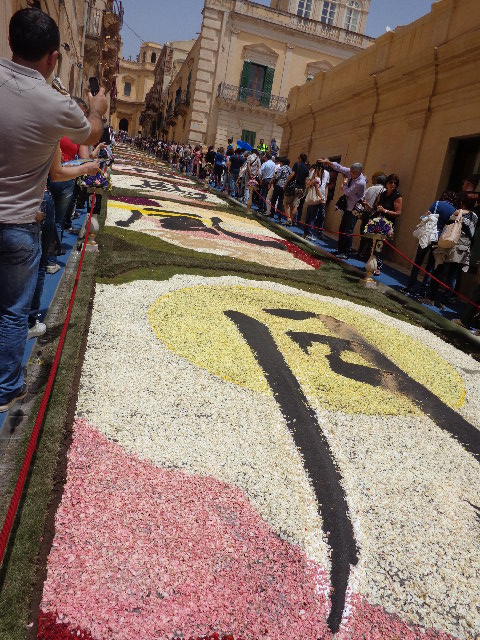
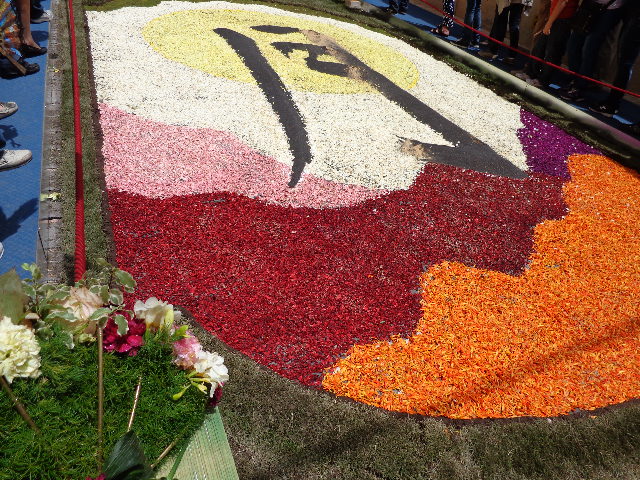
Half way up the street
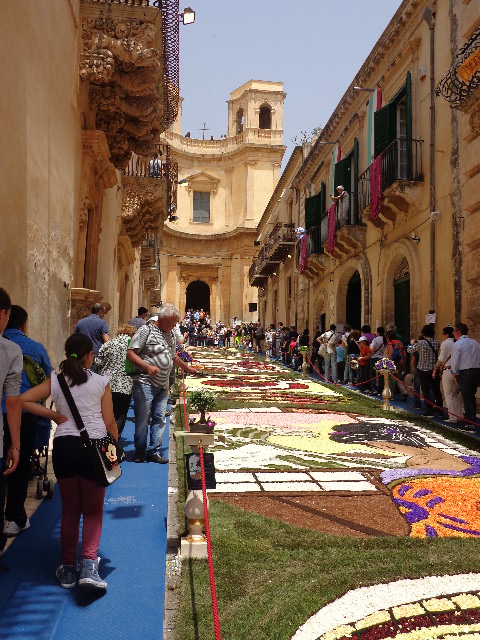
Looking down from the top of the street
 Sicily & MORE Explored by Rosanna